
Copyright
Copyright © 2026 by Dr. Phang Cheng Kar.
Published by KINDFULGym Press.
Jom MINDFULGym NOW: Practical Mindfulness For Healthcare Professionals is licensed under a Creative Commons Attribution-NonCommercial 4.0 International License (CC BY-NC 4.0).
To view a copy of this license, visit Read the CC BY-NC 4.0 license →
You are free to share (copy and redistribute the material in any medium or format) and adapt (remix, transform, and build upon the material) under the following terms:
Attribution: You must give appropriate credit, provide a link to the license, and indicate if changes were made.
NonCommercial: You may not use the material for commercial purposes.
Suggested Citation:
Phang, C. K. (2026). Jom MINDFULGym NOW: Practical Mindfulness For Healthcare Professionals. KINDFULGym Press.
If you have any questions, comments, or feedback, we would love to hear from you! You can reach Dr. Phang at drphangsunmed@gmail.com.
Foreword
The healthcare field requires devotion to its calling. Each day, healthcare workers walk into environments of high stress, uncertainty, suffering, and hopelessness. They care for their patients and families during some of life’s most delicate times, even as they carry personal burdens themselves.
In recent times, the pressures that healthcare practitioners face have risen dramatically in Malaysia and all over the world, making issues such as burnout, stress, and emotional exhaustion increasingly common within the medical fraternity. It is deeply concerning that many of our staff members often continue to push through challenges to care for their patients at the expense of attending to their psychological needs.
This book arrives at an important and necessary moment.
MINDFULGym offers a mindfulness approach that is practical, accessible, and deeply relevant to the realities of healthcare. It provides just the right balance between psychological insight and practical application. The book first helps readers understand the realities of stress, burnout, and the “healthcare mind,” including common thinking traps such as perfectionism, catastrophizing, and self-criticism. It then equips readers with concrete, usable tools that can be immediately utilized in real clinical settings and busy daily routines.
The down-to-earth style in which the information is presented is indicative of Dr. Phang Cheng Kar’s wisdom. Considering his background in the healthcare industry has given him practical knowledge of the psychological struggles experienced by healthcare workers. In authoring this book, Dr. Phang combines his knowledge and experience to provide healthcare workers with a way to support their mental well-being through a genuine sense of concern. One of the greatest strengths of Dr. Phang is his ability to discuss and reframe the topic of mindfulness in a realistic sense and come out with brilliant techniques easily accessible in the healthcare environment.
What makes MINDFULGym work is its simplicity and humanity. The techniques of Mindful-STOP, mindful breathing, NOW-ing, HEART-fulness, and kindful communication may appear as simple but are powerful tools that help manage emotions, clarity, resilience, compassion, and connecting meaningfully. These practices act as a good reminder that caring for ourselves is not separate from caring for others. It is essential for sustaining safe, compassionate, and effective healthcare.
This book also acknowledges an important truth: well-being is not a one-time achievement, but an ongoing practice. The invitation to develop one’s own “MP3”: Mindful Personal Practice Package, empowers readers to personalize mindfulness in ways that are realistic, sustainable, and authentic to their lives and professional journeys.
Whether you are a doctor, nurse, allied health professional, medical educator, student, caregiver, or healthcare leader, this book offers a practical companion and compassionate reminder that in the midst of caring for others, we must not lose connection with ourselves, with one another, and with the deeper purpose that brought us into this profession.
MINDFULGym is more than a collection of techniques. It is an invitation to pause, to breathe, to reconnect, and to build resilience with intention and kindness.
May this book serve as a source of support, reflection, and strength for all who dedicate themselves to the care of others.
Dr. Marhani Midin
Former Professor & Head of the Department of Psychiatry,
Universiti Kebangsaan Malaysia (UKM).
Dedication
To the healthcare community—those who have dedicated themselves to serving patients with skill, courage, and compassion, both now and in the future. May your unwavering commitment continue to be a source of healing, and may you also find the time and space to nurture your own well-being.
The Teh Cham Life (Podcast)
(Jom MINDFULGym NOW Podcast on YouTube & Spotify)
YouTube: Watch The Teh Cham Life on YouTube →
Spotify: Listen to The Teh Cham Life on Spotify →

Just like Malaysia’s beloved Teh Cham—a blend of bitter coffee and sweet tea—a life in healthcare is a mixture of heavy challenges and rewarding moments.
Based on Dr. Phang Cheng Kar's MINDFULGym, The Teh Cham Life podcast offers doctors, nurses, and allied health professionals practical, on-the-go mindfulness tools to navigate clinical stress. Join us to learn how to manage the bitterness of burnout, savor the sweetness of healing, and practice the ultimate truth: self-care is we care.
Preface
This book was born out of my life in healthcare over many years — not only as a psychiatrist but also as a fellow healthcare professional who has personally experienced the pressures of training and practice.
Housemanship was extremely tough for me. There were times I felt like giving up. I still remember running to the park across the hospital just to catch my breath. Some seniors were kind and supportive, while others were harsh. The stress was very real.
Over the years, I have worked in government, university, and private healthcare settings. Each had its own strengths, challenges, and demands. Life was often hectic. There were times I experienced panic attacks myself. So when I speak about the emotional burden carried by healthcare professionals, I do not speak only as an observer. I speak as someone who has also felt its weight.
One thing became increasingly clear to me. Very often, the more caring, conscientious, and dedicated healthcare professionals are the ones who suffer more. Those who care deeply, try hard, and carry responsibility sincerely may also carry a heavier emotional load.
In my clinic, I have seen more and more healthcare professionals seeking help. What reaches the clinic is probably only the tip of the iceberg. Behind many capable and functioning professionals are hidden struggles with anxiety, burnout, depression, and exhaustion. Over the years, I have also known of good doctors whose suffering ended in loss of life. The stigma of seeking help remains one of the great barriers.
That is why I am especially grateful that my hospital supports psychiatric and counseling services for all staff. Such support matters. It sends an important message: healthcare professionals deserve care as well.
The mental health challenges facing healthcare professionals are persistent, a problem I have witnessed firsthand since my houseman years, with the same issues continually recurring. The situation was significantly exacerbated by the pandemic. Given the inherent pressure, uncertainty, and exposure to human suffering in healthcare, I believe these challenges will remain to some degree.
But I do believe things can get better.
I believe more people are becoming aware.
I believe more people are trying to help.
I believe many are working on this in whatever way they can.
MINDFULGym is my little contribution.
Over the years, MINDFULGym has grown through work with medical students, healthcare professionals, patients, and the wider community. It has been shaped not only by ideas, but by real human experience.
Now that I am more senior, I am more able to afford a better work-life balance. But I have not forgotten what it was like to struggle. Perhaps that is one reason this book matters so much to me.
This book is my gift to healthcare professionals, offered with one simple wish:
May you be safe.
May you be healthy.
May you be happy.
If this book can give even one tired healthcare professional a little more space to breathe, a little more kindness toward themselves, and a few practical tools for daily life, then this effort is already worthwhile. In many ways, this book is an invitation to move from stress to balance, one STOP at a time.
Be Present. Be Calm & Be Grateful.
Jom MINDFULGym.
Acknowledgments
This book is written with deep gratitude.
I would like to acknowledge the contemplative traditions from which mindfulness has emerged, particularly early Buddhist teachings that emphasize awareness, wisdom, and compassion. These foundational ideas have quietly shaped my understanding and practice of mindfulness over the years.
I am also deeply grateful for the contributions of modern Western psychotherapy models that have integrated mindfulness into clinical practice, including Mindfulness-Based Stress Reduction (MBSR), Mindfulness-Based Cognitive Therapy (MBCT), Acceptance and Commitment Therapy (ACT), and Dialectical Behavior Therapy (DBT). These approaches have enriched my clinical work and helped me translate mindfulness into practical tools for everyday healthcare settings.
I would like to express my sincere appreciation to Emeritus Professor Tian Po Oei for his inspiration, encouragement, and trust in me to develop a locally grounded and culturally informed mindfulness program. His support has meant a great deal to me.
I am also thankful for the research support I have received over the years, including grants from Universiti Putra Malaysia (UPM), and for the dedication of the master’s and PhD students, co-investigators, and collaborators who have worked with me to scientifically validate the MINDFULGym program.
My heartfelt thanks go to the Malaysian Health Promotion Board (MySihat) and the Berjaya Care Foundation for supporting MINDFULGym as a free community education program. Their generosity has allowed this work to reach many people.
To all the MINDFULGym participants and patients I have met over the past 15 years, I am deeply grateful. You have taught me as much as I have shared with you. Your openness, trust, and lived experiences have shaped my understanding, practice, and teaching of mindfulness in ways no textbook ever could.
In many ways, MINDFULGym is not something I created alone — it has grown through all of you.
Writing this book is also my way of repaying that gratitude by sharing the MINDFULGym practice more widely with others.
If this work can support even one person in pausing, breathing, and caring for themselves more kindly, then it has already served its purpose.
May I, may you, may all be safe, healthy, and happy.
Content
Select a chapter or section to begin. This web contents list replaces printed page numbers.
Quick Start: What Can I Do Now?
Choose the time you have. One small practice is enough.
How to Read This Book: Mindfulness On Demand & On the Go

This book is not meant to be read only with the head.
It is meant to be used with the head, heart, and hands.
Think of it like this:
This is not only a book.
This is a gym.
A mind-gym.
A heart-gym.
A rest-shop for healthcare professionals.
In a gym, we do not become stronger by reading about exercise alone.
We become stronger by training.
In MINDFULGym, we train:
attention
awareness
kindness
beginner’s mind
and wisdom
So this book is not only for understanding.
This book is for practice.
This Book Is Like Clinical Practice
In healthcare, we do not use every tool for every patient in the same way.
We assess.
We choose.
We adapt.
We review.
This book is meant to be used in the same way.
Not every tool will be needed at the same time.
Not every chapter will speak to you in the same season.
Not every practice will fit every day.
So use this book the way a thoughtful clinician practices medicine:
observe, choose, try, adjust, and learn.
Use the Book in a Way That Fits Your Role & Your Needs
You may find it helpful to read this book while keeping 3 familiar healthcare characters in mind:
the house officer, trying to survive the steep learning curve
the nurse, carrying the physical and emotional load of daily care
the consultant surgeon, holding responsibility, leadership, and pressure
Sometimes you may read a chapter and feel:
“That’s so house officer.”
Sometimes:
“Wah, that one really sounds like a nurse’s day.”
Sometimes:
“Yes, even the surgeon also needs this.”
And sometimes, all 3 are in you.
Because healthcare professionals often carry:
the learner’s anxiety
the caregiver’s tiredness
and the leader’s burden
That is why you can use this book in 2 main ways.
1. Go by sequence — one tool at a time
You may choose to move step by step from Tool 1 to Tool 12.
That is helpful if you want:
a structured journey
a gradual training plan
a fuller feel of the whole MINDFULGym system
2. Choose based on need
You may also go straight to the tool that fits your present situation.
For example:
If you are like a house officer, you may need:
short, practical, emergency-use tools
things that work under pressure
ways to calm shame, panic, and overload quickly
So you may begin with:
Mindful Breathing
Mindful-STOP
Mindful Vitamins
HEART-fulness
If you are like a nurse, you may need:
body-based tools
emotional reset tools
something to carry you through repeated demand and human contact
So you may begin with:
Mindful Body Stretching
Body Scan & Kindness
Gratitude Workout
HEART-fulness
Mindful Communication
If you are like a consultant surgeon, you may need:
grounding under pressure
tools for a clear response
ways to soften harshness without losing standards
ways to remain human in a high-responsibility role
So you may begin with:
Mindful-PDF & NOW-ing
Mindful Breathing
Mindful-STOP
Mind-Scan
Beginner’s Mind
HEART-fulness
Of course, these are only examples.
You can move differently.
The important thing is not to use the book rigidly, but to use it wisely and personally.
On Demand & On the Go
MINDFULGym is designed for real healthcare life.
That means it must be:
on demand
on the go
Not only for weekends.
Not only for retreats.
Not only for people with perfect schedules.
Sometimes I like to say MINDFULGym practice should be like breastfeeding — on demand.
When needed, feed the mind.
When needed, soothe the heart.
When needed, regulate the body.
That may mean:
one mindful breath before entering the ward
one moment of clarity before replying to a difficult message
one round of Rasa Sayang in the heart before seeing a distressed patient
one minute of walking mindfully between tasks
one mindful vitamin during a hard moment
This is not a program that only works when life is quiet.
It is a program meant for:
the corridor
the ward
the call room
the clinic
the theatre
the pantry
the car park
and the drive home
Practice on demand and on the go.
Integrate It into Daily Routine
The best way to use this book is not to treat it like an exam syllabus.
Treat it like a way of life.
Gradually.
Gently.
Repeatedly.
The goal is not to “finish the book.”
The goal is to let the practices slowly enter your:
breathing
walking
speaking
resting
eating
working
and caring
Over time, the tools can become part of your natural rhythm.
Like tea and coffee preferences.
Some people like kopi-O.
Some like cham ice.
Some like strong tea.
Some like something gentler.
For me, one favorite is teh cham.
In the same way, your MINDFULGym practice can become uniquely yours.
You may discover:
your favourite tool
your favourite song
your favourite timing
your favourite combination
The important thing is not to copy someone else’s exact cup.
The important thing is to discover your own workable blend.
The Songs Are Part of the Training
MINDFULGym includes songs for many of the tools.
These are not decorations.
They are part of the method.
Why?
Because songs help us:
remember more easily
feel more deeply
practice more naturally
and carry the teaching into daily life
As you listen to the songs, do not only hear them.
Contemplate them.
Let the words sink in.
Let the message soften the mind.
Let the rhythm help you remember the practice.
The songs are not only for listening.
They are for remembering, feeling, and carrying the tools in the heart.
And no, you do not need to listen to all the songs at once.
Just choose your favorite first.
Mine is often Rasa Sayang.
You may start here.

🎶 Rasa Sayang Hey (Ver. 1): Listen on SoundCloud →
A single meaningful song, repeated and contemplated, may help more than ten songs played without heart.
The 5 Owls Are Your Training Team

As you use this book, remember the 5 owls:
Grey Owl — Remembering
Blue Owl — Attention
Pink Owl — Kindness
Green Owl — Beginner’s Mind
Yellow Owl — Wisdom and Clarity
Each tool trains these qualities in different ways.
So as you read and practice, you are not only learning techniques.
You are strengthening these inner qualities.
Best Used with Real Experience
This book can stand on its own.
But if possible, it is even better to attend an actual MINDFULGym Rest-Shop.
Why “Rest-Shop”?
Because it is not only a workshop for learning.
It is also a place for:
pausing
breathing
experiencing
connecting
and feeling the spirit and energy of the program directly
That helps you appreciate the book more deeply.
Sometimes reading gives understanding.
But actual practice in a live setting gives:
felt experience
emotional tone
human connection
and the living flavor of MINDFULGym
So if you ever have the chance to attend one, it can help you understand the book not only with the mind, but with the whole person.
Sample Ways to Use the Book in Real Life
Here are a few simple examples.
Before the ward round
Take one breath.
Relax the shoulders.
Use Mindful Breathing, Mindful-STOP, or one Mindful Vitamin.
After a difficult patient encounter
Try Mindful Walking, HEART-fulness, or Mind-Scan.
During a short break
Use Mindful Body Stretching, Gratitude Workout, or Rasa Sayang in the heart.
Before sleep after a heavy shift
Try Body Scan & Kindness, Mindful Breathing, or a gentle loving-kindness song.
When routine becomes dry
Go to Beginner’s Mind.
These are only examples.
Start where the need is.
You Do Not Need to Do It Perfectly
This part is very important.
You do not need to:
remember every tool
do every exercise
like every chapter equally
or practice perfectly every day
Some days you will forget.
Some days you will be too tired.
Some days, the mind will be messy.
That is normal.
Please do not turn MINDFULGym into one more thing to fail at.
Just begin again.
Gently.
A Simple Way to Start
If you are not sure how to begin, here is one simple approach:
That is enough.
If You Only Remember 3 Things
If you forget most of this chapter, just remember these 3 things:
Final Encouragement
This book is not about becoming:
stress-free
problem-free
or perfectly mindful
It is about becoming:
more aware
more grounded
more kind
more flexible
and more wise
And in healthcare life, that makes a real difference.
Not only for you.
But for:
your patients
your colleagues
your family
and your own heart
So go by sequence if you like.
Or choose based on need.
Practice on demand.
Practice on the go.
Integrate it gradually into daily life.
Let it become your own blend — like your own tea, coffee, or favorite teh cham.
And if you listen to the songs, do not only listen.
Contemplate.
Let the practice enter the heart.
Don’t try to master all 12 tools at once.
Just begin with one.
Be Present.
Be Calm.
Be Grateful.
Jom MINDFULGym.
PART 1
– WHY MINDFULGym, WHY NOW?
Chapter 1
The Most Important Time Is NOW
The Most Important Time Is NOW
It is 3:15 a.m. in a hospital ward.
The lights are dim, but the work continues.
A nurse quietly adjusts an IV line while checking a patient’s vital signs. A medical officer scrolls through blood results on the computer, trying to stay focused after many hours on duty. Somewhere down the corridor, a monitor alarm sounds. Footsteps move quickly past the nurses’ station.
Outside the hospital, the city is asleep.
Inside, healthcare professionals continue their work.
Moments like this are common in hospitals and clinics across Malaysia. Doctors, nurses, and healthcare workers move from one task to another, often without pause. There are patients to attend to, charts to update, medications to administer, and decisions to make quickly.
In the middle of all this activity, the mind rarely stays still.
A nurse may be preparing medication while thinking about the next patient. A doctor may be listening to a patient while mentally reviewing laboratory results or planning the next ward round. A healthcare worker driving home after a long shift may find the mind replaying conversations or decisions from earlier in the day.
The waves of healthcare work never really stop.
The Waves of Healthcare Work
Healthcare work can sometimes feel like standing in the middle of powerful waves. Patients come, emergencies arise, and unexpected situations appear throughout the day.
Stress is part of the profession.
One of the pioneers who helped introduce mindfulness into modern medicine is Professor Jon Kabat-Zinn, founder of the Mindfulness-Based Stress Reduction (MBSR) program at the University of Massachusetts Medical School. His work helped bring mindfulness from meditation halls into hospitals, clinics, and medical schools around the world.
He once described stress in a very simple way:
“You can’t stop the waves, but you can learn to surf.”
— Jon Kabat-Zinn
Healthcare professionals may not be able to stop the waves of work.
But we can learn ways to stay balanced while riding them, giving you hope and a sense of control in your demanding work.
Mindfulness is one of those ways.
The Emperor’s Three Questions
Many years ago, the writer Leo Tolstoy told a story about a king who struggled with three questions. The king believed that if he knew the answers, he would always be successful in life.
The questions were simple.
When is the most important time?
Who is the most important person?
What is the most important thing to do?
Many educated men attempted to answer the king’s questions, but none satisfied him. Eventually, the king decided to seek the advice of a wise hermit who lived in a nearby village.
The hermit was digging in his garden when the king arrived. The king asked his questions, but the old man continued digging slowly. Seeing that the hermit was tired, the king offered to help and began digging the soil.
While they were working, a wounded man suddenly ran out of the woods. He had been badly injured. The king cleaned and bandaged the wound and cared for him through the night.
The next morning, the man confessed that he had come to kill the king in revenge for the death of his brother. But after receiving the king’s compassion, he instead asked for forgiveness.
Later, the king again asked the hermit for the answers to his three questions. The hermit replied that the king had already received them.
The most important time is NOW. The present moment is the only time in which we have the power to act.
The most important person is whoever you are with NOW.
And the most important thing to do is to care for the person you are with NOW.
Inspired by the Emperor's Three Questions, I have created a song to share with you:

🎶 Emperor’s 3 Mindful Questions
What the Story Means for Healthcare Professionals
For healthcare professionals, these answers carry a special meaning.
In hospitals and clinics across Malaysia, doctors, nurses, and healthcare workers face constant demands. Recognizing your efforts can help you feel appreciated and supported amidst the relentless pace.
The pace can be relentless.
Many healthcare professionals live with their minds constantly moving between the past and the future. We think about the patient we just saw and wonder if we missed something. At the same time, we are already planning the next task, the next ward round, or the next shift.
In this constant movement, the present moment quietly slips away.
Mindfulness gently reminds us of a simple truth.
The most important time is NOW.
Not the past, which has already happened.
Not the future, which has not yet arrived.
The present moment is the only moment in which we can act, respond, and care.
Self-Care Is We Care
The third answer from Tolstoy’s story may be the most meaningful for healthcare professionals.
The most important thing to do is to care.
Healthcare is built on this very principle. Every day, doctors, nurses, and healthcare workers dedicate themselves to caring for others.
A nurse comforts an anxious patient.
A doctor explains a diagnosis with patience.
A therapist listens carefully to someone who feels overwhelmed.
Care is the heart of healthcare.
Yet something important is sometimes forgotten.
In caring for others, healthcare professionals may forget to care for themselves.
Long working hours, emotional strain, and constant responsibilities can slowly drain our energy. Fatigue accumulates. Patience becomes thinner. Small frustrations may begin to feel larger than they really are.
Over time, this may lead to burnout.
A simple reminder captures this truth beautifully:
“You cannot serve from an empty vessel.”
— Eleanor Brown
Self-care is not selfish.
It is part of sustaining compassionate healthcare, and caring for yourself helps you continue to care for others effectively.
In MINDFULGym, we often express this idea in a simple phrase:
Self-Care Is We Care.
When we care for ourselves, we strengthen our ability to care for others.
The Spirit of Rasa Sayang
In Malaysia, many of us grew up hearing the cheerful folk song “Rasa Sayang.” Its melody is simple and joyful, and its message reflects something deeply Malaysian — warmth, friendliness, and shared humanity. The melody is simple enough for anyone to sing, yet meaningful enough to remind us of something very important — kindness.
The original song is a Malay folk song, but in MINDFULGym workshops, we sometimes sing it in Malay, English, Chinese, and Tamil, reflecting the multicultural environment in which Malaysian healthcare professionals live and work.
Healthcare professionals experience this diversity every day. In a single ward round, a doctor or nurse may speak with patients from different cultures and languages. Yet beneath all these differences, the human wishes are the same.
People want to be safe.
People want to be healthy.
People want to be happy.
In the MINDFULGym program, we sometimes adapt the Rasa Sayang song as a gentle reminder of these universal wishes.
You can listen to the songs here:
🎶 Rasa Sayang Hey (Ver. 2): Listen on SoundCloud →
In workshops, we sometimes sing this simple MINDFULGym version:
Rasa sayang hey,
Rasa sayang sayang hey,
Hey, may I, may you, may all,
Be safe, healthy, and happy.
The message is simple and universal.
May I, may you, may all be safe, healthy, and happy.
Using songs as teaching tools has become a distinctive feature of the MINDFULGym program. Music helps ideas stay in the mind and heart. Long after a workshop ends, participants often remember the song and the message behind it.
Sometimes during workshops, when participants sing together in English, Malay, Chinese, and Tamil, the room becomes lighter. People smile. Tired faces relax.
For a moment, the stress of work fades.
What remains is a shared human wish.
Safe.
Healthy.
Happy.
These are not only wishes we offer to our patients.
They are also wishes we can gently offer to ourselves.
From UPM to Hospitals Across Malaysia
The ideas shared in this book did not appear overnight.
About fifteen years ago, the MINDFULGym program was first introduced to medical students at Universiti Putra Malaysia (UPM). The goal was simple: to teach practical mindfulness tools that the students and future healthcare professionals could use in their daily lives.
Over time, the program has been refined through teaching, research, and real-world clinical experience in Malaysia.
Mindfulness training programs inspired by MINDFULGym have been studied among medical students and nurses in Malaysian hospitals, showing improvements in stress levels, emotional well-being, and job satisfaction.
Workshops based on the program have also been conducted with healthcare professionals in many settings: Universiti Kebangsaan Malaysia Medical Centre, University Malaya Medical Centre, Hospital Kuala Lumpur, Hospital Bentong, Hospital Pakar Universiti Sains Malaysia (Kubang Kerian), Hospital Seremban, Hospital Melaka, Hospital Taiping, Hospital Pulau Pinang, Hospital Miri, Hospital Sentosa, the Kuala Lumpur Mental Health Conference, the Sarawak Mental Health Conference, and the Institute of Mental Health in Singapore.
Each workshop, each conversation with healthcare professionals, and each research project has helped refine the practical tools presented in this book.
This book captures the best of those accumulated experiences.
Healthcare professionals do not need complicated theories or philosophies. They need simple tools that work in real life.
Tools that can be practiced between patients.
Tools that can be used during ward rounds.
Tools that can be practiced while washing hands before a procedure.
Tools that help us reconnect with ourselves during a busy shift.
The invitation to MINDFULGym is simple.
Pause.
Take a breath.
Return to NOW.
A Question Worth Asking
Many healthcare professionals entered medicine to help others.
But somewhere along the journey, many also became quietly exhausted.
Around the world, studies have shown increasing levels of stress, burnout, anxiety, and emotional exhaustion among doctors, nurses, and healthcare workers.
Malaysia is no exception.
In the next chapter, we will take a closer look at the mental health of healthcare professionals in Malaysia — what the research tells us, what healthcare workers are experiencing, and why practical tools for well-being have become more important than ever.
Because in the end, before we can care well for others, we must first learn how to care wisely for ourselves.
Chapter 2
Mental Health of Healthcare Professionals in Malaysia: The Reality We Face

The Slow and Silent Burnout
Many healthcare professionals entered medicine, nursing, and healthcare because they wanted to help others. Yet somewhere along the journey, many also became slowly and quietly exhausted.
This exhaustion is not always dramatic. Sometimes it looks like poor sleep after a shift, a racing mind before work, irritability over small matters, or the feeling of functioning without really flourishing. Sometimes it is the heaviness that comes after too many difficult cases and too little recovery.
This reality is not confined to my personal experience; it reflects the broader situation within Malaysian healthcare.
This Is Not Just a Personal Story
Across Malaysia, the research pattern is now quite clear. Anxiety, depression, stress, and burnout have all been found at significant levels among healthcare professionals. Anxiety often appears as the most common psychological symptom, with Malaysian studies reporting it in roughly 30% to 60% of healthcare workers, depending on the setting and group studied. Burnout is also a strong recurring signal, affecting about one in four to one in three healthcare workers in some of the larger studies.
In other words, when a healthcare worker feels overwhelmed, persistently worried, emotionally drained, or close to burnout, it is not simply an individual weakness. It reflects a wider pattern observed repeatedly in Malaysian healthcare.
The Psychological Burden on House Officers: Pre-COVID-19 to Post-2022 Findings
Among all the groups studied in Malaysia, house officers appear to be among the most psychologically burdened.
Pre-COVID-19 Distress Among House Officers (431 interns from 26 hospitals):
○ 39.9% had anxiety symptoms (most prominent).
○ 29.7% had stress symptoms.
○ 26.2% had depressive symptoms.
Distress During the Pandemic Among House Officers (122 interns from 28 hospitals):
○ 36.1% had depressive symptoms (most prominent)
○ 33.7% had anxiety symptoms.
○ 23.8% had stress symptoms.
○ 8.2% had extremely severe depression.
Persistent Psychological Strain:
○ Junior doctors were already vulnerable pre-COVID-19; the pandemic worsened depressive symptoms.
○ A rapid review indicates no major improvement in depression and anxiety among healthcare workers since 2022.
Burnout Among House Officers (754 interns from 10 hospitals):
○ 73.3% experienced personal-related burnout.
○ 69.1% experienced work-related burnout.
○ 43.4% experienced patient-related burnout.
The Problem Is Wider Than House Officers
The mental health challenge extends significantly beyond house officers.
Emergency Medical Officers (among 140 surveyed)
Anxiety: 28.6%
Depression: 10.7%
Stress: 7.9%
Ministry of Health Nurses
Burnout: 24.4% (among 2,428 surveyed) - about 1 in 4.
Assistant Medical Officers
Burnout: 30.3% (among 2,033 surveyed) - about 1 in 3.
Multidisciplinary Healthcare Workers during COVID-19 (among 933 surveyed)
Personal Burnout: 53.8% - about 1 in 2
Work-related Burnout: 39.1%
Patient-related Burnout: 17.4%
Rates were higher for those with direct COVID-19 work, pre-existing medical conditions, and insufficient psychosocial support
Many Studies Show the Problem — But Far Fewer Study Solutions
One striking feature of Malaysian literature is this: we already have many studies showing the problem, but far fewer showing what actually helps.
We know a lot about prevalence. We know distress is common. We know burnout is significant. But if we keep measuring suffering without also building and testing practical responses, healthcare professionals are left with awareness of the burden but too little guidance on what to do next.
This is where the chapter begins to turn from problem toward possibility.
Why Self-Care Matters in Healthcare
When a problem is this widespread, what can we do? What helps?
The answer is complex because the cause is multifactorial: heavy workload, long working hours, emotional strain, poor resilience, difficult workplace culture, and system pressures. Responsibility cannot rest solely on healthcare professionals to "cope better." While larger systems improve slowly, healthcare workers need practical ways to protect their well-being now.
Self-care is profoundly relevant—not as self-indulgence or a luxury, but as a basic need within a profession fundamentally built on providing care.
Ignoring self-care subtly yet significantly harms healthcare professionals. As self-neglect occurs, patience erodes, emotional recovery slows, and minor frustrations magnify. Physical exhaustion and mental instability increase, eventually making compassion feel burdensome.
That is why mindfulness matters here. It is also a practical form of self-care. It helps people pause, notice what is happening, regulate their emotions more skillfully, and return to the present moment before stress carries them too far.
In that sense, mindfulness is not separate from healthcare. It helps protect the person providing the care.
And as MINDFULGym reminds us, Self-Care is We Care!
Here is a beautiful song to remind us of the importance of self-care:

🎶 Self-Care Is We Care Listen on SoundCloud →
What the Malaysian MINDFULGym Evidence Already Shows
If self-care matters in healthcare, the next question is equally important: what kind of self-care is practical, relevant, and evidence-based?

This is where MINDFULGym becomes especially meaningful.
MINDFULGym did not begin as a casual wellness activity. It began in Malaysia, with medical students in Universiti Putra Malaysia, and gradually developed through teaching, research, and real clinical experience. Over time, it grew from an educational initiative into a more evidence-informed Malaysian response to stress and emotional strain in healthcare settings.
The Malaysian evidence is especially encouraging in two groups: medical students and nurses.
Four Malaysian studies first established an effective, practical, and culturally relevant mindfulness program with medical students. Four subsequent studies showed that brief, MINDFULGym-based mindfulness interventions were feasible and beneficial for nurses in hospital settings, consistently reducing anxiety and stress, and sometimes improving mindfulness, happiness, emotional well-being, and job satisfaction.

Mindfulness benefits have been shown, but consistent practice is difficult in clinical settings due to heavy workloads, demanding schedules, forgetfulness, and insufficient support. To address this, the focus must shift from merely teaching mindfulness techniques to seamlessly integrating them into daily clinical routines in simple, practical ways that healthcare workers can adopt easily.
That makes MINDFULGym especially relevant for this book. It is not only locally developed. It is also locally tested, practically oriented, and shaped by the realities of Malaysian healthcare work.
Beyond Self-Care: Systemic Solutions for Healthcare Workers' Well-being
Evidence-based strategies like mindfulness and cognitive-behavioral therapy (CBT) are crucial for enhancing the mental health and psychological well-being of healthcare professionals.
However, reviews consistently highlight a critical point: self-care alone is insufficient. It is unjust to expect healthcare workers to 'cope better' when systemic issues like leadership, workload, and team culture remain unaddressed. Organizational improvements are essential for sustainable mental health support.
Therefore, the most balanced perspective is that mindfulness is a vital part of the self-care solution, but it must complement, not substitute for, the creation of healthier organizational systems.
A Bridge Toward Mindfulness
We already know that local studies consistently show that strained healthcare professionals are at risk of psychological distress and burnout. What is lacking are practical, culturally relevant, evidence-informed solutions applicable to real clinical settings.
That is why mindfulness becomes relevant here.
Not as a luxury.
Not as a fashionable extra.
Not as something only for retreats or quiet rooms.
But as a practical skill that can be brought into real work, real shifts, and real moments. If this is the reality we face, how can we respond wisely?
How can we care for the caregiver without adding another burden to an already heavy day?
How can we pause, even briefly, and return to stillness, clarity, and kindness in the middle of hectic clinical life?
Mindfulness is not an escape from healthcare, but a way to be more present and strengthen care. It is a simple, practical, and meaningful practice for healthcare settings in Malaysia.
This is where MINDFULGym begins to offer its answer.
In the next chapter, we will explore what mindfulness really means — not just in theory, but in a practical, human, and relevant way for healthcare professionals.
Chapter 3
What Is Mindfulness? – The MINDFULGym Way
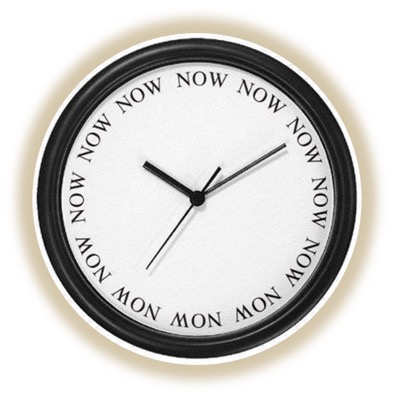
What Is the Time Now?
Before we go any further, let me ask you a question.
What is the time now?
In MINDFULGym workshops, there is only one acceptable answer.
NOW.
Not 10:30 a.m.
Not 2:15 p.m.
Not breakfast time.
Not lunch time.
Not “Doctor, already late lah.”
Just:
NOW.
I used to ask this tricky and witty question to the UPM medical students everywhere. Sometimes when they were walking. Sometimes when they were chatting. Sometimes when they were rushing somewhere. Even when they were in the toilet. Even when they were peeing. Hehe.
Why did I do that?
Not because I wanted to confuse them. Not because I wanted to show off. I asked the question because it is a playful way to wake people up from autopilot and offer them a present-moment break.
Many of us live as though the mind is always slightly ahead of the body. The body is here, but the mind is somewhere else. So a simple question like “What is the time now?” can bring us back to something we keep forgetting.
NOW.
And that is where mindfulness begins.
Why Is It Important to Pay Attention to the Present Moment?
In healthcare, this question matters a lot.
Why is it important to pay attention to the present moment?
Because this is the only moment in which we can actually do anything.
This is the only moment in which we can listen.
This is the only moment in which we can write the correct medication dose carefully.
This is the only moment in which we can notice the patient’s expression.
This is the only moment in which we can speak kindly to a frightened family member.
This is the only moment in which we can pause before reacting.
When we are not present, we miss things.
We may hear words without really listening. We may look at a patient without truly seeing the person before us. We may chart while half-thinking about something else. We may carry the previous patient into the next consultation, or the next task into the current one.
In a busy clinical setting, that matters.
Present-moment attention supports safety, listening, communication, emotional steadiness, and wiser decisions. It also helps us care more fully. As we saw earlier, the present moment is the only moment in which we can act, respond, and care.
There is another reason, too. Human minds naturally wander, a phenomenon common to all. A Harvard study by Killingsworth and Gilbert found that people spend about 47 percent of their time thinking about something other than their current activity. This research suggested that a wandering, inattentive mind is often linked to lower levels of happiness.
For healthcare professionals, maintaining presence is crucial. If their physical body is present in the ward but their mind is distracted, they risk overlooking important details, and their own mental well-being may suffer.
So in MINDFULGym, we ask again:
What is the time now?
And the answer is still:
NOW.
Mindfulness Is Often Misunderstood — and So Is Mindlessness
When people hear the word "mindfulness," many strange ideas come to mind.
Some imagine sitting cross-legged for hours.
Some think it means making the mind blank.
Some think it means being calm all the time.
Some think it means guided relaxation through an app.
Some think it is only for people with free time, quiet rooms, and scented candles.
In short, mindfulness is often misunderstood.
But the opposite is also true.
Many people do not realize how often they are living in mindlessness.
Mindlessness is autopilot living.
It is eating without tasting.
Listening without really listening.
Washing hands while mentally somewhere else.
Driving home without remembering the road.
Replying sharply before even noticing how tense you are.
Doing many things, but not really being fully present for any of them.
Being mindless is simply a natural part of the human experience, not a moral failing. For evolutionary reasons, many essential life functions—including breathing, walking, talking, and emergency responses—must operate automatically. However, when this automatic, 'mindless' mode becomes excessive, dominating our daily lives or occurring out of context, the consequences are a hectic life, robotic work, and strained relationships.
So MINDFULGym does not only teach mindfulness.
It also helps individuals identify when mindlessness becomes counterproductive. Awakening requires first recognizing that we have drifted away.
Apa Tu Mindfulness?
In MINDFULGym, I also like to bring mindfulness closer to home.
Sometimes I ask, “Apa tu mindfulness?”
For Malay-speaking participants, I introduce the phrase minda ketarasedar. It gives people a local doorway into the idea. Being mindful means more ‘ketara’ and ‘sedar’ of our thoughts, feelings, speech, and actions. Suddenly, mindfulness feels less like an imported technical term and more like something that can live in our own language, culture, and daily life.
And because MINDFULGym likes to teach in memorable ways, I do not explain only through lecture. I also use songs.
One distinctive feature of the MINDFULGym program is its use of songs as teaching tools. Music helps the message stay in the mind and heart long after the workshop ends.
There is a song called “Apa Tu Mindfulness?” that helps participants remember the meaning of mindfulness in a lighter, warmer, more Malaysian way.
🎶 You can listen to the song here: Watch on YouTube →
Sometimes a song slips into the heart more easily than a lecture slips into the head.
Why Is It Called MINDFULGym?
Now, let me ask another question.
Why do we call it MINDFULGym?
Because this is not only about understanding mindfulness.
It is about training it.
Just as we go to a gym to train the body, we come to MINDFULGym to train the mind.
But let us be very clear here.
The aim is not to make the mind blank.
The aim is not to stop all thoughts.
The aim is not to become like a stone, a statue, or a coconut without thoughts.
The aim is to train the mind actively:
to remember, to pay attention, to return to the present, and to relate with kindness, beginner’s mind, and wisdom.
So MINDFULGym is not about passive blankness.
It is about active mind training.
The brain is not fixed; it is trainable. Neuroplasticity is the brain's ability to change through repeated practice. Mindfulness training impacts brain systems for attention, emotional regulation, and self-awareness, including the prefrontal cortex and anterior cingulate cortex, and shifts between mind-wandering and task-focused networks. Essentially, repeated practice shapes our function.
And like any real gym, MINDFULGym has many tools. In the coming chapters, we will explore these tools one by one. Some train the mind through the body. Some through breathing. Some through pausing. Some through walking. Some through thoughts. Some through kindness.
Jom MINDFULGym.
Not to make the mind blank, but to train the mind well.
There Are Many Definitions of Mindfulness
There are many ways to define mindfulness.
Mindfulness did not begin as a modern trend. Its roots can be traced back to various spiritual and contemplative traditions, especially Buddhism, where mindful awareness has long been cultivated as part of a path of wisdom, compassion, and inner freedom.
In the modern secular world, one of the most influential figures in bringing mindfulness to medicine and healthcare was Dr. Jon Kabat-Zinn, who developed Mindfulness-Based Stress Reduction (MBSR). His work helped bring mindfulness into mainstream medicine and healthcare in a practical, evidence-based, and accessible way.
From there, mindfulness continued to grow across psychology, education, and healthcare.
At the same time, the MINDFULGym definition is unique.
It is shaped by a blend of Eastern wisdom, practical Western mindfulness teaching, and years of clinical and workshop experience in Malaysia. It is not a definition built only from books. It is a definition refined through teaching real people in real settings — including medical students, nurses, doctors, patients, and community participants.
So there are many doors into mindfulness.
This book invites you through the MINDFULGym door.
Let’s Learn the MINDFULGym Definition Together
Okay, it is time to learn the MINDFULGym definition together.
Do not worry. I will make it easy.
In MINDFULGym, mindfulness means:
Remembering to pay attention to the present moment with an attitude of kindness, a beginner’s mind, and wisdom.
Let us do it workshop style.
What is mindfulness?
Remembering...
To do what?
Pay attention...
To what?
The present moment...
With what?
An attitude of kindness, a beginner’s mind, and wisdom.
Again.
Remembering to pay attention to the present moment with an attitude of kindness, a beginner’s mind, and wisdom.
If you can remember this one sentence, you already have the essence of MINDFULGym.
The Five Keywords of MINDFULGym
The MINDFULGym definition gives us five very important keywords:
➔ Remembering
➔ Attention
➔ Kindness
➔ Beginner’s Mind
➔ Wisdom
These five words are like five main gym stations.
They are simple words, but they carry a lot of depth.
The nice thing is this: we do not need to master all five at once. We can train them gently, repeatedly, and practically — one moment at a time.
Remembering: The Grey Owl
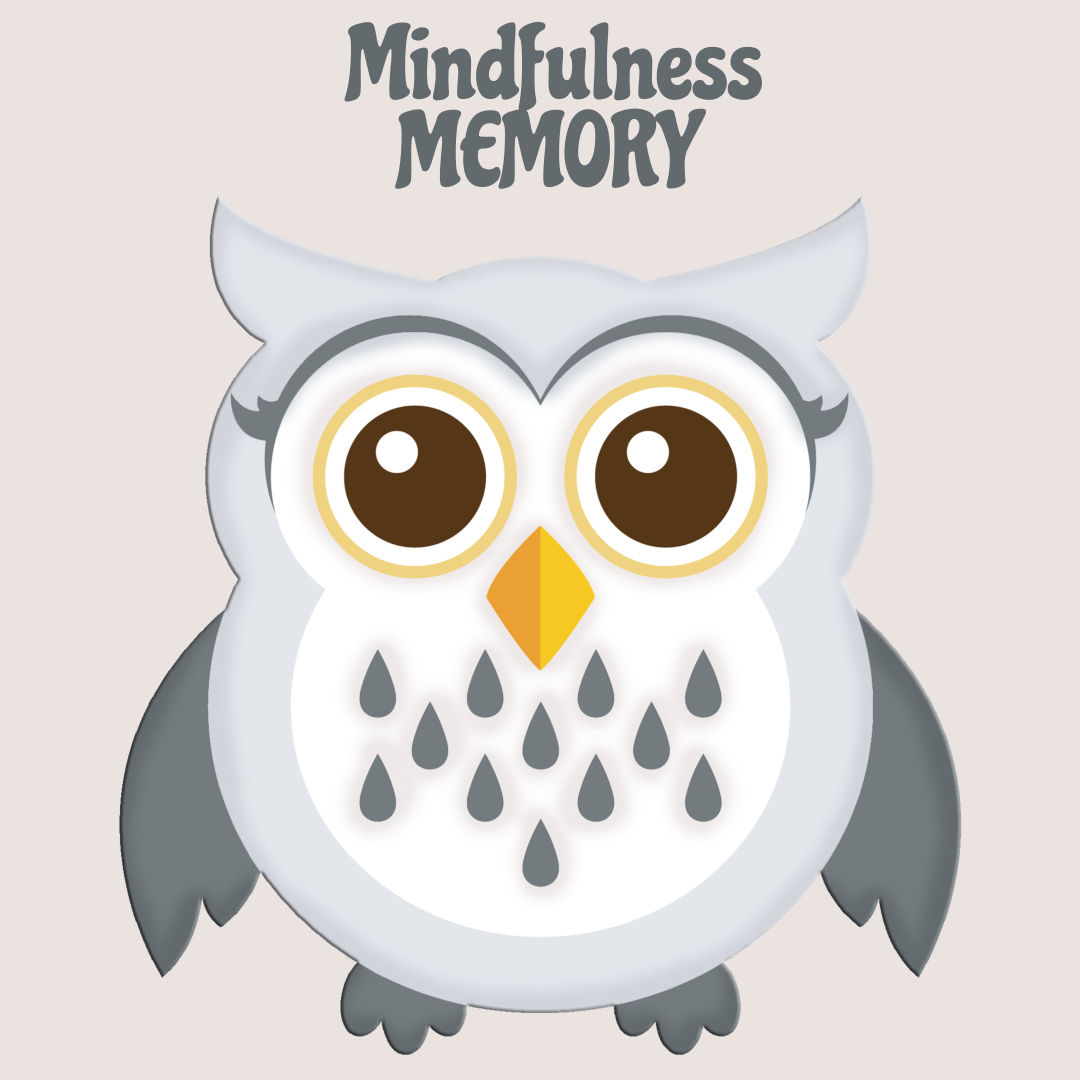
I put remembering first for a reason.
In healthcare, the problem is often not a lack of knowledge.
It is forgetting.
We forget to pause.
We forget to breathe.
We forget to notice the body.
We forget to soften the shoulders.
We forget self-care.
We forget the person in front of us while thinking about the next task.
Being mindful itself is not the challenge; the real difficulty lies in remembering to be mindful. This is why the act of remembering is a fundamental element of mindfulness.
Mindfulness often begins not with doing something new, but with remembering doing something in a new way.
In MINDFULGym, remembering is represented by the grey owl.
There is also a song for this owl.
🎶 You can listen to the Remembering Owl song here: Watch on YouTube →
Attention: The Blue Owl
Once we remember, what do we do?
We pay attention.
Attention is like the flashlight of the mind. Wherever it shines, that part of the experience becomes clearer.
When attention is scattered, life feels scattered.
When attention is divided, mistakes become easier to make.
When attention is harsh, the experience becomes heavier.
When attention is steady and kind, we see more clearly.
In healthcare, attention matters everywhere:
when prescribing or serving medications, when interpreting results, when listening to a patient, when noticing one’s own stress, and when deciding what matters most right now.
In MINDFULGym, attention is represented by the blue owl.
There is also a song for this owl.
🎶 You can listen to the Attention Owl song here:
Kindfulness: The Pink Owl
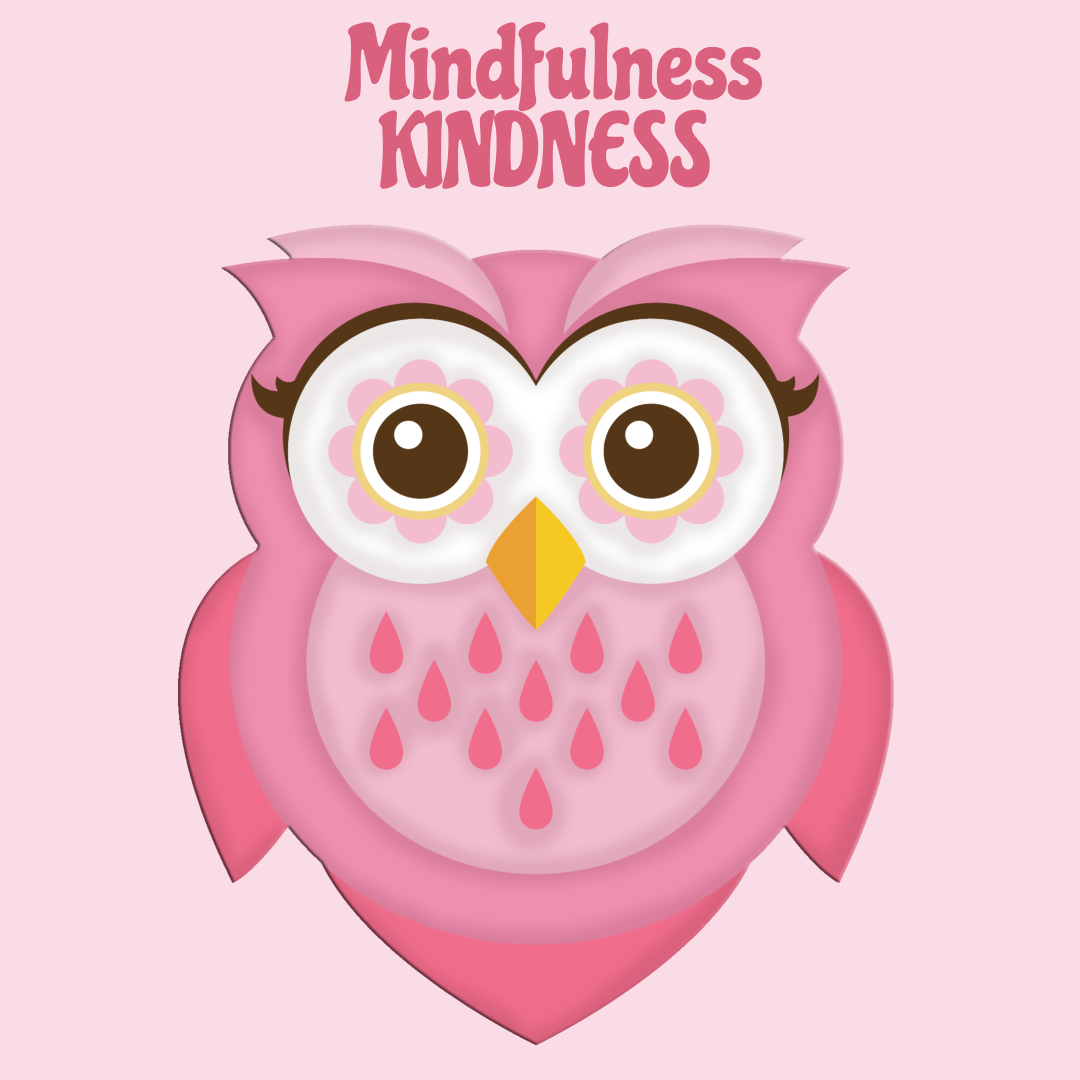
Now we come to one of the most beautiful ideas in MINDFULGym.
Mindfulness + Kindness = Kindfulness
Many people pay attention harshly.
They notice their tiredness and scold themselves.
They notice their stress and feel ashamed.
They notice a mistake and attack themselves.
They notice anxiety and say, “Why am I like this?” or “I shouldn’t feel this way.”
That is attention.
But it is not kind attention.
MINDFULGym emphasizes kindfulness — paying attention with warmth, gentleness, and care.
Kindful attention sounds more like this:
“I notice I’m tired.”
“This is hard right now.”
“Let me pause for a moment.”
“Let me be gentler with myself.”
“I’m still human.”
This matters because harsh attention often makes suffering heavier, while kind attention can begin to soften it.
That is one reason mindfulness supports self-care.
And this is why MINDFULGym keeps reminding us:
Self-Care Is We Care.
In MINDFULGym, kindness is represented by the pink owl.
There is also a song for this owl.
🎶 You can listen to the Kindness Owl song here:
Beginner’s Mind: The Green Owl
Healthcare work can become repetitive, rushed, and automatic.
Same clinic.
Same trolley.
Same forms.
Same diagnosis.
Same routines.
When work becomes too familiar, the mind can become dull, robotic, and less curious.
That is where beginner’s mind helps.
A beginner’s mind means meeting the moment with freshness, curiosity, and openness — almost as if seeing things through new eyes.
It helps us notice more.
Listen better.
Stay curious.
Avoid becoming too robotic.
Rediscover meaning in routine moments.
A beginner’s mind can help us see a patient not only as “the diabetic in bed 5,” but as a living human being with fear, hope, and dignity.
In MINDFULGym, a beginner’s mind is represented by the green owl.
There is also a song for this owl.
🎶 You can listen to the Beginner’s Mind Owl song here:
Wisdom: The Yellow Owl
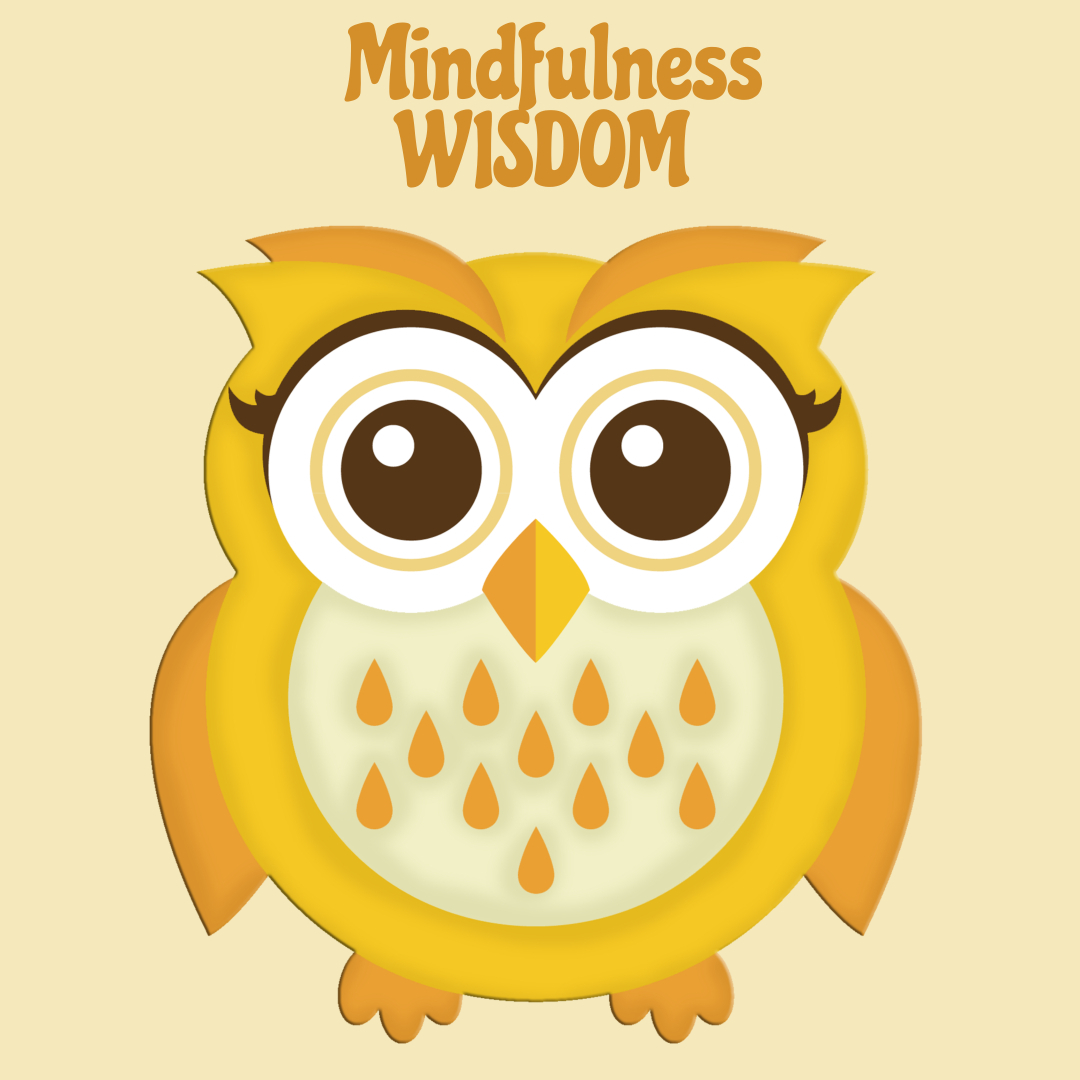
Mindfulness involves more than simple observation; it is about noticing in ways that promote wise responses.
In a healthcare context, clinical wisdom is defined as the capacity to take the right action at the right time, in the right place, and in the right manner.
In MINDFULGym, I frequently link wisdom to clarity, seeing it as going beyond mere knowledge. It is about perceiving things distinctly.
Mindfulness observes, but wisdom provides clarity.
This clarity helps answer crucial questions in the moment:
What is truly happening now?
What is the most important thing right now?
What approach will be helpful here?
Should I pause?
Should I speak?
Should I rest?
Should I ask for help?
Should I dismiss this unhelpful thought?
Without wisdom, awareness can remain passive. With wisdom, awareness transforms into a skillful action.
In MINDFULGym, wisdom is represented by the yellow owl.
There is also a song for this owl.
🎶 You can listen to the Wisdom Owl song here:
Be Present, Be Calm & Be Grateful
There is a simple MINDFULGym slogan that captures a lot of the spirit of the program:
Be Present, Be Calm & Be Grateful.
Present — so we do not get distracted by the past and future.
Calm — so we do not get carried away by every wave of stress.
Grateful — so we do not overlook the good that is still here.
There is also a MINDFULGym theme song built around this slogan.
🎶 You can listen to the song here:
Sometimes a simple slogan helps us remember what a long paragraph cannot.
The Five Owls of MINDFULGym
Now let’s put the memory system together.
In MINDFULGym, each keyword in the definition is represented by an owl of a specific color:
Grey Owl – Remembering
Blue Owl – Attention
Pink Owl – Kindness
Green Owl – Beginner’s Mind
Yellow Owl – Wisdom and Clarity
Why owls?
Owls are used because they are memorable and distinctive. They evoke a smile and aid recall.
So MINDFULGym teaches mindfulness not only through explanation, but also through:
color
image
rhythm
memory
music
Sometimes the mind remembers better when the heart is singing.
Why the MINDFULGym Way Works for Busy Healthcare Professionals
The MINDFULGym way works especially well for busy healthcare professionals because it is:
brief
practical
playful
easy to remember
culturally local
suitable for routines
not dependent on long retreats
The Malaysian studies and experience with healthcare professionals support this direction. Brief and practical formats appear especially suitable for busy healthcare workers, although sustaining practice needs support and systemic change.
Healthcare professionals do not need complicated philosophies.
They need tools they can actually use, right here, right now.
Mindfulness Is More Than a Technique
At first, mindfulness may feel like a practice.
A pause.
A breath.
A question.
A reminder.
A song.
A mindful moment.
But over time, mindfulness becomes more than a technique.
It becomes a way of relating:
to stress,
to patients,
to colleagues,
to mistakes,
to ourselves.
It changes not only what we do, but how we do it.
It becomes a way of life.
A Glimpse of What Comes Next
Now that we know what mindfulness means, we can begin to train it.
Like any real gym, MINDFULGym has many tools. In the coming chapters, we will explore how mindfulness can be trained through the body, breathing, pausing, walking, thoughts, and kindness.
But before we go into the tools, there is something important we need to understand first.
What exactly are we trying to work with?
For many healthcare professionals, one big answer is this:
STRESS.
In MINDFULGym, stress is not always seen as the enemy. Stress is a natural response to challenges and changes in life. A certain amount of stress can even help us stay alert and function well. But when stress becomes excessive, chronic, or poorly managed, it can begin to affect the mind, body, relationships, and work in painful ways. It can also spill into deeper suffering, including burnout, compassion fatigue, anxiety, and depression.
So, before we learn the tools, let us first understand the challenge more clearly.
What is stress?
How does it show up?
What presses our buttons?
And how do we usually react when stress becomes too much?
That is where we turn next.
PART 2
– UNDERSTANDING STRESS, BURNOUT & THE HEALTHCARE MIND
Chapter 4
Understanding Stress, Burnout & Compassion Fatigue
Before We Begin: What Do We Mean by “Stress”?
Before we go further, let me clarify something important.
In Chapter 2, when we talked about depression, anxiety, and stress among healthcare professionals in Malaysia, many of those findings came from research tools such as the DASS-21, which stands for the Depression, Anxiety, and Stress Scale. It is a useful screening tool for distress symptoms, but it is not a clinical diagnosis on its own. It helps us estimate symptom burden; it does not automatically mean someone has major depression or an anxiety disorder.
So when I use the word stress in MINDFULGym, I mean it in a broader, more practical way.
Stress is a natural response to challenges and changes in life. It is not always harmful. In fact, some stress can help us stay alert, focused, and productive. The problem begins when stress becomes too much, too frequent, or too prolonged, and starts affecting our health, mood, relationships, and daily functioning.
So let’s put it simply.
Stress is broad.
Stress symptoms are signs of strain.
Anxiety symptoms and depressive symptoms may grow within stress.
And when the burden becomes severe, persistent, and impairing, that may point to clinical anxiety disorders or major depression, which deserve proper assessment and care.
That distinction matters.
Stress Is Not Always the Enemy
Now, let me ask you a question.
Is stress always bad?
Not necessarily.
MINDFULGym does not see stress as the enemy. Stress is part of life. We need some stress to stay awake, respond to challenges, and get things done. Without any stress at all, we may become too dull, too passive, or too unmotivated.
That is why I sometimes say:
Stress is inevitable, but suffering is optional.
What does that mean?
It means stress may come to all of us. But how much we get swept away by it, how long we stay stuck in it, and how skillfully we respond to it — that can be trained.
And that is one reason MINDFULGym matters.
Stress, Burnout & Compassion Fatigue: Not the Same Thing
Now, let us separate three related, but different, experiences.
Stress is the pressure, strain, or inner activation we feel when life or work becomes demanding.
Burnout is what may happen when stress keeps hitting us for too long without enough recovery. It often feels like exhaustion, depletion, cynicism, reduced motivation, or emotional numbness.
Compassion fatigue is the heart's tiredness. It may happen when we keep witnessing suffering, carrying pain, and caring for others without enough emotional replenishment.
A simple way to remember it is this:
Stress is often the early wave.
Burnout is what may happen when the waves keep hitting.
Compassion fatigue is what may happen when the heart becomes tired from carrying too much suffering for too long.
Healthcare professionals may experience all three, but not always in the same way.
The 4S of Stress
In MINDFULGym, I like to help people understand stress through something simple and practical:
The 4S of Stress
Can you say them with me?
Stress Level
Stress Symptoms
Stress Triggers
Stress Reactions
These 4S help us catch stress earlier, instead of noticing it only after it has already flooded the mind, body, and behavior.
Let’s go through them one by one.
S1: Stress Level — The Stressmometer
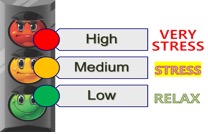
The first S is Stress Level.
In MINDFULGym, I like to use something called the Stressmometer — like a thermometer for stress.
Just imagine three simple zones:
Green – relaxed
Yellow – stressed
Red – very stressed
Now pause for a moment.
Ask yourself:
How does my mind feel?
How does my body feel?
For healthcare professionals, this can be very useful.
Before a ward round, you may be green.
After two difficult family meetings, maybe yellow.
After a long shift full of interruptions, complaints, urgent calls, poor sleep, and emotional strain, maybe red.
The point is not to judge yourself.
The point is to notice early.
Because when we notice early, we have more chance to respond wisely.
S2: Stress Symptoms — Know Your Signature Signs
The second S is Stress Symptoms.
Stress usually shows up in four main areas:
Thoughts — worrying, overthinking, forgetfulness, indecision, brain fog
Feelings — anxiety, sadness, irritability, fear, emptiness, hopelessness
Body — palpitations, shortness of breath, muscle tension, gastric pain, headache
Behavior — changes in appetite or sleep, withdrawal, excessive talking, stress eating, procrastination, or other reactive habits
In MINDFULGym, I like to call these your signature stress signs.
Why signature?
Because everyone has their own pattern.
Some people feel stress first in the body.
Some in the chest.
Some in the stomach.
Some in the mind.
Some become anxious.
Some become sad.
Some become angry.
Some go quiet.
Now, let me repeat something important.
These are stress symptoms.
They are not automatically the same as clinical anxiety disorder or major depressive disorder.
For example, a stressed healthcare worker may feel worried, tense, and sleep poorly for some time. That may include anxiety symptoms. Another person under prolonged stress may feel emotionally drained, low, hopeless, and fatigued. That may include depressive symptoms. But symptoms are not the same thing as a full clinical diagnosis. That is why proper assessment matters when suffering becomes more serious or persistent.
Semua Sakit Syndrome
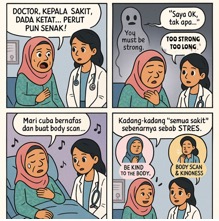
Now let me tell you a story.
At the ever-busy Klinik Kini & Sini, an elderly Mak Cik walked in looking very uncomfortable and very dramatic.
She sat down, groaned, and announced:
“Doctor, saya ada semua sakit! My whole body pain! Head pain, back pain, stomach pain, kaki pun pain!”
The young doctor, fresh out of housemanship and still clinging to his medical school notes for dear life, took a deep breath and asked:
“Mak Cik, can you show me exactly where it hurts most?”
So Mak Cik pointed to her forehead.
“Sakit!”
She pointed to her chest.
“Sakit!”
She touched her knee.
“Still sakit!”
Even her little toe — yes, you guessed it:
“Sakit!”
At this point, the young doctor’s jaw nearly dropped.
“Eh… everywhere she points also sakit? What kind of semua sakit finger is this ah?”
Then came the punchline.
The problem was not that Mak Cik’s whole body was broken.
The problem was that her finger was fractured.
The pain was everywhere she pressed because the finger itself was the problem. The moral of the story (medical school version): do not forget to do a thorough physical examination.
The MINDFULGym version adds that sometimes the finger is fine, but life is not, with stress manifesting physically.
This is what I call Semua Sakit Syndrome.
That does not mean the suffering is imaginary.
It means stress is not only a mental or emotional experience. It can also involve physiological changes and physical symptoms. In MINDFULGym, stress may show up not only in thoughts and feelings, but also in the body — through palpitations, shortness of breath, muscle tension, gastric discomfort, headaches, body pain, poor sleep, and fatigue.
For healthcare professionals, this is very relevant.
When we are under sustained stress, our shoulders may tighten without us noticing. Sleep may become lighter or more broken. The stomach may become more sensitive. Headaches may come more often. The chest may feel tight. Fatigue may become heavier. We may say, “I’m just tired,” or “Maybe I didn’t sleep enough,” or “Maybe I’m getting old,” without realizing how much stress the body is carrying.
Sometimes the body speaks before the healthcare professional has words for the stress.
So when a doctor, nurse, or healthcare worker keeps having bodily symptoms, it is worth asking not only:
“What disease is this?”
but also:
“What stress is this body carrying?”
S3: Stress Triggers — What Presses Your Buttons?
The third S is Stress Triggers.
Stress triggers are the situations that easily stress us out. The MINDFULGym 4S note gives some common examples: work pressure, deadlines, health issues, financial concerns, relationship conflicts, and parenting or caregiving responsibilities.
Now let’s make this more healthcare-specific.
For healthcare professionals in Malaysia, some common reported or well-recognized stressors include: heavy workload, long hours, shift work, poor sleep, steep learning curves for junior staff, fear of mistakes, rotation stress, poor supervisor support, team conflict, lack of psychosocial support, technostress, administrative overload, work-family strain, and caregiving responsibilities at home.
For some house officers, the trigger may be:
the next ward round
fear of being questioned by seniors
post-call exhaustion
the pressure not to make mistakes
For some nurses, it may be:
too many patients
trauma exposure
difficult shifts
too much multitasking
not enough support
For some senior staff, it may be:
bureaucracy
leadership burden
digital overload
institutional isolation
role ambiguity
Now notice what I am not doing yet.
I am not yet asking:
Why does this trigger affect you more than another person?
That deeper question belongs to the next chapter, the Mindful Mirror chapter.
For now, the important question is simpler:
What presses your buttons?
If we do not know our common triggers, stress can keep ambushing us.
S4: Stress Reactions — How Do You React Under Stress?
The fourth S is Stress Reactions.
Under stress, many of us react automatically in one of four familiar ways:
Fight — arguing, blaming, criticizing
Flight — avoiding, escaping, procrastinating
Freeze — numbing, feeling stuck, shutting down
Fawn — people-pleasing, overcompensating, losing boundaries
If I were doing this in a workshop, I would ask:
When stress comes, which one are you?
Do you fight?
Do you run?
Do you freeze?
Do you fawn?
There is no need to shame yourself here.
The point is not to say, “Aiyo, my reaction is bad.”
The point is to say:
“Ah… this is my automatic pattern.”
When we know our pattern, we are less likely to be driven blindly by it.
When Stress Becomes Too Much
So, when does stress become too much?
Usually, when it becomes chronic, overwhelming, and starts spilling into deeper suffering.
This is where we need to be careful and clinically responsible.
Stress may begin as a natural human response. But if it becomes too much, it may lead to more serious conditions such as anxiety disorders and major depression.
That is why I sometimes refer to the three musketeers of emotional suffering as:
Symptoms of Stress, Anxiety, and Depression.
But again, let’s be precise.
While stress is not the same as anxiety or depressive disorders, failing to recognize and manage it appropriately can lead to a progression toward more severe suffering.
When to Seek Professional Help
This part is very important.
Healthcare professionals are often very good at helping others, but not always very good at asking for help themselves.
And here is something worth saying honestly.
For many healthcare professionals, it may feel easier to seek help for physical symptoms than for mental health struggles. Physical complaints often feel more acceptable, more medical, and less stigmatized. Access to consultations, tests, and medications may also feel more straightforward.
But seeking help for anxiety, depression, or emotional burnout can feel much harder.
Why?
Because stigma is still real.
Because some fear being judged.
Because some worry about confidentiality.
Because some worry about professional liability.
Because some fear that asking for help may affect how colleagues, supervisors, or institutions see them, or even threaten job security.
The Malaysian healthcare review materials also highlight that the lack of mental health support and limited psychosocial support remain important workforce issues.
So sometimes it is easier to say:
“I have gastric pain.”
than
“I am emotionally exhausted.”
Easier to say:
“I can’t sleep well.”
than
“I think I’m falling apart inside.”
Please consider seeking professional help when:
symptoms are persistent
sleep is badly affected
work functioning is significantly impaired
anxiety or low mood is becoming more severe
you feel overwhelmed most of the time
there is marked hopelessness
there are thoughts of self-harm or suicide
If what you are experiencing is no longer just “I’m stressed,” but is beginning to look like significant clinical anxiety or clinical depression, please do not wait too long and do not only tell yourself to “be stronger.”
Seeking help is not a weakness.
It is wisdom.
Why This Matters Before We Go Deeper
Before we understand ourselves more deeply, it helps to know four things:
how stressed we are
how stress shows up in us
what tends to trigger it
how we usually react
That is why this chapter comes before the next Mindful Mirror chapter.
First, we learn to notice stress.
Then, we learn to understand ourselves more deeply.
Two people can face the same stressful situation, yet respond very differently.
One becomes angry.
Another becomes anxious.
One withdraws.
Another overworks.
One cannot sleep.
Another gets gastric pain.
Why?
That is where the Mindful Mirror becomes helpful.
Stress may be shared.
But our response to stress is often deeply personal.
And that is where we turn next.
But first, a crucial question to truly test your mastery of this chapter.
Be serious. Ready…
What is the main difference between stress, anxiety, and depression? You can find the answers on the next page, but try to figure it out yourself.
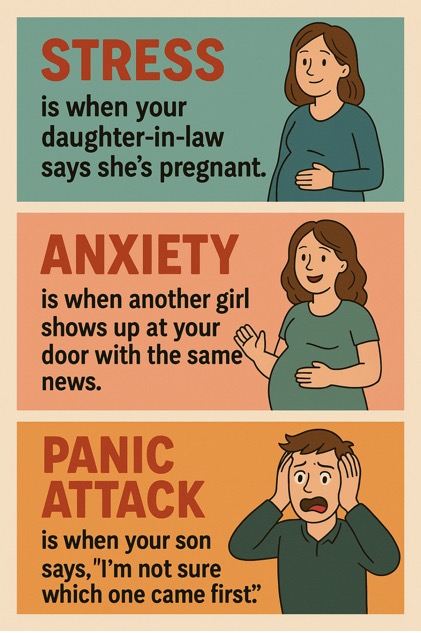
Laughter is truly the best medicine for stress; it is a great way to unwind after a busy day!
Chapter 5
Mindful Mirror on the Wall: Understanding Ourselves with Kindness

Mirror, Mirror on the Wall…
You remember the famous Disney line:
“Mirror, mirror on the wall, who is the prettiest of them all?”
At MINDFULGym, we use the mirror in a different way.
Not to ask:
Am I pretty enough?
Am I good enough?
Am I better than others?
But to ask:
“Mindful mirror on the wall, help me understand myself more and more.”
That is a very different kind of mirror.
It is not a mirror for vanity.
It is not a mirror for comparison.
It is not a mirror for self-criticism.
It is a mirror for understanding.
And for healthcare professionals, that matters a lot. Because when stress comes, many of us are very quick to ask:
“What is wrong with me?”
But MINDFULGym gently encourages another question:
“What is happening in me?”
That small shift can make a big difference.
Why Do We Need a Mindful Mirror?
In Chapter 4, we learned about the 4S of stress:
stress level, stress symptoms, stress triggers, and stress reactions.
That helps us notice stress more clearly. But now another important question comes.
Why do different people respond so differently to the same stress?
Same angry patient.
Same long shift.
Same short-staffed ward.
Same criticism from a senior.
Same delay in results.
Yet one person becomes angry.
Another becomes anxious.
Another goes numb.
Another overworks.
Another cries in the car park.
Why?
Because human beings do not respond only to situations.
We respond through our thoughts, feelings, body sensations, behavior, environment, and past experience.
That is why we need the Mindful Mirror.
A CT Scan or MRI of the Mind
Let me use a medical analogy.
In healthcare, when we want to understand the body more deeply, we may use:
a blood test, a CT scan, an MRI scan, an ECG, or a stethoscope.
We do not just guess.
We assess carefully.
The Mindful Mirror is like a CT scan or MRI scan of the mind. It helps us see the whole inner picture, not just one symptom.
It is also like auscultating the emotional heart.
Just as we use a stethoscope to listen carefully to the physical heart, the Mindful Mirror helps us listen carefully to the inner life.
What is happening in the mind?
What is happening in the emotions?
What is happening in the body?
What is happening in behavior?
In other words, the Mindful Mirror helps us make a more complete assessment of the whole human experience.
The 7 Mindful Mirror
In MINDFULGym, the Mindful Mirror has 7 parts:
You can imagine this like a full-body mirror of the mind.
Instead of seeing only one part — for example, symptoms, anger, or tiredness — you see the whole picture.
And when you feel stressed, overwhelmed, or triggered, you can gently ask:
“Mindful mirror on the wall, help me understand myself more and more.”
Three Mirrors in Real Life
Before we go through the 7 parts, let’s meet three people. Not fairy-tale characters. Real healthcare characters.
Case 1: The House Officer
A young house officer has been on a demanding rotation. She is tired, behind on documentation, and worried about making mistakes. During ward rounds, a senior doctor corrects her harshly in front of the team.
Case 2: The Nurse
A nurse is working in a short-staffed ward after a long shift. An angry family member complains loudly that the patient has been waiting too long and says, “Nobody here cares!”
Case 3: The Consultant Surgeon
A consultant surgeon appears calm and high-functioning. But the operating list is delayed, the team is tense, the relatives are anxious, and there is pressure from all directions. Outwardly, he looks composed. Inwardly, the pressure is building.
Same person? No.
Same role? No.
Same stress? Not exactly.
But all three are under strain.
Now let’s look into the Mindful Mirror.
1. Situation – What Is Happening?
The first part of the Mindful Mirror is the situation.
This means: what is happening, factually?
Just the event.
Not the story yet.
Not the judgment yet.
Not the conclusion yet.
For our three cases:
The house officer was corrected sharply by a senior during a ward round.
The nurse faced an angry family member in a short-staffed ward.
The consultant surgeon was dealing with delays, pressure, and tension in the operating environment.
That is the situation.
In healthcare, this step is very important because we are trained to gather history and separate facts from assumptions.
The same skill is helpful inwardly.
A useful question is:
What happened?
Not:
What horrible meaning have I already attached to what happened?
Start with the situation.
2. Thoughts – What Am I Thinking?
Now we come to thoughts.
This is where the mind starts telling stories.
The house officer may think:
“I’m not good enough.”
“I’m going to make a mistake.”
“My senior thinks I’m useless.”
The nurse may think:
“This family is impossible.”
“I’m trying my best, and nobody sees it.”
“I cannot take this anymore.”
The consultant surgeon may think:
“Everything depends on me.”
“If anything goes wrong, I will be blamed.”
“I must not show weakness.”
These are not the facts, but inner stories.
Some thoughts are realistic and helpful. Some are exaggerated, distorted, or unkind. In the next chapter, we will look more closely at these “Ghost We Think” patterns. But for now, the key point is simple:
Thoughts influence experience.
The event matters. But the story we tell ourselves about the event also matters a lot.
3. Feelings – What Am I Feeling?
The third part is feelings.
Now let me ask you as I would in a workshop:
What am I feeling?
Not what am I thinking.
Not what should I be feeling.
Not what others expect me to feel.
What am I actually feeling?
The house officer may feel:
anxiety, shame, helplessness, fear.
The nurse may feel:
frustration, anger, sadness, exhaustion.
The consultant surgeon may feel:
pressure, irritation, loneliness, dread, maybe even guilt.
Many healthcare professionals are very good at recognizing signs and symptoms in patients, but not always very good at naming their own emotions.
That is why this step matters.
There is a useful phrase:
Name it to tame it.
When we name a feeling, we often become less fused with it.
Instead of:
“I am a mess.”
It becomes:
“I notice anxiety.”
“I notice anger.”
“I notice shame.”
That is already a shift.
4. Body Sensations – What Is My Body Saying?
The fourth part is body sensations.
Stress and emotions often show up in the body before we fully understand them in words.
The house officer may notice:
tight chest, sweaty palms, racing heart.
The nurse may notice:
tense shoulders, headache, jaw tightness, fatigue.
The consultant surgeon may notice:
shallow breathing, neck tension, gastric discomfort, body heaviness.
This is why Chapter 4 matters. Stress is not only mental and emotional. It can also involve physiological changes and physical symptoms.
Sometimes the body speaks before the person has the words. That is why the Mindful Mirror includes the body.
If we only look at thoughts and forget the body, we miss a big part of the picture.
5. Behavior – What Am I Doing or Saying?
The fifth part is behavior.
What am I doing under stress?
The house officer may become overly apologetic, withdrawn, or avoid asking questions.
The nurse may speak more sharply, rush tasks, or shut down emotionally.
The consultant surgeon may become controlling, impatient, cold, or silent.
Behavior matters because it affects:
patients, colleagues, teamwork, and ourselves.
Sometimes, under stress, we do things that feel protective in the short term but become unhelpful in the long term.
That is why I like to ask this mindful question:
“Is this response helpful or harmful?”
Not:
“Am I a bad person?”
But:
“Is this response helping or harming?”
That creates space for wiser choices.
6. Environment – What Around Me Is Affecting Me?
Now we come to a very important part: the environment.
Sometimes people think everything is inside the individual. But healthcare professionals know that context matters.
A lot.
The house officer is not only affected by her own mind. She is also affected by: hierarchy, workload, ward culture, time pressure, and fear of being judged.
The nurse is not only affected by her own emotions. She is also affected by:
understaffing, workload, patient demands, team support, and the emotional atmosphere of the ward.
The consultant surgeon is not only affected by personality. He is also affected by: operating delays, system pressure, leadership burden, expectations, team dynamics, and institutional culture.
This part of the mirror is very compassionate because it reminds us:
You are not always the problem. Sometimes the system is part of the picture too.
That matters in healthcare.
Very much.
7. Past Experience – What from My Past Is Affecting Me Now?
The last part of the Mindful Mirror is past experience.
This is where things get deeper.
The house officer may be reacting not only to today’s correction, but also to:
past humiliation during training, fear of failure, or earlier criticism from authority figures.
The nurse may be reacting not only to this family member, but also to:
previous burnout, older wounds from being unappreciated, or painful memories from earlier shifts.
The consultant surgeon may be reacting not only to today’s delay, but also to:
a past complication, harsh training culture, perfectionism, or years of carrying responsibility without enough emotional support.
Old experiences can color the present. It is like wearing haunted glasses.
The situation may be current, but the emotional coloring may be older. This is why the past matters. Not to blame the past for everything.
But to understand that our present reactions may be shaped by more than the present moment alone.
Why the Same Stress Affects People Differently
Now let us pull the mirror together. Why do different people respond differently to the same stress?
Because they do not just face the same situation.
They also bring:
different thoughts
different feelings
different body patterns
different behaviors
different environments
different past experiences
So two people may face the same angry patient, but their inner mirror is different. Two people may hear the same criticism, but their interpretations differ.
Two people may work in the same hospital, but their histories, patterns, and support systems are not the same.
That is why the Mindful Mirror is so helpful.
It reminds us that human experience is layered.
Why the Mindful Mirror Matters in Healthcare
The Mindful Mirror offers healthcare professionals key benefits: deeper self-understanding, less self-blame, earlier detection of stress, wiser communication, avoidance of automatic reactions, and clearer, kinder responses.
Instead of saying:
“I’m just weak.”
“I’m just too emotional.”
“I’m just a bad doctor.”
“I’m just a bad nurse.”
We can pause and say, “Let me look in the mirror.”
What is the situation?
What am I thinking?
What am I feeling?
What is happening in my body?
What am I doing?
What around me is affecting me?
What from my past is coloring this moment?
That is a much kinder and wiser way of understanding ourselves.
The Mindful Mirror Song
And because this is MINDFULGym, yes — there is a song for it too.
There is a Mindful Mirror song to help participants remember the 7 parts more lightly and joyfully.
🎶 You can listen to the song here: Listen on SoundCloud →
Sometimes we remember better when learning is not only intellectual, but also musical and playful.
Looking into the Mirror with Kindness
Let me say something very important.
The Mindful Mirror is not for self-attack; it is not an ‘autoimmune disease.’
It is not for saying:
“What is wrong with me?”
“Why am I so weak?”
“Why am I like this?”
“Why can’t I be better?”
The Mindful Mirror is for understanding. It is for looking with kindness.
That is why the chapter is called:
Mindful Mirror on the Wall: Understanding Ourselves with Kindness
Not: criticizing ourselves with harshness
Not: diagnosing ourselves with shame
But: understanding ourselves with kindness
This matters because understanding often opens the door to wiser change.
A Glimpse of What Comes Next
Once we begin to understand the Mindful Mirror, another interesting question appears.
What about the stories the mind tells?
What about the thoughts that make things heavier?
What about catastrophizing, mind-reading, all-or-nothing thinking, and other common traps?
That is where we turn next.
Because once we can look into the mirror, we are ready to notice the Ghost We Think, and that is the next chapter.
Chapter 6
The Ghost We Think: Common Thinking Traps in Healthcare Work
Who Is Haunting You?
In hospitals and clinics, we worry about many things.
Viruses.
Bleeding.
Wrong doses.
Missed diagnoses.
Crashing patients.
Angry relatives.
Delayed results.
Complaints.
Lack of sleep.
Too much work.
But there is another troublemaker that often goes unnoticed.
Not a virus.
Not a bacterium.
Not even a difficult patient.
A thinking ghost. In MINDFULGym, I call this:
The Ghost We Think.
Not a real ghost, of course. But a very real mental habit. A pattern of thinking that quietly distorts reality and makes stress heavier.
So before we go further, let me ask you something.
Have you ever thought:
“I made one mistake. I’m a bad doctor.”
“This patient is unhappy. I must have failed.”
“My colleague is quiet. They must be judging me.”
“If this goes wrong, everything is over.”
If yes, congratulations. You are human.
And yes… you may have met ‘The Ghost We Think.’
What Is “The Ghost We Think”?
“The Ghost We Think” refers to thinking errors, also known in psychology as cognitive distortions. These are invisible mental habits that distort how we see things.
They are like wearing haunted glasses.
Everything starts to look more negative, scary, personal, hopeless, or extreme than reality. These "ghosts" whisper doubts, exaggerate danger, hide positives, and affect our emotions, decisions, and behavior.
Here is an important truth:
Thinking errors are not facts — they are habits.
Let me say that again.
Thinking errors are not facts — they are habits.
And habits can be noticed. That is the first step.
Why Ghosts Get Louder in Healthcare
Now, why is this especially important for healthcare professionals?
Healthcare is a breeding ground for thinking errors due to its inherent stress, responsibility, uncertainty, fatigue, emotional burden, time pressure, fear of mistakes, perfectionistic culture, and constant exposure to suffering.
That means the ghosts often get louder.
A tired house officer may think:
“I made a mistake, so I’m a terrible doctor.”
A nurse may think:
“The family is upset, so they must think I don’t care.”
A consultant surgeon may think:
“The outcome was poor, so I failed completely.”
When these ghosts become loud, they can contribute to:
anxiety
shame
burnout
defensive practice
reduced empathy
harsher communication
more suffering than necessary
In other words, the ghost not only affects how we feel. It affects how we think, decide, speak, and care.
Let’s Meet 3 Real-Life Cases
Before we meet the 10 common ghosts, let us meet three healthcare characters.
Case 1: The House Officer
A junior doctor has been on a demanding rotation. She is tired, behind on documentation, and trying hard not to make mistakes. During ward rounds, a senior doctor corrects her sharply in front of the team.
Case 2: The Nurse
A nurse in a short-staffed ward has just completed many tasks. She received several thank-yous throughout the day, but one angry family member loudly complained, “Nobody here cares!”
Case 3: The Consultant Surgeon
A consultant surgeon appears calm and high-functioning. But after a difficult patient outcome, he starts replaying the case again and again, questioning himself, even though the illness was severe and many factors were involved.
Keep these three people in mind.
Later, I will ask you to help me spot the ghosts in each case.
Ready?
The 10 Common Ghosts
Let us meet 10 common thinking ghosts.
Not because you need to memorize them like exam facts.
But because once you can name a ghost, it becomes easier to stop obeying it blindly.
1. Catastrophic Thinking

This ghost says:
“Worst case will happen.”
A house officer thinks:
“If I miss this diagnosis, the patient will die, and my career will be over.”
A nurse thinks:
“If the family is upset, they are definitely going to make a complaint.”
A surgeon thinks:
“If this complication happens, everything will collapse.”
This ghost is like doing a full-body CT scan because someone sneezed once. It jumps straight to the worst possible conclusion.
2. Discounting the Positive

This ghost says:
“The good doesn’t count.”
A nurse may receive ten thank-yous and one complaint — and then remember only the complaint.
A house officer may do many things well, but one correction from a senior erases all of it.
A surgeon may safely complete many complex cases, but one difficult case overshadows everything else.
This ghost is like ignoring all the normal blood results and staring only at one slightly abnormal value.
3. Unfair Comparison

This ghost says:
“Others are better than me.”
A junior doctor compares herself to a consultant with 20 years of experience.
A nurse compares her worst day with someone else’s polished surface.
A surgeon compares himself with an idealized image of how a “perfect consultant” should function.
This ghost loves unfair comparisons. It is like comparing a medical student with a specialist and then acting surprised that the student is still learning.
4. Mind-Reading

This ghost says:
“They must think badly of me.”
A patient frowns, and the nurse assumes:
“They must think I’m not caring enough.”
A senior doctor looks serious, and the house officer assumes:
“They must think I’m incompetent.”
A colleague becomes quiet, and the surgeon assumes:
“They are judging my decision.”
This ghost is like diagnosing before taking a history.
Very confident.
Very fast.
Very often wrong.
5. Perfectionism / Must and Should Thinking

This ghost says:
“I must be perfect.”
“I should never make mistakes.”
A doctor makes a small error, corrects it, learns from it — but still feels like a failure.
A nurse misses one small detail on a very difficult day and then cannot forgive herself.
A surgeon expects every operation, every communication, and every decision to go flawlessly.
This ghost forgets one important thing:
Healthcare is practiced by humans, not machines.
6. Overgeneralization

This ghost says:
“Always.”
“Never.”
One failed procedure becomes:
“I always fail.”
One awkward communication becomes:
“I’m never good with patients.”
One difficult shift becomes:
“Everything is always like this.”
This ghost is like making a diagnosis based on a single data point and calling it final.
7. Black-or-White Thinking

This ghost says:
“All good or all bad.”
A patient outcome is not ideal, so the surgeon concludes:
“Total failure.”
A house officer gets one harsh correction and decides:
“I’m useless.”
A nurse has a difficult day and thinks:
“I’m not cut out for this job.”
This ghost does not like grey zones. But healthcare is full of grey zones.
In fact, good medicine often lives in the grey.
8. Personalization

This ghost says:
“It’s all my fault.”
A patient deteriorates, and the doctor blames herself entirely.
A family member is upset, and the nurse assumes she alone caused it.
A case turns out badly, and the surgeon carries the whole burden inside, ignoring illness severity, system factors, and team factors.
This ghost acts as though you are the only variable in a very complex equation.
But healthcare is never that simple.
9. Emotional Reasoning

This ghost says:
“I feel it, so it must be true.”
“I feel anxious, so I must be incompetent.”
“I feel guilty, so I must have done wrong.”
“I feel afraid, so danger must be everywhere.”
This ghost treats feelings like laboratory results.
But feelings are real signals — not always solid evidence.
10. Mental Filter

This ghost says:
“Only the negative counts.”
A healthcare worker notices only the workload, only the complaints, only the tension, only the mistakes.
The recovery, gratitude, teamwork, humor, and human connection fade into the background.
This ghost is like looking at only one shadowy corner of an X-ray and forgetting the rest of the chest film.
Tunnel vision. Negative tunnel vision.
Ghost Spotting Workshop: Can You Identify the Ghosts?
Okay, now let us make this interactive.
Three cases.
Can you spot the ghosts?
Case 1: The House Officer
After being corrected in front of the team, she thinks:
“I always mess things up.”
“My senior must think I’m useless.”
“If I make another mistake, my career is over.”
What ghosts do you see?
Possible answers:
Overgeneralization — “I always mess things up.”
Mind-reading — “My senior must think I’m useless.”
Catastrophic thinking — “My career is over.”
And maybe also:
Emotional reasoning — “I feel ashamed, so I must really be useless.”
Unfair comparison — if she compares herself harshly to senior doctors
Case 2: The Nurse
She had a long shift, received several thank-yous, but one angry relative complained. After that, she thinks:
“Nobody appreciates me.”
“They must think I’m not caring enough.”
“What’s the point? The whole day was bad.”
What ghosts do you see?
Possible answers:
Discounting the positive — ignoring the many thank-yous
Mind-reading — “They must think…”
Mental filter — only seeing the complaint
Black-or-white thinking — “The whole day was bad.”
Case 3: The Consultant Surgeon
After a difficult patient outcome, he thinks:
“It’s all my fault.”
“If the outcome is poor, then the whole case was a failure.”
“I should have been better.”
What ghosts do you see?
Possible answers:
Personalization
Black-or-white thinking
Perfectionism / should thinking
possibly emotional reasoning, if guilt is treated as proof of failure
So, how did you do?
The point of this exercise is not to pass an exam.
The point is to help you notice how often the ghosts appear in real life.
Why Ghosts Matter in Healthcare
Why does all this matter?
Thinking errors do not remain in the mind quietly; they affect emotions, confidence, communication, teamwork, clinical judgment, self-care, empathy, and risk of burnout.
If a healthcare professional constantly tells themselves:
“I’m failing,”
“I’m not enough,”
“Everything is terrible,”
“Everyone is judging me,”
…then suffering grows.
Sometimes the stressor is real.
But the ghost makes it heavier.
Ghosts Are Common, Not Shameful
Now let me say something important.
Having thinking ghosts does not mean you are weak.
It does not mean you are irrational.
It does not mean you are broken.
It means you are human.
Especially a human working under stress, fatigue, uncertainty, and responsibility.
Everyone has ghosts.
Junior staff have them.
Senior staff have them.
Doctors have them.
Nurses have them.
Therapists have them.
Even mindfulness trainers have them.
The goal is not to become a person with zero ghosts.
The goal is to notice the ghosts earlier and believe them less blindly.
The Ghost We Think Song
And because this is MINDFULGym, yes — there is a song for this chapter too.
There is a song called “The Ghost We Think.”
One reason this song is especially useful is that it lists all 10 thinking errors, making them easier to remember in a lighter, more playful way.
So instead of only memorizing from a list, participants can remember through rhythm, melody, and repetition.
🎶You can listen to the song here: Watch on YouTube →
Sometimes the mind remembers better when learning has a bit of music and a bit of fun.
Before We Move On…
In this chapter, our job is mainly to spot the ghosts.
Not yet to wrestle with them too much.
Not yet to fight them aggressively.
Not yet to solve everything.
Just to notice them.
That is already very important.
Because once we can name a ghost, we are less likely to confuse it with truth, and that weakens its negative influence.
A Bridge to Part 3 — The 12 MINDFULGym Tools
Part 2 of this book has covered stress, burnout, and compassion fatigue; the 4S of stress; the Mindful Mirror; and The Ghost We Think. Having explored the healthcare mind, we now shift from understanding to training.
In Part 3, we will begin working with the 12 MINDFULGym tools — practical ways to train the mind through the body, breathing, pausing, walking, attention, kindness, and wiser living.
Insight is important.
But in MINDFULGym, insight is only the beginning.
NOW, it is time to train. Music…

🎶 MINDFULGym song, APT style: Watch on YouTube →
Jom MINDFULGym.
PART 3
– THE CORE MINDFULGym TOOLS
Chapter 7
Mindful Body Stretching: Relaxing the Body
What It Is
Mindful Body Stretching is a simple MINDFULGym tool that uses 10 gentle postures to progressively stretch and relax different parts of the body.
But let me say this clearly from the start.
This is not just stretching.
Mindful Body Stretching means stretching the body while staying present with an attitude of kindness, a beginner’s mind, and wisdom.
This particular method of stretching—the mindful way—involves specific qualities. These characteristics will be elaborated upon further in the Mindful Tips section.
So yes, the body is stretching.
But the mind is also training.
When the body softens, it often becomes easier to:
focus on the present moment
feel calmer
notice stress earlier
reconnect with gratitude
and reconnect with care
For healthcare professionals, this matters a lot. Many of us carry stress not only in the mind, but also in the neck, shoulders, jaw, back, chest, hands, and legs. Mindful Body Stretching helps us listen to the body before the body starts shouting.
How It Works
When we are under stress, one of the most common things that happens is muscular tension. The neck tightens. The shoulders harden. The jaw clenches. The chest feels less open. Even the breathing muscles may tighten.
And when the body tightens, the mind often tightens too.
That is why Mindful Body Stretching is helpful. It works by gently reversing the build-up of muscular tension and then helping us notice the contrast between tension and relaxation.
So this tool is not only about stretching.
It is about:
sensing the body
noticing stress patterns
softening tension
and soothing the body with mindful awareness
For healthcare professionals, it can be a quick reset between demands.
A one-minute mindful stretch may not solve all your problems. But it can soften the body, refresh the mind, and help you respond with a little more stability, rather than feeling like a hamster on a wheel of pure autopilot.
What to Do
📽️ You can watch the demonstration videos for these 10 postures here: Watch on YouTube →
1. Squeeze Oranges
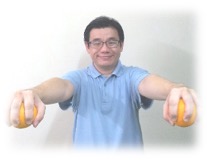
Clench your fists.
Imagine squeezing oranges for juice.
Feel the tension around the fists.
Count 1 to 10 slowly.
Open your fists and let go of the tension.
Feel the waves of relaxation.
Repeat this 2 times.
2. Tortoise

Imagine that you are a tortoise.
Push your head into the shell and shrug your shoulders.
Feel the muscular tension around the neck and shoulders.
Count 1 to 10 slowly.
Let go and return to the neutral position.
Feel the waves of relaxation.
Repeat this 2 times.
3. Superman

Push your hands behind to squeeze the shoulder blades together and extend your stomach forward.
Feel the muscular tension around the area between your shoulder blades and stomach.
Count 1 to 10 slowly.
Let go and return to the neutral position.
Feel the waves of relaxation.
Repeat this 2 times.
4. Push the Ceiling
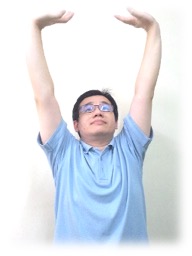
Imagine that the ceiling is falling down.
Straighten your hands with palms facing upward and fingers pointing toward each other.
Imagine pushing the ceiling.
Arch your body slightly backward and feel the muscular tension around the hands, neck, and chest.
Count 1 to 10 slowly.
Let go and return to the neutral position.
Feel the waves of relaxation.
Repeat this 2 times.
5. Aaahhhh!
Open your mouth as wide as possible and imagine making the sound, “Aaahhhh!”
Feel the muscular tension around the mouth.
Count 1 to 10 slowly.
Let go and return to the neutral position.
Feel the waves of relaxation.
Repeat this 2 times.
6. Eeeehhh!
Clench your teeth and imagine making the sound, “Eeeehhh!”
Feel the muscular tension around the jaw.
Count 1 to 10 slowly.
Let go and return to the neutral position.
Feel the waves of relaxation.
Repeat this 2 times.
7. Oohhhhhh!

Stretch your nose vertically and imagine making the sound, “Oohhhhhh!”
Feel the muscular tension around the nose.
Count 1 to 10 slowly.
Let go and return to the neutral position.
Feel the waves of relaxation.
Repeat this 2 times.
8. Grab Tissue Papers with Toes
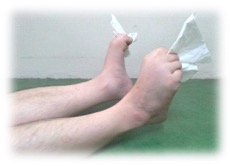
Imagine trying to grab a piece of tissue paper or cloth with the toes of both feet.
Feel the muscular tension around the toes.
Count 1 to 10 slowly.
Let go and return to the neutral position.
Feel the waves of relaxation.
Repeat this 2 times.
9. Touch Your Toes with Hands
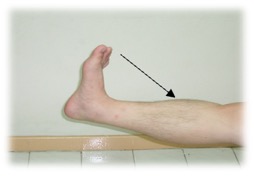
Touch your toes with your hands or try to flex your ankles toward the body.
Feel the muscular tension around the calves.
Count 1 to 10 slowly.
Let go and return to the neutral position.
Feel the waves of relaxation.
Repeat this 2 times.
10. Touch the Wall with Your Toes
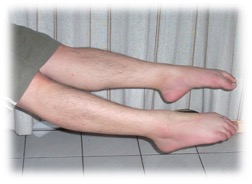
Imagine touching an imaginary wall in front of you with your toes.
Feel the muscular tension around the upper parts of the feet.
Count 1 to 10 slowly.
Let go and return to the neutral position.
Feel the waves of relaxation.
Repeat this 2 times.
Mindful Tips
To enhance your mindful stretching practice and maintain consistency with MIDFULGym, apply these 5 mindful tips.
1. Grey Owl — Remembering
Remember that this is Mindful Body Stretching, not just body stretching.
The goal is not merely to pull, bend, or hold a posture. The goal is to remember to come back to the present moment again and again.
When the mind wanders into worries, plans, regrets, or mental to-do lists, gently come back.
Come back to the body.
Come back to the posture.
Come back to NOW.
2. Blue Owl — Attention
Pay attention to bodily sensations, not only to the outer movement.
Feel the tension.
Feel the release.
Feel the waves of relaxation.
This is one of the biggest differences between ordinary stretching and mindful body stretching.
Ordinary stretching may focus only on posture.
Mindful Body Stretching pays attention to the lived experience of the body.
3. Pink Owl — Kindness
Stretch with kindness, not force.
Do not overstretch just because you think you “should” do it perfectly. Adjust the posture, intensity, and duration according to what the body needs today.
If the body says, “That’s enough,” listen.
You are not punishing the body.
You are befriending the body.
A gentle smile can help too. Sometimes when the face softens, the rest of the body follows.
4. Green Owl — Beginner’s Mind
Do not be too rigid or too boring.
Be playful, curious, and creative.
You can imagine squeezing oranges, becoming a tortoise, or being Superman. You can experiment with different timings, body parts, or ways of fitting the stretches into your daily work.
Beginner’s mind keeps the practice alive.
Without it, the exercise may become just another dull routine.
5. Yellow Owl — Wisdom
Be wise about how you use the practice.
Start small.
Adapt to your schedule.
Respect your body.
Use realistic expectations.
You do not need to do the full set three times a day to be a “good MINDFULGymer.” Sometimes, one or two mindful stretches during a shift may already be very helpful.
And remember: Mindful Body Stretching is a useful tool, but not a magic wand. It works even better when integrated with other MINDFULGym tools and a wiser overall attitude.
When to Practice
This tool is especially suitable for busy healthcare professionals because it can be done briefly and flexibly.
For the House Officer
A house officer may practice:
before the ward round, to soften tension in the neck and shoulders
after long clerking or documentation, to release stiffness from sitting
after being corrected by a senior, to calm the body before the mind spirals
during a short toilet or pantry break, as a quick physical reset
after the post-call, when the whole body feels tight, tired, and overloaded
For the Nurse
A nurse may practice:
before or after a medication round, to reset attention and body tension
after lifting, transferring, or repositioning patients, especially for the shoulders, back, and legs
during a short break in a busy ward, even if only one or two postures can be done
after a difficult interaction with a patient or family member, to soften the body before carrying the stress forward
at the end of a long shift, as a kind way of helping the body come down from work mode
For the Consultant Surgeon
A consultant surgeon may practice:
before the clinic starts, to arrive with a steadier body and mind
between cases in the theatre, to release accumulated muscular tension
after long standing during surgery, especially for the neck, shoulders, chest, and legs
after a difficult case or emotionally heavy discussion, to reduce body tension before the next task
before going home, to avoid bringing a fully tightened body into family life
Heartful Story
The Pharmacist Who Forgot Her Body
A pharmacist was known for being efficient, reliable, and careful.
She checked prescriptions thoroughly.
She answered questions patiently.
She caught dosage issues that others sometimes missed.
She kept the workflow moving even when the queue was long, and the phone would not stop ringing.
From the outside, she looked calm and capable.
But her body was telling another story.
By the end of each day, her neck felt stiff, her shoulders were hard like stone, and her lower back ached. Sometimes even her jaw was tight without her realizing it. She would go home tired and tell herself, “Never mind, just part of the job.” The next day, she would do the same thing again.
One day, during a MINDFULGym session, she learned Mindful Body Stretching.
At first, she almost laughed. “Stretching only? So simple ah?”
But she tried it anyway. She did not do the whole set. Just a few gentle postures.
She stretched her shoulders mindfully.
She softened her jaw.
She breathed while noticing the body.
She smiled a little when she realized how much tension she had been carrying without even knowing it.
After a few days of practicing brief mindful stretches during work breaks, something changed.
The workload did not disappear.
The prescriptions did not decrease.
The interruptions did not magically stop.
But her body was no longer being ignored.
She began noticing tension earlier.
She took short stretch breaks before the pain became louder.
She felt a little more present, a little more relaxed, and a little kinder toward herself.
One day she said,
“I used to think I was only taking care of medicines. I forgot that I also needed to take care of the body that was dispensing them.”
Lesson for Healthcare Professionals
Many healthcare professionals are very good at caring for others, but not always good at noticing the body’s early cries for help.
We wait until the neck is very tight.
We wait until the back is painful.
We wait until the whole body becomes one big complaint.
Mindful Body Stretching reminds us of something simple but important:
The body also deserves care.
For healthcare professionals, this is not selfish. It is wise.
When we care for the body early, the body does not need to shout so loudly later.
And when the body softens, the mind often softens too.
Inspirational Quote
“Taking care of your body is an act of compassion. Your body is not only yours; it belongs to your ancestors, your parents, and future generations. It is a gift.” — Thich Nhat Hanh
When the body softens, the mind often softens too.
Mindful Body Stretching helps us enter the present moment through the body. The next tool helps us stay there more clearly with the mind.
In the next chapter, we will explore Mindful-PDF & NOW-ing the Present Moment — a practical way to strengthen focus and reduce mindless multitasking.
Jom MINDFULGym.
10 Mindful Body Stretching Postures
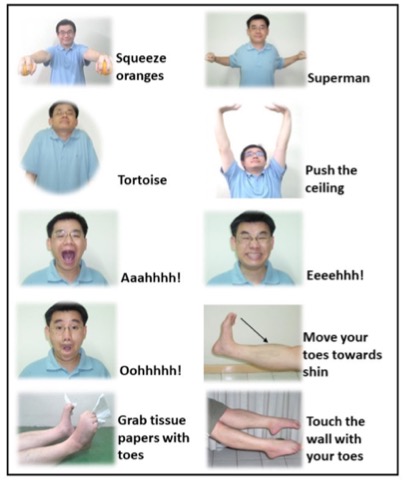
Chapter 8
Mindful-PDF & NOW-ing the Present Moment: Focusing Attention in a Busy Day

What It Is
When the ward is busy, the phone is ringing, the senior is calling, the patient is asking something, the family is waiting, and your notes are still incomplete…
What does the mind usually do?
For many of us, the mind starts jumping.
From this to that.
From task A to B to C to D.
And we call it productivity.
But very often, it is just scattered attention.
That is where Mindful-PDF & NOW-ing comes in.
It is a simple MINDFULGym tool for busy people with busy minds.
P = Prioritize
D = Delegate or Divide into smaller tasks
F = Focus through single-tasking
NOW-ing = gently labelling the present activity
So, let’s learn it together.
What is P?
Prioritize.
What is D?
Delegate or Divide.
What is F?
Focus.
And what is NOW-ing?
Naming the present task gently and clearly.
For example:
“Now listening.”
“Now prescribing.”
“Now checking the dose.”
“Now washing hands.”
“Now documenting.”
Mindful-PDF & NOW-ing is not about becoming slow.
It is about becoming less scattered and more focused.
How It Works
Modern healthcare is busy, interruption-filled, and mentally demanding. A house officer may be clerking a patient, reviewing blood results, answering a senior’s call, and preparing a referral within minutes. A nurse may be preparing medications, responding to a call bell, answering a colleague’s question, and reassuring a worried family member. A consultant surgeon may be operating, supervising trainees, handling equipment issues, and making rapid decisions under pressure.
In such settings, multitasking may seem efficient, but it is often not true multitasking at all. More often, it is rapid task-switching — the mind leaving one task, re-entering another, and paying a price each time.
A helpful MINDFULGym phrase is this:
Multitasking is a THIEF.
It steals:
time — because every switch has a restart cost
energy — because the brain must repeatedly stop, reorient, and reload
presence — because the body is here, but the mind is elsewhere
accuracy — because divided attention increases risk
calmness — because the mind becomes more scattered and rushed
Mindful-PDF works because it reduces unnecessary overload.
When we prioritize, we reduce noise.
When we delegate or divide, we reduce burden.
When we focus, we reduce switching costs.
When we NOW the present moment, we anchor attention to what is actually happening now.
Research support, put simply, points in the same direction:
In healthcare, interruptions and multitasking are associated with reduced efficiency and poorer task performance.
In doctors, interruptions, multitasking, fatigue, and poor working memory are associated with a higher risk of prescribing and task errors.
In nurses, interruptions during medication work are associated with higher rates of procedural failures and medication errors.
In surgeons, flow disruptions, communication problems, and multitasking can increase the risk of surgical errors.
In pharmacists, interruptions, task-switching, and multitasking are recognized as important practice and safety concerns.
So this tool is not only about feeling calm.
It is also about helping healthcare professionals work with more steadiness, safety, and clarity.
What to Do
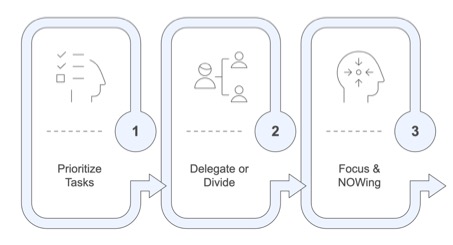
Now, let’s learn the method itself.
1. P – Prioritize
Pause for one breath and ask:
What is the most important thing now?
Not everything.
Not ten things.
Just:
What matters most now?
In clinical work, this often means asking:
What is urgent?
What is safety-critical?
What only I can do?
What can wait?
What should come first?
2. D – Delegate or Divide
Next ask:
Can I get help?
Can I break this into smaller steps?
Sometimes the wise thing is to delegate a non-urgent interruption.
Sometimes the wise thing is to divide one big task into smaller parts:
review the chart
confirm identity
write the order
explain the plan
document clearly
Big mental loads become easier when broken into steps.
3. F – Focus
Now return to one task at a time. Especially during safety-critical work.
This is where I like to introduce a simple idea: RED ZONE Awareness
Not all tasks are equal. Some tasks are RED ZONE tasks.
That means: No multitasking zone.
Examples include:
prescribing
medication preparation
consent taking
critical surgical steps
reviewing abnormal results
When you enter a RED ZONE, tell yourself:
“This is RED ZONE — single task only.”
That small inner phrase can be very protective.
4. NOW-ing
Silently label the present activity.
This is called NOW-ing.
Some people find it awkward at first, so let me make it easier for you. There are 3 simple styles of NOW-ing.
Action-based
“Now prescribing.”
“Now listening.”
“Now suturing.”
Safety-based
“Now checking carefully.”
“Now confirming identity.”
“Now rechecking dose.”
Emotional-awareness based
“Now feeling rushed.”
“Now feeling stressed.”
“Now coming back.”
This last one is important.
Sometimes the danger is not only distraction.
Sometimes the danger is a rushing mind.
📽️ For a brief video introduction to the Mindful-PDF technique, see the following YouTube Short:Watch the short video on YouTube →
📽️ For a brief video introduction to the NOW-ing technique, see the following YouTube Short:Watch the short video on YouTube →

🎶 The song "A Drop of Honey in the Rain” effectively reinforces the core message of NOW-ing the present moment. You can access and listen to the song via this link: Watch on YouTube →
Mindful Tips
1. Grey Owl — Remembering
When the mind gets scattered, remember the sequence:
P? D? F? NOW?
You do not need to remember everything at once. Just come back to the simple flow:
Prioritize
Delegate or Divide
Focus
NOW
If needed, you can silently repeat it like a mini-mantra:
“P, D, F, NOW.”
2. Blue Owl — Attention
Use short, clear labels to anchor attention. Instead of giving the mind a long lecture, just say:
“Now listening.”
“Now checking.”
“Now prescribing.”
“Now documenting.”
“Now breathing.”
Simple labels help attention return more easily to what is actually happening.
3. Pink Owl — Kindness
When the mind wanders or gets hijacked by stress, do not scold yourself.
Just come back kindly.
A harsh mind becomes more scattered.
A kind mind returns more easily.
If you find yourself feeling rushed, tense, or overwhelmed, take a moment to pause. Engage in some mindful body stretches and breaths. Often, a brief, kind break is all it takes to ease internal pressure before you resume your task.
4. Green Owl — Beginner’s Mind
Be curious about what helps your attention.
You may discover that:
a brief mindful body stretch helps reset focus
one slow breath helps you return more clearly
some tasks need RED ZONE protection
some distractions can be parked for later
your mind works better with shorter, clearer steps
Treat attention training like a living experiment, not a rigid rulebook.
5. Yellow Owl — Wisdom
Use the tool wisely, not rigidly.
If the mind is already clear, calm, and sharp, there may be no need to deliberately use the Mindful-PDF & NOW-ing tool at that moment. Do not turn it into another rule or burden.
But when your stress level is yellow or red, when the mind is scattered, rushed, overloaded, or easily distracted, that is exactly when this tool becomes more useful.
So be flexible.
Use it more when you need it more.
Use it less when the mind is already steady.
And if the mind is overloaded with other unfinished tasks, use task parking wisely:
“Not now, later.”
“Park this first.”
“I’ll come back to this.”
That is wisdom:
not using the tool mechanically,
but using it at the right time, in the right way, for the right need.
When to Practice
For the House Officer
A house officer may practice Mindful-PDF & NOW-ing:
during clerking, by saying silently, “Now listening.”
while prescribing, by using “Now prescribing carefully.”
during procedures, by dividing the steps and labeling them briefly
before handover, by prioritizing unstable patients and urgent issues first
when many requests arrive together, by pausing and asking what is urgent, important, delegable, or waitable
For the Nurse
A nurse may practice Mindful-PDF & NOW-ing:
during medication rounds, by entering the RED ZONE and focusing fully
when interrupted during medication preparation, by prioritizing the medication task first
during a busy shift with competing requests, by distinguishing many roles from harmful multitasking
during wound dressing or sterile procedures, by using short labels such as “Now cleaning” or “Now checking”
after an emotional interruption, by pausing for one breath and resetting with “Now coming back”
For the Consultant Surgeon
A consultant surgeon may practise Mindful-PDF & NOW-ing:
before the operating list, by prioritizing cases by acuity and complexity
during critical operative steps, by protecting the RED ZONE attention
when equipment or coordination issues arise, by delegating troubleshooting when possible
between cases, by using a reset phrase such as “Now finishing case one, now preparing case two”
during consent and family discussions, by avoiding split attention and listening fully
Heartful Story
The Intern, the Injection, and the Inner Traffic Jam
A young house officer had just started a new posting.
On one particular morning, everything seemed to happen at once.
A patient needed a review.
A senior wanted an update.
A nurse asked about a medication order.
His phone buzzed.
A family member looked worried.
And while doing all this, he was also supposed to prepare for a simple procedure.
Outwardly, he looked busy.
Inwardly, it was worse.
His mind was like a Kuala Lumpur traffic jam at 6 p.m.
One lane for worry.
One lane for rushing.
One lane for “What if I forget?”
One lane for “Aiyo, faster faster.”
And somewhere inside, a tiny lane for the actual task in front of him.
Not surprisingly, he almost missed an important detail.
Luckily, he paused.
Just one breath.
And he remembered a MINDFULGym phrase:
P. D. F. & NOW.
So he asked himself:
What is the most important thing now?
What can wait?
What can be delegated?
What am I doing now?
And then he said silently:
“Now checking the patient.”
“Now preparing carefully.”
“Now doing one thing at a time.”
The work did not disappear.
The ward did not become silent.
But his mind became less noisy.
And that changed everything.
Lesson for Healthcare Professionals
Many healthcare professionals not only have a heavy workload, but also an inner traffic jam.
Mindful-PDF & NOW-ing does not magically remove all demands. But it helps clear a lane in the mind.
Not all at once.
Just the next wise lane.
And sometimes that is enough to make work safer, calmer, and more human.
Inspirational Quote
“You can have it all. Just not all at once.” — Oprah Winfrey
That sentence fits healthcare beautifully.
A doctor, nurse, surgeon, pharmacist, or therapist may carry many responsibilities.
But not all of them need to be held in the same moment.
Mindful-PDF & NOW-ing works well when we are trying to bring attention back to the present task.
But when the mind is already under pressure, scattered, or overloaded, it may be harder to prioritize, focus, and NOW clearly.
That is where the next tool becomes especially helpful.
In the next chapter, we will explore Mindful Breathing: Calming the Mind Under Pressure.
Jom MINDFULGym.
Chapter 9
Mindful Breathing: Calming the Mind Under Pressure
What It Is
When the mind is under pressure, what is always with you?
Your BREATH.
Not your yoga mat.
Not your quiet room.
Not your perfect schedule.
Your BREATH.
That is why mindful breathing is such a practical MINDFULGym tool for healthcare professionals. It is portable, immediate, and available in real time.
Mindful Breathing is a MINDFULGym tool that uses breathing to help us:
recognize emotional states
calm the mind and body
cultivate a healthier mental attitude under pressure
And let me say something important from the start.
Most healthcare professionals do not have time for hours of sitting meditation.
That is why MINDFULGym emphasizes on-the-go, on-demand practice.
If a tool only works when life is quiet, it may not be practical enough for real healthcare work.
Mindful breathing can be used:
in the ward
at the nurses’ station
outside the clinic room
before a difficult conversation
after a distressing event
or during a short break between tasks
In this chapter, we will learn 3 main ways to practise it:
The first two are especially practical for busy clinical life. The third is useful too, but may fit better on weekends, off-duty time, or quieter moments.
How It Works
How can something as simple as breathing help the mind so much? There are two primary ways to use the breath as a mental health tool.
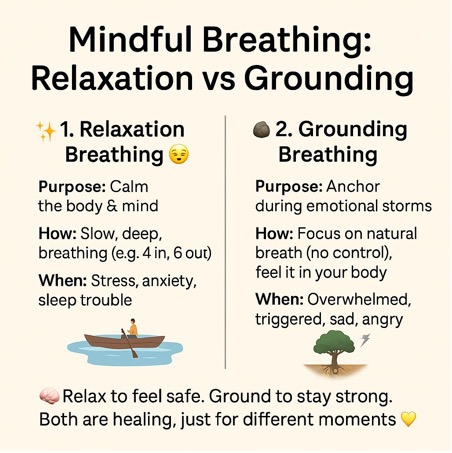
1. Relaxation Breathing — The Calm
This is active regulation.
Here, you gently change the rhythm of the breath, often by slowing it down and making the out-breath a little longer than the in-breath.
Why does this help?
Because a longer exhale can stimulate the parasympathetic nervous system, especially through the vagus nerve. You can think of this as the body’s natural brake system. It helps slow the heart rate, reduce physiological arousal, and shift the body away from high-alert mode.
So if stress is pressing the accelerator, this style of breathing helps apply the brake.
This is especially helpful when you feel:
wired
panicky
physically tense
unable to settle
or unable to sleep
2. Grounding Breathing — The Anchor
This is pure mindfulness.
Here, you do not try to force the breath into a special pattern. You simply notice it as it is.
You feel the air at the nose.
You notice the chest rising and falling.
You feel the belly moving.
The breath becomes an anchor.
This is useful when emotions feel too big or too loud. At such times, trying to force a very slow breath may feel frustrating or even suffocating. Simply noticing the natural breath may be more skillful.
So in simple words, we can remember:
Calm = change the breath gently
Anchor = observe the breath gently
That is a helpful distinction.
There is another reason mindful breathing works: emotion affects breathing, and breathing affects emotion. When we are angry, frightened, rushed, or overwhelmed, the breath often changes. So by paying attention to breathing, we become more aware of our emotional state and more able to regulate it.
So mindful breathing is not only about relaxation.
It is also about:
self-awareness
emotional regulation
steadiness under pressure
practical self-care in real clinical life
What to Do
Here are 3 main ways to practise mindful breathing.
1. Mindful Breathing (Qigong Style)
This is one of the most practical methods for daily healthcare life.
How to do it:
Breathing IN…
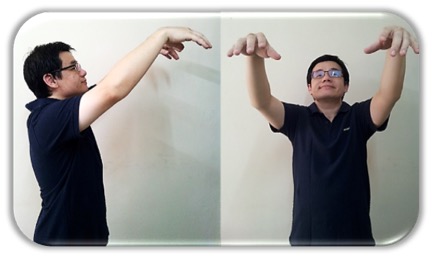
Breathing OUT…
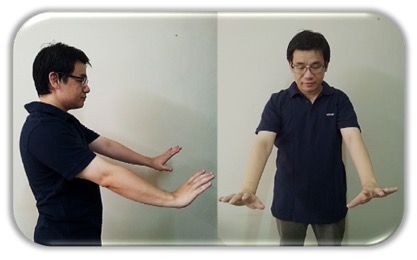
You can enhance this practice with the heartful style:
Gently rest your hands over your chest.
Allow a soft smile to form, both on your face and within your heart.
Visualize yourself soothing your heart.
Incorporate simple imagery, such as inhaling the scent of a flower and exhaling to gently blow a leaf away.
Once you are familiar with it, you may even drop the hand movement and simply practise slow, deep, mindful breathing anytime, anywhere — on the go, on demand.
📽️A video demonstration of the Mindful Breathing technique (Qigong Style) is available for access here: Watch on YouTube →
2. Combined Mindful Breathing and Stretching
This method combines the calming effects of breathing with the softening effects of mindful stretching. You can do it in two main ways:
Simultaneous practice — breathing and stretching together
Sequential practice — stretching first, then mindful breathing
You may practise this sitting, standing, or lying on a bed, depending on your condition and setting.
A. Simultaneous Practice (Together)
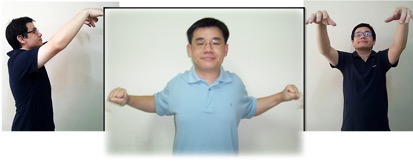
In this method, stretching and breathing are done simultaneously. Here, the breath replaces the usual counting from 1 to 10.
How to do it:
B. Sequential Practice (One After the Other)

In this method, you do a group of stretches first, and then follow it with mindful breathing.
This creates a gentle cycle:
stretch → breathe → stretch → breathe
How to do it:
This is especially helpful if chest, neck, or shoulder tension is making it hard to breathe deeply.
There is no single best method. Try both and see which suits your body and situation better.
📽️A video demonstration of the combined Mindful Breathing and Stretching is available for access here: Watch on YouTube →
3. Mindful Breathing Meditation

This is the more formal version. It is usually done sitting or lying in a comfortable position, with a little more time and quiet. It is usually done sitting, with a little more time and quiet.
How to do it:
This can be very nourishing, but for many healthcare professionals, it may fit better:
on weekends
on off-duty days
before sleep
during prayers
or in quieter moments
You can access two audio-guided mindful breathing meditation practices using the links provided below:
🎶Mindful Breathing & Mountain Imagery (English): Watch on YouTube →
🎶Mindful Breathing & Mountain Imagery (Malay): Watch on YouTube →
Mindful Tips
1. Grey Owl — Remembering
Remember the core principle:
On the go. On demand.
You do not need to wait for the perfect time, perfect room, or perfect mood.
A few mindful breaths before a difficult conversation may matter.
A few mindful breaths after a distressing incident may matter.
A few mindful breaths while washing hands may matter.
The important thing is to remember that the breath is available now.
2. Blue Owl — Attention
Know the two main ways to use the breath:
Calm
and
Anchor
If you are wired, restless, or physiologically activated, use the breath to calm the system by slowing and lengthening the exhale.
If emotions are loud, chaotic, or too big, use the breath as an anchor by simply noticing it as it is.
This small distinction can make practice much more effective.
3. Pink Owl — Kindness
Do not force the breath harshly.
Some people try to “perform” calm breathing and end up making themselves more tense.
If slow breathing feels soothing, use it.
If forcing the breath feels frustrating, simply notice the natural breath.
Mindful breathing is not about controlling yourself like a machine. It is about relating to yourself with kindness.
4. Green Owl — Beginner’s Mind
Be flexible and curious.
There are many ways to practise mindful breathing. Some people prefer:
Qigong-style breathing
diaphragmatic breathing with affirmation
4-7-8 breathing with visualization
guided box breathing
or simply quietly observing the natural breath
You do not have to like every method equally.
Try a few and notice what fits you best. Listen to your heart and see which method feels most natural, most practical, and most effective for you in real life.
That is beginner’s mind:
not forcing one “perfect” method,
but staying open to what truly helps.
5. Yellow Owl — Wisdom
Use the method wisely, not rigidly.
If the mind is already clear, calm, and sharp, there may be no need to deliberately use the mindful breathing tool at that moment. Do not turn it into another rule or burden.
But when your stress level is yellow or red, when the mind is scattered, rushed, overloaded, or easily distracted, that is exactly when this tool becomes more useful.
So be flexible.
Use it more when you need it more.
Use it less when the mind is already steady.
If the chest and shoulders are tight, combining breathing with mindful stretching may work better.
If the mind is overloaded with unfinished tasks, it may help to use task parking first:
“Not now, later.”
“Park this first.”
“I’ll come back to this.”
And if the mind is too scattered to settle, begin with one gentle breath only.
Wisdom means not asking:
“What is the perfect breathing method?”
but:
“What breathing method is most helpful right now?”
When to Practice
For the House Officer
A house officer may practise mindful breathing:
before the ward round, to settle anticipatory anxiety
after being corrected by a senior, to prevent the mind from spiralling
before prescribing or doing a procedure, to steady attention
after a distressing patient interaction, to reset emotionally
during post-call fatigue, when the body is tired but the mind is still racing
For the Nurse
A nurse may practise mindful breathing:
before medication rounds, to enter with a steadier mind
after an angry family interaction, to avoid carrying the stress into the next patient
between physically demanding tasks, especially with combined stretching and breathing
during a short break at the nurses’ station, even if only for a minute
before going home after a shift, so the ward does not stay trapped in the body
For the Consultant Surgeon
A consultant surgeon may practise mindful breathing:
before entering the operating theatre, to arrive more centered
between cases, to reset body and mind
after a difficult operative moment, to prevent emotional spillover
before consent or family discussions, to speak more steadily and clearly
after a long operating list, especially with breathing plus stretching, to release accumulated tension
Heartful Story
The Senior Ward Sister and the Three Breaths
In one ward, there was a senior ward sister whom everyone respected.
She was experienced, capable, and steady. Junior nurses often said, “Wah, Sister so calm one.” Doctors liked working with her because she seemed reliable even during chaos.
But what most people did not see was this: she had not always been calm.
Years earlier, she used to carry the whole ward home in her body.
Her shoulders were always tight.
Her chest often felt heavy.
After difficult shifts, she could still hear the call bells in her head.
Even at home, her mind was still charting, still responding, still rushing.
One day, after a particularly difficult shift, she learned a very simple form of mindful breathing.
Not one hour.
Not silent retreat.
Just a few breaths.
At first she used it quietly:
before answering an angry relative
after a tense medication round
while washing hands before the next task
Later she discovered she could also combine it with stretching:
one shoulder release with one out-breath
one chest-opening stretch with one slow inhale and exhale
one short reset before walking back into the ward
And on quieter weekends, she sometimes sat for a few minutes of breathing meditation.
Over time, this became one of her secret strengths. Not because her work became easy. But because she learned that the breath could meet her in many forms.
One day, a younger nurse asked her,
“Sister, how come you always look so steady?”
She smiled and said,
“Not always steady. But I know how to come back.”
Lesson for Healthcare Professionals
That is the beauty of mindful breathing.
It is versatile. It does not demand one perfect posture, one perfect duration, or one perfect setting.
It can be:
one breath before replying
three breaths after bad news
breathing with stretching between tasks
breathing before and after prayers
or a longer breathing meditation when life finally quiets down
For healthcare professionals, that matters.
Because in real clinical life, the most helpful tool is often not the most sophisticated one. It is the one you can actually use.
NOW - Breathe in…breathe out…and enjoy this song: 🎶BREATH: Anchor in the Wind Listen on SoundCloud →
Inspirational Quote
“If you want to conquer the anxiety of life, live in the moment, live in the breath.” — Amit Ray
Mindful breathing helps calm the mind under pressure. But in clinical life, we do not only need calm. We also need a way to pause before reacting.
That is where the next tool becomes very helpful.
In the next chapter, we will explore Mindful-STOP: From Autopilot to Wise Action.
Chapter 10
Mindful-STOP: From Autopilot to Wise Action
From Stress to Balance, One STOP at a Time.
What It Is
Healthcare life can feel a bit like Pac-Man.
You are moving through corridors, wards, clinics, operating theatres, handovers, calls, messages, alarms, tasks, relatives, deadlines, and expectations. And just when you think you have cleared one corner, another ghost appears.
One ghost is time pressure.
Another is fear of mistakes.
Another is an angry relative.
Another is your own tired mind.
So what usually happens?
We keep moving.
We rush.
We react.
We speak too quickly.
We reply too sharply.
We decide too fast.
Or we shut down.
That is where Mindful-STOP becomes so helpful.
It is a brief MINDFULGym tool for creating a small, powerful pause in the middle of real life.
S – Stop
T – Take a breath
O – Observe
P – Proceed wisely
Mindful-STOP is not a long meditation. It is not an escape from work. It is a practical way to pause in the middle of pressure and shift from autopilot to wise action. In many ways, it helps us move from stress to balance, one STOP at a time.
And although it is especially useful when stress levels are yellow or red, it is also helpful to practice it regularly during the day, even when things are not exploding. Why? Because STOP is not only for emergencies. It is a training tool. The more we practice it in smaller moments, the more available it becomes in bigger ones.
How It Works
There is a famous line often linked to Viktor Frankl:
“Between stimulus and response, there is a space. In that space is our power to choose our response.”
That is exactly what Mindful-STOP is trying to protect.
Without STOP, life can become:
stimulus → reaction
Someone criticizes you → you snap.
A relative complains → you harden.
A colleague goes quiet → you assume the worst.
A patient deteriorates → you panic or blame yourself.
With STOP, something else becomes possible:
stimulus → pause → awareness → wiser response
That little pause matters.
By the time we reach this chapter, we have learned a lot.
From Chapter 4, we know stress can push us into fight, flight, freeze, or fawn.
From Chapter 5, we know the Mindful Mirror helps us understand what is happening in the situation, thoughts, feelings, body, behavior, environment, and past experience.
From Chapter 6, we know the Ghost We Think can distort reality.
From Chapter 9, we know one or two mindful breaths can help steady the mind-body under pressure.
Mindful-STOP brings all of that together in one brief practice.
And here is something very important.
Under P, the question is not only:
“Who is right?”
“Who is wrong?”
“Who started it?”
“Who should not have done that?”
Why?
Because in stressful moments, those questions often make us more:
defensive
rigid
self-critical
or eager to win rather than help
The wiser question is:
“What is helpful now?”
A house officer may think, “My senior is unfair.” That may even be true. But what is helpful now — arguing immediately, or listening first and correcting the order safely?
A nurse may think, “This family is unreasonable.” That may also be true. But what is helpful now — reacting sharply, or calming the situation so patient care can continue?
A consultant surgeon may think, “They should not question me like this.” But what is helpful now — showing irritation, or clarifying the plan firmly and calmly?
In a heated moment, helpful vs unhelpful is often wiser than right vs wrong.
What to Do
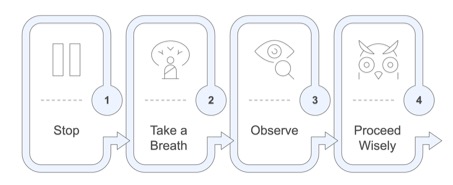
S – Stop
Pause physically.
Stop the tongue.
Stop the fingers.
Stop the rushing hand.
Stop the automatic reply.
Not forever.
Just for a moment.
This is the first power of STOP. It interrupts autopilot.
T – Take a Breath
Take one or two mindful breaths.
This connects naturally with the previous chapter. You do not need a long breathing session here. Just one or two conscious breaths may already help.
The breath is not the whole practice.
It is the doorway.
O – Observe
Now look gently.
Observe the mind-body:
What am I thinking?
What am I feeling?
What is happening in my body?
Observe the senses:
feet on the floor
hands touching something
sounds in the room
the feeling of the chair, pen, keyboard, mask, or air on the skin
Observe the wider picture:
What triggered me?
Is my past being stirred?
Is the environment contributing?
Am I reacting only to the present, or also to something older?
This is where STOP connects strongly with the Mindful Mirror. What looks like “overreaction” is sometimes not only about the present moment. Past experience and environment may also be shaping the reaction.
P – Proceed Wisely
Now choose the next step.
Not just what feels automatic.
Not just what feels satisfying in the heat of the moment.
Not just what proves that you are right.
Ask:
“What is helpful now?”
Helpful may mean:
slowing down
speaking calmly
saying less
asking one clarifying question
correcting the task safely
apologizing
asking for help
postponing the discussion
or just staying silent for a few seconds longer
Reacting is fast.
Responding is wise.
📽️ For a brief video introduction to the Mindful-STOP technique, see the following YouTube Short:Watch the short video on YouTube →
Mindful Tips
1. Grey Owl — Remembering
Remember to use STOP not only during a crisis, but also during ordinary moments.
Pause before a ward round.
Pause before replying to a message.
Pause before opening the next patient file.
Pause before entering the operating theatre.
Pause before speaking when tired.
The more regularly you remember STOP, the more naturally it comes when pressure rises.
2. Blue Owl — Attention
Observation is not only mental.
Use sensory grounding, too.
Feel your feet on the floor.
Feel your breath in the chest or abdomen.
Notice the sounds around you.
Notice your hands touching something.
This helps bring the mind back from spinning thoughts into present-moment reality.
3. Pink Owl — Kindness
Use STOP with self-compassion, not self-attack.
Some people turn STOP into another weapon:
“I should have STOPped.”
“I failed again.”
“What’s wrong with me?”
That is not a kind practice.
A useful image here is the story of the cup of water. The question is not only how heavy the cup is. The question is how long you keep holding it. Even a light cup becomes unbearable if you hold it too long.
Stress, embarrassment, guilt, and anger can be like that cup.
Mindful-STOP is sometimes a gentle way to put the cup down, even for a moment.
4. Green Owl — Beginner’s Mind
There is no one perfect STOP.
Sometimes STOP is two seconds.
Sometimes it is twenty seconds.
Sometimes it is one breath.
Sometimes it includes full sensory grounding.
Sometimes it happens before speaking.
Sometimes it happens after you have already reacted and need to reset.
Be flexible. Be curious. Discover how STOP works best for you.
5. Yellow Owl — Wisdom
Use STOP wisely, not rigidly.
If the mind is already clear and steady, you do not need to force the tool. But when stress level is yellow or red, when the mind is rushed, triggered, or overloaded, that is exactly when STOP becomes more important.
And here are the extended 7 Mindful-STOPs for Healthcare Professionals:
- STOP multitasking blindly — prioritize, delegate, and focus on one important thing at a time.
- STOP complaining automatically — notice what is still workable, meaningful, or worth appreciating.
- STOP ruminating about the past and future — return to what can be done now.
- STOP overthinking when action is needed — sometimes the next wise step is better than endless thinking.
- STOP being harsh about mistakes — learn, repair if needed, and move on.
- STOP trying to please everyone or prove yourself all the time — wise care is better than approval-seeking.
- STOP desperately trying to fix or cure everyone — sometimes steady, skillful, compassionate care is already enough.
When to Practice
For the House Officer
A house officer may practice Mindful-STOP:
before replying to senior criticism, especially when feeling embarrassed or defensive
before prescribing, when rushed, to reduce careless mistakes
after a distressing patient event, before carrying it into the next task
during handover panic, when many thoughts are competing at once
after noticing the mind spiraling, for example, after one small mistake
For the Nurse
A nurse may practice Mindful-STOP:
before responding to an angry family member, to avoid snapping back
during medication work, if interrupted, to re-anchor and proceed safely
after a tense interaction with a colleague, before carrying the emotion forward
before escalating a concern, to speak more clearly and steadily
when moving from one emotionally heavy patient to the next, to avoid emotional spillover
For the Consultant Surgeon
A consultant surgeon may practice Mindful-STOP:
before case discussion or consent, to arrive more centered
during tense theatre moments, when irritation is rising
after a difficult outcome, before speaking or messaging defensively
before correcting a trainee, to choose firmness without harshness
when leadership pressure is building, pause and act from clarity rather than tension
Heartful Story
The Medical Officer Who Kept Carrying the Cup
A medical officer in specialty training was bright, hardworking, and deeply committed.
He read widely.
He stayed back late.
He wanted to do well.
He wanted to become a specialist not only for status, but because he genuinely cared about becoming competent and useful.
But training was hard.
One day, during a case discussion, his supervisor questioned his management plan in front of others.
The words themselves were not cruel. But to him, they felt sharp.
He smiled on the outside.
Inside, many things happened at once.
Heat in the face.
Tightness in the chest.
A thought: “I’m not good enough.”
Another thought: “Everyone can see I’m weak.”
Then anger.
Then shame.
Then, a silent vow to overwork and prove himself.
He carried that moment all day.
Then all evening.
Then even into the next day.
The criticism had lasted a few minutes.
But inside him, he was still holding the cup.
Later, during a MINDFULGym session, he heard the story: a cup may not seem heavy at first, but the longer we keep holding it, the heavier it becomes.
That line struck him.
He realized he had been doing that with stress.
With shame.
With criticism.
With the need to prove himself.
Soon after that, he began using Mindful-STOP.
Not perfectly.
Not dramatically.
Just practically.
Before replying.
Before spiraling.
Before sending a defensive message.
Before speaking, when triggered.
The next time he was questioned sharply, he felt the old reaction rising again.
This time he STOPped.
He paused.
He took one breath.
He noticed the tight chest, the old fear of criticism, the pressure of training culture, and the urge to defend himself.
Then he asked:
“What is helpful now?”
Not “Am I right or wrong?”
Not “How do I prove myself?”
Just:
“What is helpful now?”
And he said calmly:
“Thank you. Let me rethink that and improve the plan.”
The pressure did not disappear.
But he no longer became the pressure.
Lesson for Healthcare Professionals
That is the value of Mindful-STOP.
It does not remove stress.
It does not make criticism pleasant.
It does not guarantee that people around us will behave well.
But it can help us stop holding the cup longer than necessary.
For healthcare professionals, that matters a lot.
Because in this work, we carry many things. If we do not learn how to pause and put some of them down, even a manageable burden can become very heavy.
Inspirational Quote
“Between stimulus and response, there is a space. In that space is our power to choose our response.”
— Viktor Frankl
Mindful-STOP helps us pause before reacting.
It reminds us that even in a demanding healthcare life, balance does not always come through dramatic change. Sometimes it begins with one small pause, one breath, and one wiser response — from stress to balance, one STOP at a time.
The next step is to train attention in another important direction. Under stress, the mind often notices only what is wrong, what is missing, and what is painful.
In the next chapter, we will explore Gratitude Workout: Paying Attention to the Positive, Even on Tough Days.
Jom MINDFULGym.
Chapter 11
Gratitude Workout: Paying Attention to the Positive, Even on Tough Days
What It Is
Let me ask you something.
On a hard day, what does the mind usually notice first?
The complaint.
The delay.
The mistake.
The difficult relative.
The unread message.
The mind is very fast at spotting what is wrong.
That is why Gratitude Workout is such an important MINDFULGym tool. It trains the mind to pay attention to the positive aspects of life — strength, blessings, good deeds, accomplishments, support, and small moments of goodness — instead of letting attention drift only toward what is negative or loud.
And here is a very Malaysian way to understand it.
Life is a bit like teh cham — my favorite drink. It is a mixture. Not all tea, not all coffee. Not all bitter, not all sweet. In the same way, life is a mixture of pleasant and unpleasant experiences. A difficult day may still contain one kind colleague, one grateful patient, one useful lesson, one prevented mistake, one funny moment, one breath of relief.
Gratitude Workout does not deny the bitter part.
It trains us not to miss the sweet part.
How It Works
The mind has a natural negativity bias. Negative experiences tend to grab more attention and stick more strongly than positive ones. That is why one complaint can outweigh many thank-yous, and one criticism can stay in the head much longer than several moments of appreciation.
This is where the MINDFULGym simile is so helpful:
Negative experiences are like Velcro — they stick easily.
Positive experiences are like Teflon — they slide off more easily.

So Gratitude Workout is not about pretending life is always positive. It is about correcting the imbalance.
When we deliberately search for what went well, we train our attention in a healthier direction. Over time, repeated attention habits can shape the brain through neuroplasticity. In simple words, what we practice repeatedly becomes easier to notice and access.
There is also a famous positive psychology finding from the Olympic world. Silver medalists often look objectively “better off” than bronze medalists, but a classic study found that bronze medalists often appeared happier because silver medalists tended to compare upward to gold, while bronze medalists more often compared downward to not winning a medal at all.
The lesson is simple: happiness is influenced not only by outcome, but also by where the mind places its attention.
What to Do
There are 2 main ways to practice the Gratitude Workout.
1. Google-WWW-Yahoo
This is one of the most playful and memorable MINDFULGym methods.
Google = mentally search
WWW = What Went Well
Yahoo = rejoice, celebrate, appreciate
In other words, each day, deliberately search for 3 things that went well.
They do not have to be dramatic.
A patient smiled.
A nurse helped.
A procedure went smoothly.
You caught a problem before it caused harm.
You kept going on a difficult day.
Then comes Yahoo — not necessarily by shouting in the ward, but by consciously appreciating the good.
And let me add one cheeky reminder.
WWW can mean What Went Well.
If you let the mind drift, it may become What Went Wrong.
That is exactly why gratitude training matters.
Please tune the mind to the helpful channel.
And one more warning from my sessions:
WWW does not mean What Women Want.
That one may be too stressful.
MINDFULGym cannot help you with that. 😄
📽️ For a brief video introduction to the Google-WWW-Yahoo technique, see the following YouTube Short:Watch the short video on YouTube →
2. Gratitude Cards
The second main practice is to use gratitude cards.
These cards help prompt the mind toward specific themes of appreciation. You mentioned that you have already prepared the card images, so they can be inserted into the chapter later. The 12 card wordings are:
These cards are helpful because they make gratitude more concrete. Instead of vaguely telling ourselves, “Be grateful,” they give the mind something specific to notice, reflect on, and appreciate.
Blue cards


Green cards
Yellow cards
Mindful Tips
1. Grey Owl — Remembering
Remember that the mind does not always drift naturally toward gratitude. It often drifts toward complaint, fault-finding, fear, and unfinished business.
So gratitude needs deliberate remembering.
That is why it helps to build a small ritual:
after the ward round
after a meeting
before sleep
after a shift
or while driving home
2. Blue Owl — Attention
Do not only ask, “What went wrong?”
Also ask:
What went well?
What was helpful?
What was kind?
What did I learn?
What am I thankful for right now?
Attention is trainable.
The more often you direct it toward the good, the easier it becomes to notice the good.
3. Pink Owl — Kindness
Gratitude is not only about being thankful for big blessings.
Sometimes it is about treating yourself more kindly.
You may be grateful:
that you kept going
that you tried your best
that you learned from a mistake
that a hard day has passed
that it could have been worse
Kind gratitude softens harsh self-judgment.
4. Green Owl — Beginner’s Mind
Do not make gratitude boring or forced.
Be curious.
You can practice it through:
Google-WWW-Yahoo
gratitude cards
short journaling
sharing one WWW in a team reflection
starting a meeting with one good thing before problem-solving
Beginner’s mind keeps the practice fresh.
5. Yellow Owl — Wisdom
Use gratitude wisely.
Gratitude is not denial.
It is not toxic positivity.
It is not pretending everything is fine.
If there is a real problem, address it.
But before jumping straight into fault-finding, it is often wiser to first notice:
what is already working
what has improved
who has tried
what has gone well so far
what strengths are present
This is especially useful in healthcare:
In a departmental meeting, before discussing problems, notice what the team has done well.
In a grand ward round, before picking apart mistakes, acknowledge what was managed well.
In an ordinary ward round, before focusing only on what is abnormal, remember what is improving.
This is not about avoiding improvement. It is about creating a healthier emotional climate for improvement.
That supports morale, teamwork, and more balanced thinking.
When to Practice
For the House Officer
A house officer may practice the Gratitude Workout:
after the ward round, by noticing one thing learned and one thing done well
after being corrected, by also remembering what was useful in the feedback
before sleep, by recalling 3 small WWW moments from the day
when comparing upward to seniors, by remembering, “I am learning, not failing”
after a difficult shift, by noticing that some things still went right
For the Nurse
A nurse may practice the Gratitude Workout:
after a medication round, by noticing what was completed safely
after one complaint, by also remembering the thank-yous and small moments of connection
during handover or debrief, by naming what went well in the shift
when feeling alone, by remembering supportive teamwork moments
before going home, by recalling one patient, one colleague, and one personal strength to be grateful for
For the Consultant Surgeon
A consultant surgeon may practice the Gratitude Workout:
after a tough theatre list, by noticing what went safely and what the team handled well
during departmental meetings, by recognizing effort before critique
after a difficult outcome, by still noticing what was done skillfully and ethically
during grand ward rounds, by encouraging appreciative noticing before troubleshooting
at the end of the week, by recalling the good in the team, trainees, and patients, not only the problems
Heartful Story
The Head of Department Who Changed the Mood in the Room
A head of department was known for being sharp, efficient, and hardworking.
He cared deeply about standards.
He wanted patients to get good care.
He wanted the department to improve.
So, in meetings, he often quickly focused on what was wrong.
The delayed discharges.
The missing notes.
The system gaps.
The complaints.
The inefficiencies.
He was not wrong.
But over time, something happened.
The room became heavier.
People spoke less openly.
Meetings felt tense.
Some team members started bracing themselves before every discussion.
One day, after reflecting on his own stress and leadership style, he tried something different.
At the next departmental meeting, before discussing problems, he asked:
“Before we start troubleshooting, tell me — what went well this week?”
At first, the room was quiet.
Then one person spoke.
A nurse had prevented a medication error.
A junior doctor had handled a difficult family conversation well.
The ward had improved flow in one unit.
A colleague had quietly helped another who was overwhelmed.
Slowly, the mood changed.
The problems were still there.
The department still had things to improve.
But the room no longer felt like a place where people only came to hear what was wrong.
Over time, this small shift had a big effect.
People felt more seen.
Morale improved.
The team became more willing to discuss problems honestly.
Critique became easier to receive because appreciation was no longer absent.
One day, a junior staff member said quietly after the meeting,
“Thank you, doctor. It feels easier to work hard when the good is also noticed.”
Lesson for Healthcare Professionals
Gratitude does not make a department weak.
It makes it more human.
And often, more effective too.
If we only look for fault, people become discouraged.
If we only praise and never improve, people stagnate.
But when we first notice what is good, and then troubleshoot for improvement, we create a wiser balance.
That is very much like teh cham.
Work, leadership, and life are mixtures.
Not all sweet.
Not all bitter.
The Gratitude Workout helps us train our minds to notice the good without denying the difficult.
And that matters — for our own mental health, and for the morale of the teams we serve with.
Here is a song on gratitude for delighting you day: 🎶 Magic of Life: Count The Blessings (A Happy Song on Gratitude & Contentment) Listen on SoundCloud →
Inspirational Quote
“I complained that I had no shoes until I saw someone with no feet.”
— Mahatma Gandhi
Gratitude Workout trains the mind to notice what is good, helpful, and worth appreciating — even on tough days.
The next step is equally important.
Sometimes what we need is not only gratitude, but a way to care for the body and mind more deeply through stillness, warmth, and friendly presence.
In the next chapter, we will explore Body Scan & Kindness: Caring for the Tired Body.
Jom MINDFULGym.
Chapter 12
Body Scan & Kindness: Caring for the Tired Body
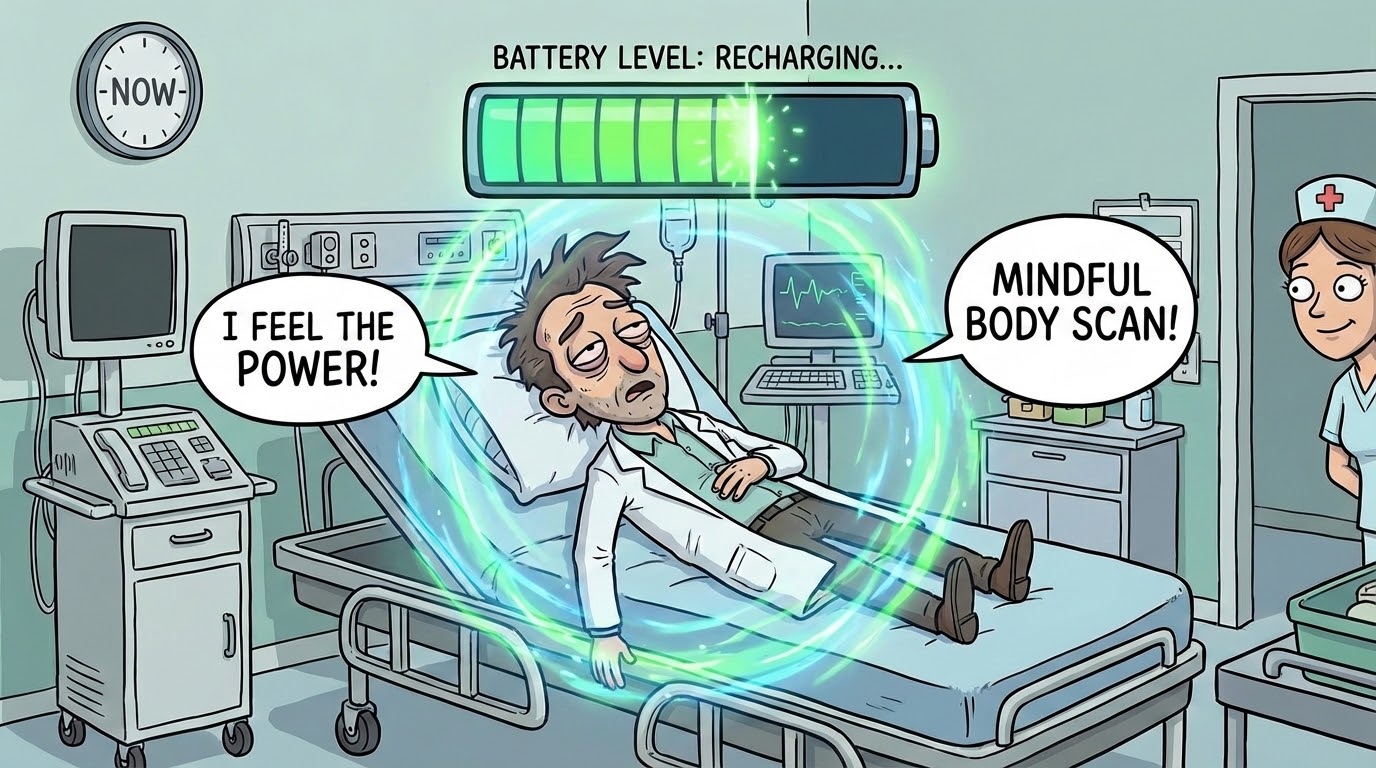
What It Is
This is no ultrasound, CT, or MRI scan.
It is a mental scan — a mindful way of scanning the body to soothe the body and calm the mind.
When healthcare professionals are tired, stressed, and stretched too long, the body often knows before the mind admits it.
The shoulders harden.
The jaw tightens.
The chest feels heavy.
The back complains.
The mind becomes a traffic jam.
Or like a hamster wheel — still spinning, still spinning, still spinning.
That is where Body Scan & Kindness becomes very helpful.
This is a MINDFULGym tool that involves shifting mindful attention to different sensations in the body and relating to them with kindness. It is useful for relieving body tiredness or discomfort, refreshing the mind, and supporting more restful sleep.
In this chapter, we will learn 2 main exercises:
Body Scan & Kindness for refreshing the body
Mindful Body Grounding for deep rejuvenating sleep
Both are especially helpful for healthcare professionals who are tired, overstimulated, or mentally overactive. And both can be combined usefully with Mindful Body Stretching, especially when the body feels very tight before you begin.
How It Works
When people are stressed, they are often told, “Don’t think too much.”
But usually, that does not work.
If we try too hard not to think, the mind often thinks even more. The classic "don't think of a pink elephant" study demonstrates this: actively trying to suppress a thought often makes it more persistent and intrusive. The more we fight the traffic jam, the more cars seem to appear. The more we run on the hamster wheel, the more tired we become.
🎶Here is a song on “Don’t Think of a Pink Elephant: A Mindful Song on Letting Go of Negative Thoughts: (7 Languages): Watch on YouTube →
One skillful way to reduce overthinking is to shift attention repeatedly from the “head” to the body.
That is one reason body scan works.
Instead of fighting thoughts directly, we gently move attention to:
touch sensations
tension
warmth
heaviness
air movement
contact with the bed or chair
As attention settles into the body, the traffic jam in the mind often begins to loosen. The hamster wheel slows down. Not because we forced the thoughts away, but because we gave the mind a more grounding place to rest.
There is another reason this matters for healthcare professionals.
Sleep deprivation is common in healthcare work because of long shifts, night duties, irregular schedules, and inadequate recovery time. When sleep is poor, attention, mood, patience, memory, and clinical judgment can all suffer. That is why this chapter is not only about comfort. It is also about:
restoring the body
softening the stress response
helping the mind slow down
and supporting better sleep, especially when healthcare work has overstimulated the whole system
This chapter also connects naturally with the earlier idea of Semua Sakit Syndrome. Sometimes stress is not only mental or emotional. It shows up in the body: tight chest, headaches, body aches, gastric discomfort, fatigue, and poor sleep. Body Scan & Kindness helps us turn toward the body more skillfully, rather than ignoring it until it starts shouting.
What to Do
There are 2 main ways to practice this tool.
Body Scan & Kindness for Refreshing the Body
📽️ For a guided Body Scan & Kindness practice, see the following YouTube video:Watch on YouTube →
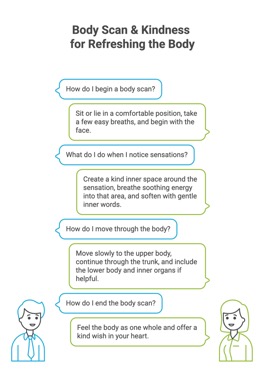
If you like imagery, you may imagine doing this body scan:
on the beach, with cool healing waves scanning the body
or under a waterfall, with refreshing water sweeping gently through the body
Mindful Body Grounding for Deep Rejuvenating Sleep
This second practice is especially helpful when the body is tired, but the mind is still buzzing.
📽️ For a guided Mindful Body Grounding practice, see the following YouTube video:Watch on YouTube →
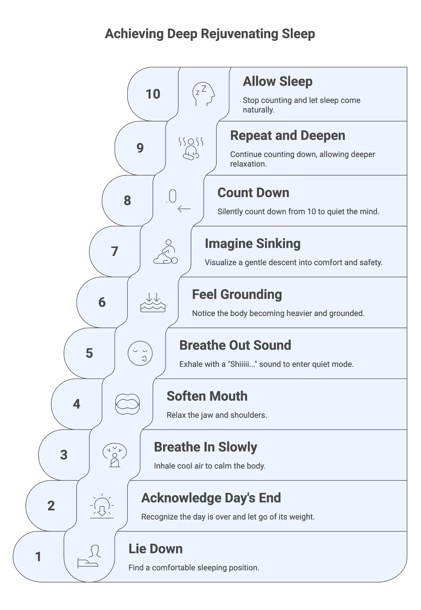
Mindful Tips
1. Grey Owl — Remembering
Remember that even if these exercises do not always lead to deep sleep, they can still be deeply refreshing.
And that is very important.
Healthcare professionals often have only a short period to rest before returning to action. So do not underestimate the value of a brief but genuine refresh.
A few minutes of body scan, kindness, or grounding may not give you a full night’s sleep, but they can still help:
soften the body
calm the mind
reduce inner traffic-jam thinking
and restore enough energy to continue more steadily
So when the mind says,
“Aiya, if I can’t sleep deeply, no point lah,”
Gently remember: Refreshing the body and mind is already a meaningful benefit.
3. Pink Owl — Kindness
Do not scan the body like a harsh inspector looking for faults.
Scan like a kind nurse or doctor doing a gentle review.
If you find discomfort, do not scold the body.
If you find tension, do not fight it.
Meet it with patience, friendliness, and care.
4. Green Owl — Beginner’s Mind
Be flexible in how you practice.
Some days you may prefer:
a full body scan
a quick face-and-shoulders scan
beach imagery
waterfall imagery
body grounding for sleep
or a short scan after mindful stretching
Listen to your heart and see what feels most practical and effective for you in real life.
5. Yellow Owl — Wisdom
Use the right version for the right need.
Quick Recharge: Use Body Scan & Kindness for refreshing the body.
Deeper Rest/Sleep Support: Use Mindful Body Grounding.
Body Tightness: Begin with a few minutes of Mindful Body Stretching before the scan.
If sleep problems are severe, prolonged, or significantly affecting safety and functioning, it is also wise to seek professional support rather than relying solely on self-help.
When to Practice
For the House Officer
A house officer may practice this tool:
after the post-call, when the body feels broken but sleep does not come easily
after being scolded or corrected, when the chest stays tight, and the mind keeps replaying the scene
during a short break, for a quick body refresh before the next round
before sleep, especially when the mind is still racing with unfinished tasks
on weekends, for deeper recovery from accumulated fatigue
For the Nurse
A nurse may practice this tool:
after a heavy shift, when the legs, back, and shoulders feel overloaded
between demanding tasks, for a short body refresh if even a few minutes are available
after a difficult interaction with a patient or family member, when stress stays trapped in the body
before going to bed after a late shift or night duty, to help the body settle into sleep
on recovery days, as part of gentle self-care and reset
For the Consultant Surgeon
A consultant surgeon may practice this tool:
after a long operating list, when the body feels tight, compressed, and overstimulated
after a difficult case outcome, when the mind keeps replaying the day
before sleep, especially when the body is tired, but the thinking mind is still very awake
during off-duty time, as a deeper recovery practice
after prolonged standing or intense concentration, to soften the body and clear the mind
Heartful Story
The Paramedic Who Could Not Switch Off
An emergency department paramedic was known for being fast, capable, and dependable.
He could move quickly.
He could think on his feet.
He could handle chaos better than many people.
When emergencies came, he functioned.
But when the shift ended, another problem began.
His body was exhausted, but his mind would not stop.
Even lying in bed, he could still hear the siren in his head.
He could still see the faces.
He could still feel the urgency in his chest.
He told himself, “I’m tired enough. I should be able to sleep.”
But the more he tried to force sleep, the more awake he felt.
One day, after a particularly heavy week, he decided to try something different.
He did Mindful Body Stretching first.
Not a full exercise class.
Just a few gentle postures.
He softened the shoulders.
Released the jaw.
Stretched the chest.
Let the back and legs unwind a little.
Only then did he move on to the other two practices.
First, he used Body Scan & Kindness to refresh the body. As he scanned from face to feet, he realized how much of the shift was still trapped inside him.
Later that night, he used Mindful Body Grounding to help him sleep. He lay down, breathed with the soft “Shiiiii…” out-breath, felt the weight of the day sinking into the bed, and counted gently downward.
Something changed.
The shift did not disappear.
The hard cases did not vanish.
But his body no longer had to carry them all at full volume into the night.
After some time, he said:
“I used to think I needed to knock myself out to sleep. Actually, I needed to let my body know it was safe to rest.”
Lesson for Healthcare Professionals
Many healthcare professionals are not only tired.
They are tired and activated.
The body wants sleep.
The mind is still on duty.
The nervous system is still running.
That is why this combination can be so helpful:
Mindful Body Stretching to soften the physical tension
Body Scan & Kindness to soothe and refresh the body
Mindful Body Grounding to support deeper rest and sleep
Sometimes the body needs to be softened before it can be settled.
Rest is not laziness.
Rest is repair.
🎶 Before you doze off, here is a gentle, music-box rendition of the soothing Rasa Sayang song that helps you relax. Good night, and may you have sweet dreams. Watch on YouTube →
Inspirational Quote
“Almost everything will work again if you unplug it for a few minutes, including you.”
— Anne Lamott
Body Scan & Kindness helps us rest more deeply in stillness.
The next tool helps us bring mindfulness into movement.
In the next chapter, we will explore Mindful Walking: Grounding in Motion.
Jom MINDFULGym.
Chapter 13
Mindful Walking: Grounding the Mind in Motion
What It Is
For those times when sitting still or lying down feels impossible—when a restless body, a busy mind, or an intense day makes it feel like demanding a speeding motorbike to halt immediately—Mindful Walking offers a valuable solution.
Mindful Walking is a MINDFULGym tool that involves paying full, beginner ’s-mind attention to the moment-to-moment sensations of walking — the movement of the legs, the soles touching the ground, the shifting of weight, and even the air brushing against the skin.
It is a useful way to ground attention, calm restlessness, and turn ordinary walking into both a mindfulness practice and a gentle form of physical exercise.
For healthcare professionals, this matters a lot.
You are already walking:
to the ward,
to the clinic room,
to the nurses’ station,
to the operating theatre,
to the next patient,
to the next crisis.
Mindful Walking does not require a special studio.
It asks only this:
Can one part of your day’s walking become more awake, more grounded, and more kind?
And because MINDFULGym likes to keep practice joyful, there is also a walking song to support the tool. That makes mindful walking not only grounding but also lighter and more enjoyable.
The song is available for listening at this link: 🎶Joyful Walking: A Song for Mindful Steps & Inner Peace Watch on YouTube →
How It Works
Mindful Walking works by gently bringing attention down from the crowded thinking mind into the moving body — especially the feet, the legs, and the rhythm of stepping.
When attention returns again and again to the contact with the ground, the shifting of weight, and the simple left-right movement of walking, the mind often becomes more grounded and less easily carried away by stressful thoughts.
This is especially helpful for healthcare professionals because walking is already part of daily work. So instead of adding one more thing to do, Mindful Walking transforms something you are already doing into a practice of grounding, calming, and reconnecting.
It is also a gentle form of physical exercise. And for those carrying emotional overload, restlessness, or fatigue, that matters.
Mindful Walking is also relevant for trauma.
There is direct trauma, when something frightening or overwhelming happens to the healthcare professional personally. There is vicarious trauma or secondary trauma, when repeated exposure to the pain, terror, grief, violence, or despair of others begins to affect the helper’s inner world. There is also cumulative trauma, when many difficult experiences slowly build up over time.
For some healthcare professionals, especially those working in emergency, psychiatry, intensive care, or trauma-related settings, the body may remain on alert even after the shift ends.
That is why Mindful Walking can be so helpful.
It gives the body a rhythmic, grounding way to discharge some of that activation and come back to the present moment.
And there is an interesting parallel here. Francine Shapiro’s observation that eventually led to EMDR began during a walk, when she noticed that distress shifted as her eyes moved back and forth. Mindful Walking is not EMDR therapy, but the left-right rhythm of walking can be understood as a kind of natural bilateral grounding. For some people, that can feel organizing, settling, and emotionally steadying.
In that sense, Mindful Walking is not only a way of getting from place to place.
It is also a way of moving from one state of mind to another.
What to Do
Here is a 10-step guide to Mindful Walking, adapted for real healthcare life.
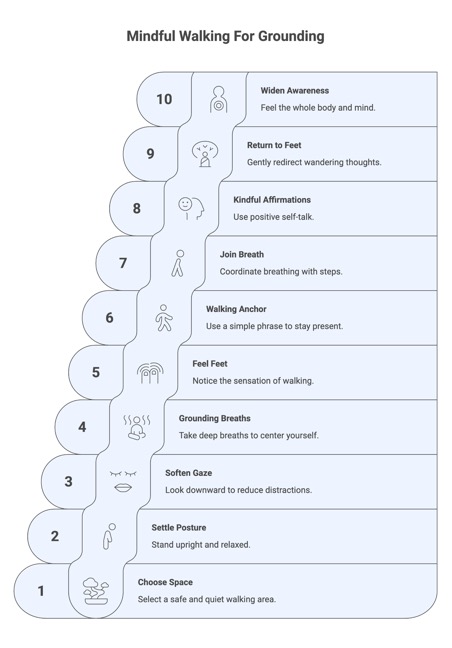
A Creative Practice: 3 Minutes Mindful Walking + 3 Minutes Brisk Walking
If you want to combine grounding with more exercise, try this creative pattern:
This can be especially good for healthcare professionals who need both:
a grounding practice
and a practical way to move the body more
Mindful Tips
1. Grey Owl — Remembering
Remember that walking can be a mindfulness practice, not only transport.
You do not need one perfect long session.
A few minutes between tasks can already help.
Walking to the next ward can be a practice.
Walking back after a difficult conversation can be a practice.
Walking to the pantry can be a practice.
2. Blue Owl — Attention
Bring attention down to the feet.
When the head feels crowded, the feet can become good teachers.
Notice:
the contact with the ground
the shift of weight
the rhythm of steps
the left-right movement
the breath moving with the body
The mind may be in the story.
The feet are in the now.
3. Pink Owl — Kindness
Do not walk like a harsh drill sergeant.
Walk like someone helping the body come home.
If you feel emotionally flooded, restless, or shaky, let the practice be gentle. You do not have to force calm. Sometimes it is enough to keep walking and let the body slowly teach the mind, step by step, that this moment can be survived.
4. Green Owl — Beginner’s Mind
Make the practice alive and playful.
You can:
use “left-right” or “here-now” labels
walk with the Mindful Walking song
take three steps while inhaling and five steps while exhaling.
walk with soft healing affirmations
or alternate mindful walking with brisk walking
This is not military marching. It is living attention.
5. Yellow Owl — Wisdom
Use the right style for the right need.
If you are agitated, overwhelmed, or trauma-activated, slower grounding walking may help more.
If you feel flat, sluggish, or mentally stuck, the 3-minute mindful + 3-minute brisk method may be more refreshing.
And remember: Mindful Walking can feel EMDR-like in a loose, natural way, thanks to its alternating left-right rhythm — but it is not EMDR therapy. If trauma symptoms are severe, persistent, or destabilizing, proper trauma-informed professional support is still important.
When to Practice
For the House Officer
A house officer may practice Mindful Walking:
before the ward round, to settle anticipatory anxiety
after being corrected by a senior, to prevent the mind from spiraling
while walking between wards, as a grounding reset rather than carrying one case into the next
after a difficult patient event, to let the body discharge stress through movement
during post-call fog, using short brisk walking intervals to wake up the body more skillfully
For the Nurse
A nurse may practice Mindful Walking:
between beds or stations, by turning necessary walking into grounded walking
after a difficult family interaction, to avoid carrying that emotional charge into the next patient
during a short break, especially with “here-now” steps and a longer out-breath
after physically demanding care, to release accumulated tension while moving
before going home, to let the ward settle in the body before entering family life
For the Consultant Surgeon
A consultant surgeon may practice Mindful Walking:
before entering the theatre, to arrive more centered
between cases, to reset after an intense procedure
after a difficult outcome or consent conversation, to stop replaying the event while still in motion
during off-duty exercise time, by combining grounding walking with brisk interval walking
before going home, to shift from operating mode into ordinary human mode
Heartful Story
The Medical Officer in the Psychiatric Ward
A medical officer working in a psychiatric ward had become very good at functioning under pressure.
He could review a suicidal patient in the morning, de-escalate aggression before lunch, complete a difficult family discussion in the afternoon, and still finish his notes before the shift ended.
From the outside, he looked composed.
Inside was another story.
Too many stories of abuse.
Too many threats.
Too many episodes of violence.
Too many nights after hearing about another suicide attempt.
Too many faces stay in the mind after work.
He began noticing something.
Even after he left the ward, the ward did not leave him.
His body stayed tight.
His chest stayed alert.
His mind replayed scenes as he drove home.
Some nights, even when the body was tired, one part of him still felt as if it was pacing the psychiatric unit.
One day, after a particularly heavy week, he tried something simple.
He walked.
Not just to get somewhere.
But to ground.
At first, he used the hospital corridor.
Left.
Right.
Left.
Right.
He kept his gaze soft, noticed the feet, and silently said:
“Here… now…”
“Step… step…”
When the memories came, he did not fight them. He just kept walking.
Later, he began using a simple rhythm after difficult shifts:
3 minutes of mindful walking, then 3 minutes of brisk walking.
The brisk walking helped discharge some of the body’s activation.
The mindful walking helped him come back to himself.
Over time, this became one of his quiet rituals after heavy days.
One evening, after a shift filled with aggression, restraint, and suicidal despair, he paused before getting into his car and walked slowly across the compound.
With each step, he said silently:
“I can leave some of this with the ground.”
He still cared.
He still remembered.
But he no longer had to carry every story at full intensity in his body.
Later he said:
“I used to think walking was only to move from place to place. I didn’t realize walking could help me move from one state of mind to another.”
Lesson for Healthcare Professionals
That is one of Mindful Walking's quiet strengths.
It does not ask you to suppress emotion.
It does not force stillness when the body is activated.
It allows movement, grounding, release, and return.
For healthcare professionals exposed to direct trauma, vicarious trauma, or cumulative trauma, that is no small thing.
Sometimes the body needs movement before the mind can settle. Sometimes the ground becomes part of the healing.
Inspirational Quote
“Walking HERE, walking NOW,
Journey to the present, we allow,
Touching hearts, healing pain,
In this moment, joy we gain.”
— from the MINDFULGym Mindful Walking song
Mindful Walking helps us ground the mind through movement.
The next tool helps us work more directly with the thoughts that still follow us.
In the next chapter, we will explore Mind-Scan: Transforming Negative Thoughts with Wisdom.
Jom MINDFULGym.
Chapter 14
Mind-Scan: Understanding & Transforming Unhelpful Thoughts
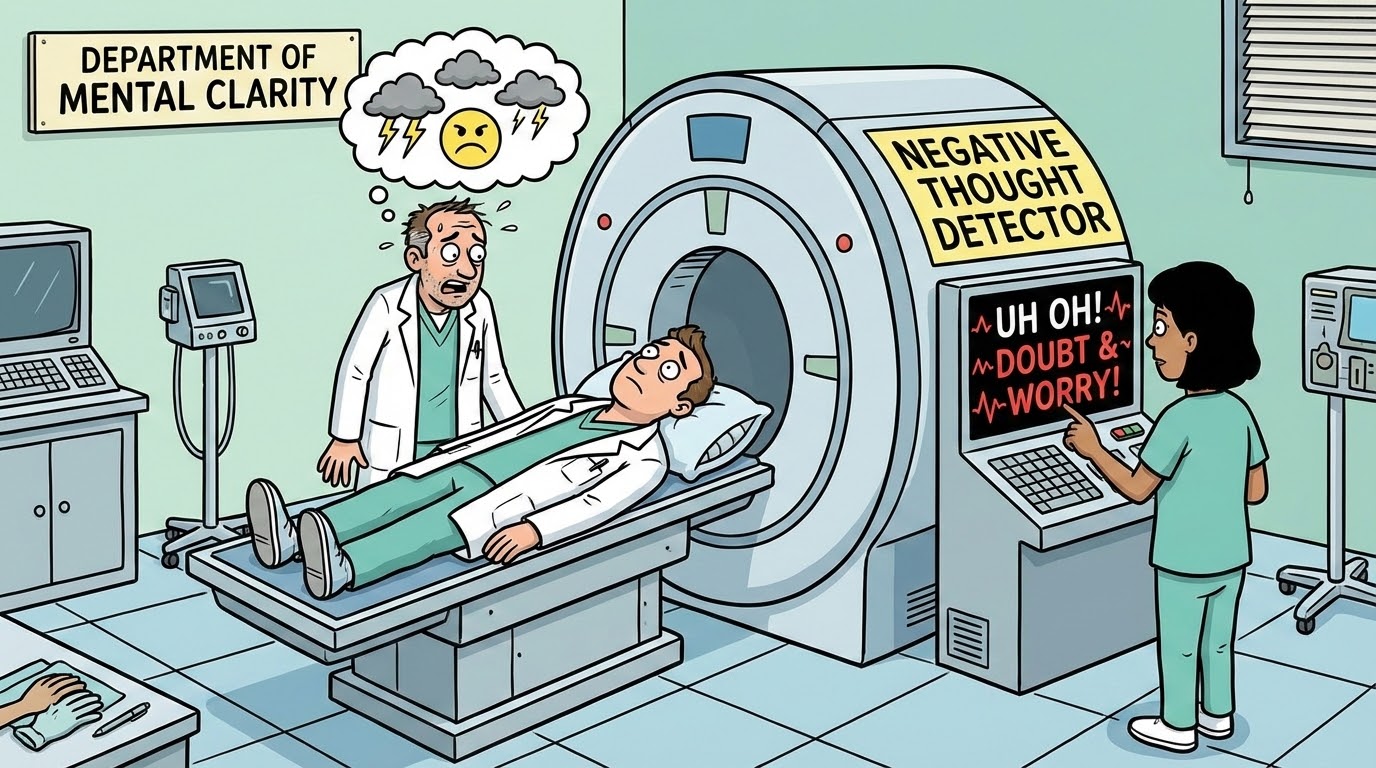
What It Is
This is not a CT scan.
This is not an MRI scan.
And unlike the earlier Body Scan & Kindness, this is not a body scan either.
In MINDFULGym, we have both a physical scan and a mental scan.
Body Scan helps us scan the body with awareness and kindness.
Mind-Scan helps us scan the mind — especially the thoughts that influence emotions, body tension, behavior, and stress.
For healthcare professionals, that matters a lot.
Because sometimes the suffering is not only from:
the workload
the criticism
the difficult patient
the poor outcome
the long shift
Sometimes the suffering becomes heavier because of the story the mind adds on top.
A thought says:
“I always mess up.”
“They must think I’m incompetent.”
“This proves I’m a bad doctor.”
“If this happened, everything is ruined.”
So if Chapter 6 helped us spot the ghosts, this chapter helps us do the next thing:
It helps us scan the thought more wisely.
Mind-Scan is a MINDFULGym tool for:
noticing unhelpful thoughts
checking whether they are facts, fears, habits, or old stories
understanding how they affect us
and gently transforming them into more balanced, useful, and wiser ways of thinking
How It Works
Thoughts matter.
They influence:
feelings
body tension
behavior
communication
confidence
decision-making
A stressful moment, such as one experienced in a clinic, is difficult enough.
However, the suffering intensifies if the mind adds unhelpful thoughts like:
"I'm hopeless."
"I always fail."
"This means I'm not good enough."
That is why Mind-Scan matters.
It helps us slow down and ask:
What am I actually thinking?
Is this a fact, an assumption, a fear, or a ghost?
Is this thought helpful or unhelpful?
Is there a better way to look at this?
And here is something important.
Mind-Scan often works better when the body is less tense and the mind is less flooded.
So if your stress level is already yellow or red, it may help first to use:
Mindful Body Stretching
Mindful Breathing
Body Scan & Kindness
or Mindful-STOP
Why?
Because a very active mind usually scans poorly.
When the body softens and the breath steadies, the thought becomes easier to examine with clarity rather than panic.
This is also where Mindful-STOP links naturally with Mind-Scan.
STOP creates the pause.
Mind-Scan uses the pause well.
And if you remember the Mindful Mirror, you will know that thoughts do not arise in isolation. They are influenced by:
the situation
the feelings
the body
the environment
and the past
A helpful way to explain it to healthcare professionals is this:
Just as we do not diagnose a patient based on a single symptom, we should not believe every thought without checking it.
What to Do
A simple way to practice Mind-Scan is to remember the word:
S-C-A-N
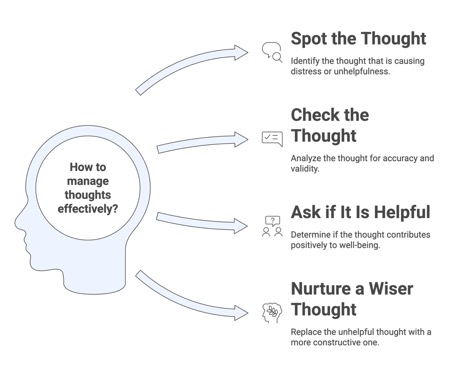
S – Spot the Thought
What is the actual sentence in the mind right now?
Not just:
“I feel bad.”
But:
“I’m going to fail.”
“They are judging me.”
“I’m not cut out for this.”
“This always happens to me.”
Catch the wording clearly.
C – Check the Thought
Now check the thought.
Ask:
Is this a fact?
Is this a fear?
Is this a ghost from Chapter 6?
Is this an assumption?
Is this an old story being replayed?
This is where healthcare training can help.
We already know how to distinguish:
symptoms from diagnosis
possibilities from probabilities
impression from evidence
Mind-Scan asks us to do something similar inwardly.
A – Ask if It Is Helpful
Now ask:
Is this thought helpful or unhelpful?
Not only:
“Is it positive?”
And not only:
“Is it emotionally satisfying?”
But:
Does this thought help me respond wisely?
N – Nurture a Wiser Thought
Now gently replace the unhelpful thought with something wiser.
Not fake positivity.
Not denial.
Not sweet nonsense.
Something more balanced, kind, realistic, and useful.
For example:
Instead of:
“I always fail.”
Try:
“This was a difficult moment. I can learn from it.”
Instead of:
“They must think I’m incompetent.”
Try:
“I may not know what they think. Let me clarify if needed.”
Instead of:
“This proves I’m a bad doctor.”
Try:
“This situation was hard. One case does not define my whole worth.”
And if the thought points to a real problem, ask:
What wise action is needed now?
Because Mind-Scan is not about thinking positively and doing nothing.
It is about seeing more clearly so you can act more wisely.
Cognitive Defusion: Making Space Between You and the Thought
Sometimes the mind is too fused with a thought.
Instead of noticing,
“I’m having the thought that I failed,”
we collapse into,
“I failed.”
That is why a little cognitive defusion can help.
Defusion means creating a bit of space between you and the thought.
You can try simple phrases like:
“I’m noticing the thought that…”
“My mind is telling me that…”
“Ah, here comes the ‘I’m not good enough’ story again.”
“This may be a ghost, not a fact.”
For example:
Instead of:
“I’m a terrible doctor.”
Try:
“I’m noticing the thought that I’m a terrible doctor.”
That small change matters.
It does not erase the thought.
But it makes it less powerful.
This reflective song serves as a reminder of the importance of observing our thoughts with detachment.
🎶 Thoughts Are Like Farts: Let Them Go Watch on YouTube →
The 10 Ghosts & Their Antidotes
Here is a practical Mind-Scan table for the 10 ghosts from Chapter 6.
| Ghost | What it sounds like in healthcare | Mind-Scan antidote | Defusion phrase |
| 1. Catastrophic Thinking | “If I miss this, the patient will die and my career is over.” | Separate facts from fears. Ask, “What is actually happening now, and what is the next wise step?” | “My mind is jumping to worst-case mode.” |
| 2. Discounting the Positive | “The thank-yous don’t count. Only the complaint matters.” | Deliberately scan for full data, not only negative data. Ask, “What also went well?” | “I notice my mind is filtering out the good.” |
| 3. Unfair Comparison | “That consultant handles everything perfectly. I’m far behind.” | Compare fairly. Ask, “Am I comparing a learner with an expert?” | “Here comes the comparison story again.” |
| 4. Mind-Reading | “The patient frowned. She must think I’m incompetent.” | Reality-check. Ask, “What do I actually know? Have I asked?” | “My mind is pretending to read minds.” |
| 5. Perfectionism / Must-Should Thinking | “I must not make mistakes.” | Replace perfection with humanity and learning. Ask, “What can I learn and improve?” | “This is the perfectionist voice talking.” |
| 6. Overgeneralization | “One failed procedure means I always fail.” | Shrink the conclusion. Replace always/never with sometimes/this time. | “My mind is making one event into a whole identity.” |
| 7. Black-or-White Thinking | “The outcome was not ideal, so the whole case was a failure.” | Look for the grey zone. Ask, “What was difficult, and what still went okay?” | “I notice my mind is splitting things into all-or-nothing.” |
| 8. Personalization | “The patient deteriorated. It’s all my fault.” | Re-scan the wider picture: illness severity, team factors, system factors, timing, uncertainty. | “My mind is making me the only variable.” |
| 9. Emotional Reasoning | “I feel anxious, so I must be incompetent.” | Separate feeling from fact. Feelings are real signals, not always accurate conclusions. | “I’m noticing anxiety, not proving incompetence.” |
| 10. Mental Filter | “Only the bad part counts.” | Zoom out. Ask, “What is the whole picture, not just the darkest corner?” | “My mind is staring at one shadow and forgetting the rest.” |
This table is not for memorizing like an exam.
It is for helping the mind say:
“Aha… I know this ghost, and I know a wiser direction too.”
Mindful Tips
1. Grey Owl — Remembering
Remember to use Mind-Scan especially when:
stress level is yellow or red
emotions are strong
the mind is replaying something
one sentence keeps looping in the head
the Ghost We Think is getting loud
But do not force a complicated mental scan when you are completely flooded. If needed, calm the body first and then return to the thought more gently.
2. Blue Owl — Attention
Catch the actual sentence in the mind.
The clearer the sentence, the clearer the scan.
Instead of:
“I’m stressed.”
Ask:
“What exactly am I saying to myself?”
Maybe it is:
“I’m not good enough.”
“I always mess up.”
“This will end badly.”
“Nobody appreciates me.”
A vague thought is hard to transform. A clear thought is easier to work with.
3. Pink Owl — Kindness
Do not use Mind-Scan like a harsh prosecutor.
This is not:
“Why am I thinking like this again?”
“What’s wrong with me?”
“I should know better.”
Thoughts arise. That is part of being human.
Mind-Scan is kinder than that. It says:
“Ah… this thought is here. Let me understand it with more care.”
4. Green Owl — Beginner’s Mind
Be curious.
Sometimes a thought is clearly distorted.
Sometimes it contains a small truth wrapped in a lot of fear.
Sometimes the thought is intensified by:
lack of sleep
hunger
embarrassment
perfectionism
old memories
workplace culture
So stay open.
Do not rush to declare every thought “wrong.” Sometimes the wiser response is not to fight the thought, but to understand what it is trying to protect.
5. Yellow Owl — Wisdom
Do not ask only:
“Is this thought positive?”
Ask:
Is it true enough?
Is it balanced?
Is it helpful?
Does it support wise action?
Does it reduce unnecessary suffering?
Wisdom is not fake positivity.
Wisdom is reality seen more clearly.
When to Practice
For the House Officer
A house officer may practice Mind-Scan:
after being corrected by a senior, when shame turns into self-attack
after a small mistake, before “I always fail” grows bigger
before handover, when anxious thoughts become exaggerated
when comparing upward to seniors, and concluding unfairly that they are inadequate
after a difficult patient encounter, when one moment starts defining the whole day
For the Nurse
A nurse may practice Mind-Scan:
after a complaint from a patient or family member, before the mind turns one complaint into total failure
when feeling unappreciated, and beginning to think that nobody notices the effort
after a tense interaction with a colleague, when mind-reading begins
when carrying one bad moment into the rest of the shift, through mental filtering
before going home, to avoid bringing unexamined thoughts into family life
For the Consultant Surgeon
A consultant surgeon may practice Mind-Scan:
after a poor outcome or complication, before personalization takes over
when perfectionistic self-talk becomes harsh and relentless
after being questioned by a colleague or trainee, before irritation becomes rigid certainty
when leadership pressure makes every issue feel catastrophic
after a long day, when fatigue makes thinking more extreme than reality
Heartful Story
The GP Who Thought One Difficult Consultation Defined Everything
A general practitioner had always cared deeply about patients.
He listened carefully.
He tried to explain clearly.
He worked long days.
He stayed thoughtful even when the queue was long.
Most days, he managed reasonably well.
But one afternoon, near the end of a tiring clinic, he had a difficult consultation.
The patient was distressed, impatient, and clearly unhappy. The consultation felt rushed. The patient left without much warmth, and the doctor sat there for a moment, feeling the heaviness of it.
Then the thoughts began.
“I handled that badly.”
“She must think I don’t care.”
“I’m becoming a bad doctor.”
“Maybe I’m not suited for this anymore.”
By the time he finished the rest of the clinic, the consultation had become much bigger in his mind than it really was.
One patient’s difficult reaction had started turning into a story about his whole worth as a doctor.
That night, he remembered Mind-Scan.
But he did not jump straight into examining the thought.
First, he used a few mindful breaths.
Then he softened the body a little.
Then he paused with Mindful-STOP.
Only after the body was less tight did he begin scanning the thought.
What exactly was the sentence in his mind?
“She must think I don’t care.”
“I’m becoming a bad doctor.”
He checked it.
Was it a fact?
Not really.
Was there mind-reading?
Yes.
Was there overgeneralization?
Yes.
Was fatigue amplifying the story?
Very likely.
Then he asked:
“Is this thought helpful?”
Not really.
A more balanced thought began to emerge:
“That was a difficult consultation.”
“I may not know what she thinks.”
“I was tired, but I still tried to help.”
“I can learn from this without condemning myself.”
Then he added a little defusion:
“I’m noticing the thought that I’m a bad doctor. That does not mean it is the whole truth.”
Nothing magical happened.
The consultation did not become pleasant afterward.
But the thought no longer had the same power to crush him.
And he realized something important.
A difficult consultation does not automatically mean a failed doctor.
Lesson for Healthcare Professionals
That is the value of Mind-Scan.
It does not erase difficult moments.
But it helps stop one difficult moment from becoming a distorted story about your whole self.
For healthcare professionals, that matters greatly.
Because the work is hard enough already.
We do not need our unexamined thoughts to make it harder.
Inspirational Quote
“Watch your thoughts, they become words; watch your words, they become actions; watch your actions, they become habits; watch your habits, they become character; watch your character, for it becomes your destiny.”
— Frank Outlaw
Mind-Scan helps us understand and transform unhelpful thoughts with more wisdom.
But life is not only about scanning and reframing thoughts.
Sometimes what we need next is a fresher way of seeing — not through old habits, overfamiliarity, or routine thinking, but with curiosity, openness, and new eyes.
In the next chapter, we will explore Beginner’s Mind: Seeing Patients, Work, and Ourselves with Fresh Eyes.
Jom MINDFULGym.
Chapter 15
Beginner’s Mind: Seeing Patients, Work, and Ourselves with Fresh Eyes
What It Is
Healthcare work can become routine.
Same ward.
Same clinic room.
Same corridor.
Same system.
Same pressure.
After years of service, something understandable can happen.
The work may continue, but the freshness fades.
Curiosity becomes thinner.
Joy becomes quieter.
And sometimes a kind of professional detachment slowly creeps in.
That is where Beginner’s Mind becomes a very important MINDFULGym tool.
In MINDFULGym, Beginner’s Mind means experiencing ordinary things with the attitude of a beginner — as if seeing through fresh lenses, with child-like curiosity, and as though this may be a once-in-a-lifetime experience.
So this chapter is an antidote to:
boredom
emotional flattening
robotic routine
overfamiliarity
and the slow loss of joy in healthcare life
Gratitude Workout trains us to notice what is good.
A Beginner’s Mind helps us notice it afresh.
Not just,
“Okay, something good happened.”
But,
“Wah… I almost missed the wonder in this ordinary moment.”
How It Works
Beginner’s Mind helps us appreciate the NOW experience more fully — scenery, conversation, learning, food, music, work, relationships, and small daily moments.
For healthcare professionals, that matters a lot.
Because when work becomes too routine, the risk is not only boredom. It can also affect:
empathy
curiosity
learning
morale
and professional development
A curious clinician often sees more.
A tired, overfamiliar mind may say:
“I know this already.”
A Beginner’s Mind asks:
“What have I not noticed yet?”
That is one reason Beginner’s Mind is so helpful in clinical work. It keeps us open:
to the uniqueness of each patient
to learn from every setting
to better questions
and to more creative solutions
Albert Einstein is often quoted as saying:
“I have no special talents. I am only passionately curious.”
That spirit fits Beginner’s Mind very well.
Not pretending to know nothing.
Not becoming naive.
But refusing to let expertise harden into dead certainty.
And in professional development, this line from Shunryu Suzuki captures it beautifully:
“In the beginner’s mind, there are many possibilities, but in the expert’s, there are few.”
That does not mean expertise is bad.
It means expertise needs freshness.
Otherwise, it can become rigid, repetitive, and closed.
Beginner’s Mind helps expertise stay alive.
What to Do
Here are 5 practical ways to cultivate Beginner’s Mind in healthcare life.
1. Wake Up the Routine
Do something routine a little differently.
For example:
sit in a different chair during a meeting
take a slightly different route to the ward
begin the clinic with one quiet breath and one fresh question
teach the same topic in a new way
notice one new thing in a patient you thought was “a familiar case”
The point is not novelty for novelty’s sake.
The point is to draw attention.
2. See the Patient with Fresh Eyes
Even if you have seen:
the same diagnosis many times
the same type of complaint many times
or the same patient many times
ask gently:
What is unique about this person today?
What matters most to this patient now?
What have I not noticed yet?
What is the human story behind the symptoms?
What can I still learn here?
This is Beginner’s Mind in clinical form.
It helps reduce detachment and keep healthcare human.
3. Practice Mindful Photography for Joy
Since many of us already use phones so much, why not sometimes turn them into a joy-capturing tool?
This is where Mindful Photography comes in.
Instead of using the phone only for:
messages,
alerts,
complaints,
and unfinished work,
Use it sometimes to capture:
light falling into a hospital corridor
a green tree outside the clinic
a cup of tea during a quiet pause
a kind handwritten note
a small, beautiful, ordinary moment
The phone does not always have to be a stress machine.
Sometimes it can become a gratitude and Beginner’s Mind device.
4. Keeping MINDFULGym Alive with the '3M' Approach
The 3M approach offers an inventive method for sustaining the MINDFULGym tools:
Modify
Mix
Match
Modify the technique.
Mix different MINDFULGym tools.
Match the practice to individual needs.
For example:
combine Mindful Walking with Mindful Photography
begin a meal with Mindful Breathing, then Mindful Eating
use Gratitude Workout after Mindful Photography
use STOP first, then bring in Beginner’s Mind before replying
adapt one tool differently for teenagers, healthcare workers, parents, or online learning
This keeps practice fresh, personal, and alive.
5. Use the “It Depends” Lens in Answering Questions
Beginner’s Mind is not rigid.
It does not force every question into:
yes or no
right or wrong
good or bad
Sometimes the wiser answer is:
“It depends.”
Why?
Because context matters.
The patient matters.
The timing matters.
The system matters.
The history matters.
The intention matters.
An “it depends” mindset opens understanding. It creates more space, more nuance, and more wisdom than rigid black-and-white thinking.
Mindful Tips
1. Grey Owl — Remembering
Remember that Beginner’s Mind does not require a dramatic new life.
It can begin in an ordinary moment.
An ordinary patient.
An ordinary cup of tea.
An ordinary ward round.
An ordinary Tuesday.
The key is not a new world.
It is a new way of seeing.
2. Blue Owl — Attention
Slow down enough to actually notice.
This may include:
the tone of a patient’s voice
the way sunlight enters the room
the taste of food
the expression on a colleague’s face
the small difference in a case you thought was “the same”
Attention is the doorway. Without attention, everything becomes blurred.
3. Pink Owl — Kindness
Use Beginner’s Mind not only with patients and work, but also with yourself.
Instead of saying,
“I’m too old already.”
“I’m burnt out already.”
“I’m like this only.”
Try asking:
What is still alive in me?
What am I still learning?
What joy have I stopped noticing?
What new way might still be possible?
Kindness helps freshness return.
4. Green Owl — Beginner’s Mind
Keep the practice playful, curious, and alive.
You can:
change small routines
ask better questions
use the phone to capture beauty
mix MINDFULGym tools creatively
experiment with new ways of teaching, listening, writing, or helping
Beginner’s Mind is not childishness.
It is a living curiosity.
5. Yellow Owl — Wisdom
Beginner’s Mind does not mean throwing away expertise.
It does not mean pretending you know nothing.
It does not mean becoming careless.
It means keeping expertise fresh, not frozen.
Wisdom says:
keep your standards
keep your skill
keep your discipline
but stay open
keep learning
and do not let routine become spiritual rust
When to Practice
For the House Officer
A house officer may practice Beginner’s Mind:
when feeling overwhelmed and robotic during a busy posting
when seeing “another routine case” and forgetting the person behind the diagnosis
when comparing upward to seniors instead of staying curious and learning
when eating too fast to taste anything at all
when using the phone mindlessly, turn it into a mindful photography tool instead
For the Nurse
A nurse may practice Beginner’s Mind:
when ward life starts feeling repetitive and emotionally flat
when a familiar patient is seen only as a task instead of a person
when team morale feels low, and everything looks like a routine burden
during a short break, by savoring one ordinary moment more fully
by noticing one fresh, beautiful, or meaningful thing in each shift
For the Consultant Surgeon
A consultant surgeon may practice Beginner’s Mind:
when years of expertise risk becoming overfamiliar certainty
before seeing a patient, by asking, “What is unique here today?”
during teaching, by explaining something familiar in a new way
when leadership feels dry or repetitive, by noticing what is still alive in the team
by keeping one part of work, learning, or daily life fresh rather than merely efficient
Heartful Story
The Psychiatrist Who Is Obsessed with Beginner’s Mind.
After more than 25 years as a doctor, I can honestly say this:
I have no regret in becoming a psychiatrist.
Not because every chapter has been easy.
It has not.
There were difficult cases.
Heavy responsibilities.
Fatigue.
Painful moments.
Uncertainty.
And many lessons that only came through long experience.
But one thing has kept the work alive for me:
Beginner’s Mind.
The willingness to keep learning with fresh eyes.
Because every setting teaches something new.
With healthcare professionals, the learning is different.
With patients, different.
With caregivers, different.
With parents and teenagers, different.
With government vs. private healthcare service, different.
The experience of MINDFULGym also keeps changing for me.
A new insight from a patient with OCD.
A new lesson from the workshop for therapists' self-care.
A new challenge in working with teenagers and their parents.
A new discovery while making a mindfulness podcast and music.
A new adaptation for corporate settings.
A new experience through online Zoom sessions during MCO.
A new layer through the train-the-trainers program
And now, another unfolding through this book.
The tools may be familiar. But the living experience is never exactly the same.
There are also small personal practices that help me keep this spirit alive.
I still keep the appreciation gifts and thank-you cards from my patients. Not to feed ego, but to savor kindness and remember the human side of the work.
I learned to write songs with AI, especially through Suno, to convey messages related to mindfulness and good mental health. That also came from Beginner’s Mind — being willing to say, “I’ve never done this before, but let me learn.”
Here is a song on beginner’s mind that I have made: 🎶The Empty Cup Song: Cultivating an Open & Beginner’s Mind Watch on YouTube →
Sometimes I write a little “prescription” for patients:
“Self-compassion — at least QID” with a MINDFULGym sticker.
Sometimes, for patients who have recovered well and are ready to be discharged from my clinic, I write them a ‘graduation certificate’ to make their experience memorable.
For some Chinese-speaking patients taking quetiapine, an antipsychotic and mood stabilizer, I use a more positive and memorable Chinese nickname for the medicine:
Quetiapine — 貴太平 (guì tài píng)
in Cantonese: gwai3 taai3 ping4
貴 means precious
太 means very
平 means peace
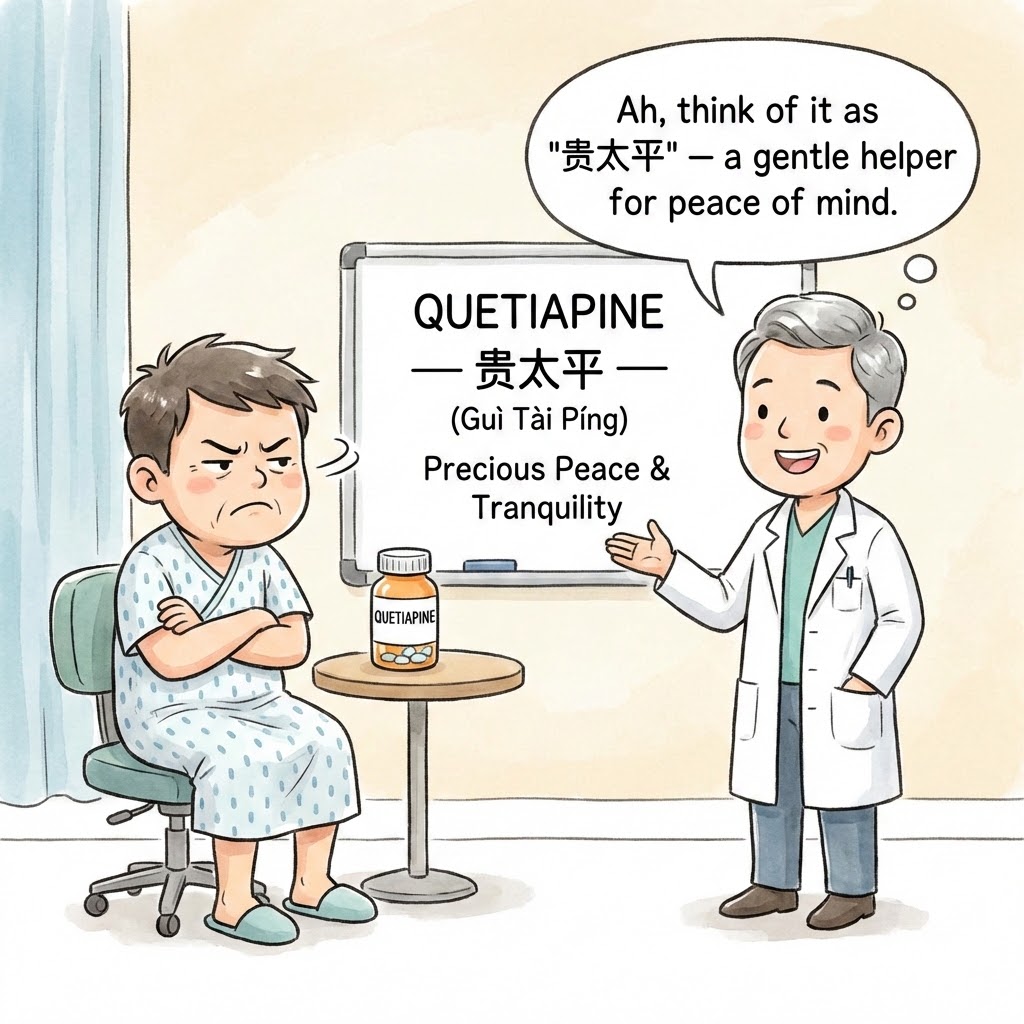
So the medicine becomes associated not only with illness, but with the hope of precious peace.
It is a small reframing, but sometimes a small reframing can change the emotional tone of treatment. A fearful, resistant, or discouraged relationship with medication may soften when meaning becomes gentler, warmer, and more human.
And there is another practice that helps me appreciate life and work more deeply.
Sometimes I bring in what I call the Auld Lang Syne Effect — imagining that this moment may not come again in quite the same way.
This conversation with a patient.
This teaching moment with a trainee.
This ordinary clinic day.
This message from someone who once suffered and is now better.
That spirit is close to ichigo ichie — this one time, this one meeting, a Japanese cultural concept emphasizing the unrepeatable nature of a moment.
When we remember that, even ordinary moments can feel more alive.
Lesson for Healthcare Professionals
Long service can lead to wisdom. But if we are not careful, it can also lead to dullness.
Beginner’s Mind protects the joy of learning.
It helps us stay curious, stay human, and stay open.
And sometimes that is exactly what keeps a long career from becoming only duty — and keeps it a path of meaning.
Inspirational Quote
“The real voyage of discovery consists not in seeking new landscapes, but in having new eyes.”
— Marcel Proust
Beginner’s Mind helps us see patients, work, and ourselves with fresh eyes.
The next step is to learn how to meet difficulty itself with greater wisdom, steadiness, and friendliness.
In the next chapter, we will explore Befriending Challenges: 5 Mindful Vitamins for Hard Times.
Jom MINDFULGym.
Chapter 16
Befriending Challenges: 5 Mindful Vitamins for Emotional Resilience
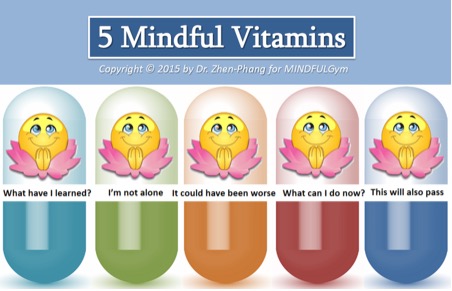
What It Is
When life is pleasant, be grateful.
That was the spirit of the previous chapter on Gratitude Workout.
But what about when life is unpleasant?
When the shift becomes chaotic.
When the patient relapses.
When the complaint arrives.
When the body is tired, and the mind is heavy.
When the heart says, “I really cannot already…”
Then we need something else.
We need to be graceful.
Not graceful in the sense of pretending everything is fine.
Graceful in the sense of tai chi — not stiff, not crashing into reality headfirst, not fighting every movement with tension. In tai chi, there is flow, balance, softness, steadiness, and wise adjustment.
Healthcare life also needs that kind of grace.
That is where the 5 Mindful Vitamins come in.
In MINDFULGym, these vitamins are short coping statements or mindful mantras that help us think in wiser, healthier, and more helpful ways during difficult times.
Here is the sequence we will use in this chapter:
And because this is MINDFULGym, each vitamin also has a song to help people remember it more easily. The links can be inserted later.
So this chapter is about emotional resilience.
Not denying pain.
Not forcing positivity.
Not pretending hard things are easy.
But learning how to befriend challenges more wisely.
🎶Take a moment to pause and enjoy the song "Be Grateful, Be Kindful." You can listen to it via this link:Listen on SoundCloud →
How It Works
Let me use a simple image.
Life is a bit like Tetris.
Blocks keep coming.
Some are manageable.
Some are awkward.
Some arrive too fast.
Some pile up at the wrong time.
That is normal.
In healthcare life, the blocks may be:
a difficult patient
a delayed result
a staffing shortage
a family conflict
a bad outcome
another unexpected demand
So the goal is not to stop life from sending blocks.
The goal is to respond more wisely to the blocks that come.
That is where AAM comes in:
AAM = Accept, Adjust & Move On
This is a very practical MINDFULGym response to change and challenge.
The Automobile Association of Malaysia (AAM) is widely known for its past roadside breakdown service. While that car assistance later became unreliable due to service issues, the image of AAM as the go-to roadside assistance association remains strong among many Malaysians.
So here is the MINDFULGym version:
If your car breaks down, call AAM.
If your mind breaks down, call AAM, too.
Accept
First, acknowledge reality.
Not liking it.
Not approving of it.
Not surrendering to it.
Just recognizing:
“Yes, this is happening.”
The MINDFULGym material reminds us that acceptance means acknowledging or becoming aware. It does not mean liking the unpleasant experience, surrendering helplessly, or expecting instant change like instant noodles.
Adjust
Next, adapt.
What needs to change?
What expectation needs softening?
What support is needed?
What tool might help now?
For healthcare professionals, adjustment may mean:
slowing down
asking for help
changing the plan
taking one mindful breath
using STOP
or lowering unnecessary self-pressure for the moment
Move On
Then continue with a meaningful purpose.
Not pretending nothing happened.
But also not living in the same internal car crash forever.
This step is not about denial. It is about carrying the lesson forward without carrying the whole suffering forever. The MINDFULGym notes describe this last step in terms of meaningful purpose and goal.
That is why this line, often attributed to Friedrich Nietzsche, fits so well:
“He who has a why to live can bear almost any how.”
When we reconnect with meaning, purpose, and the next wise step, we are more able to move on — not blindly, but bravely.
The 5 Mindful Vitamins support this whole AAM process.
You can think of them in 3 ways:
like immunization — not stopping all challenges, but helping the mind buffer suffering better
like emotional first aid — brief and portable support during hard moments
and, loosely, like a mood stabilizer for the mind — not in the pharmacological sense of lithium or Epilim, of course, but in the sense of helping the mind become less wildly thrown around
What to Do
Here are the 5 Mindful Vitamins in this chapter’s sequence.
1. What Have I Learned?
This vitamin turns pain into reflection.
Instead of only asking,
“Why did this happen to me?”
We ask,
“What have I learned?”
Maybe the lesson is:
I need better boundaries
I need more rest
I need to slow down
I need to ask earlier
I need to communicate more clearly
This vitamin helps us grow without attacking ourselves.
🎶 Song: What Have I Learned? Heartfelt Song About Learning from Life Watch on YouTube →
2. I Am Not Alone
This vitamin reminds us of shared humanity.
Stress, fear, mistakes, shame, and struggle can make us feel isolated.
This vitamin says:
“I am not alone.”
Other healthcare professionals have felt overwhelmed too.
Other people have made mistakes too.
Other good clinicians have doubted themselves too.
This helps soften loneliness and shame.
🎶 Song: I'm Not Alone: A Song of Comfort & Connection Watch on YouTube →
3. It Could Have Been Worse
This vitamin helps widen perspective.
It does not deny pain.
It simply asks:
“Could it have been worse?”
Sometimes the answer is yes.
The day was hard, but no one was harmed.
The family was upset, but the situation calmed down.
The outcome was not ideal, but something important was preserved.
This vitamin helps reduce catastrophic thinking.
🎶 Song: It Could Have Been Worse: Song of Resilience & Silver Linings Watch on YouTube →
4. What Can I Do Now?
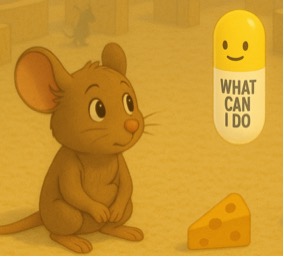
This vitamin brings us back to agency.
Not:
“What should have happened yesterday?”
Not:
“What if next week becomes worse?”
But:
“What can I do now?”
When the mind is overwhelmed by freezing, spiraling thoughts, or feelings of helplessness, this approach is particularly valuable. It guides us back to taking the next sensible action, focusing on one step at a time.
"Instead of complaining about the darkness, light a candle." - Eleanor Roosevelt
🎶 Song: What Can I Do: A Song to Shift from Catastrophizing to Solutions Watch on YouTube →
5. This Will Also Pass
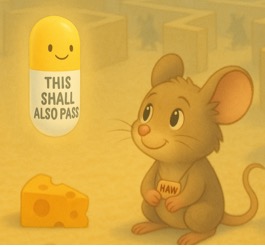
This vitamin reminds us of impermanence.
Feelings change.
Storms change.
Embarrassment changes.
Fear changes.
Seasons change.
The difficult shift does not last forever.
The shame wave does not last forever.
This chapter of life is not the whole story.
This vitamin is especially helpful when emotions feel huge and permanent.
🎶 Song: This Shall Also Pass: Mindful Song for Calm & Resilience Watch on YouTube →
The 5 Mindful Vitamins in Clinical Life
| Mindful Vitamin | House Officer | Nurse | Consultant Surgeon |
| What Have I Learned? | After being corrected during ward round: “I need to clarify earlier instead of guessing.” | After a tense shift: “I need to ask for support sooner before I become too stretched.” | After a difficult case: “I need to communicate risk and contingency plans more clearly.” |
| I Am Not Alone | “Many juniors have felt overwhelmed in housemanship too.” | “Other nurses also know this kind of tiredness and emotional load.” | “Even senior surgeons carry doubt and pressure after hard cases.” |
| It Could Have Been Worse | “I made a minor error, but the patient was still safe.” | “The family was angry, but the situation settled without harm.” | “The outcome was difficult, but a more serious complication was prevented.” |
| What Can I Do Now? | “I can correct the order, inform the senior, and learn from it.” | “I can take one breath, prioritize the next task, and continue safely.” | “I can review the facts calmly and decide the next step with the team.” |
| This Will Also Pass | “This shame and anxiety will not last forever.” | “This impossible-feeling shift will eventually end.” | “This heavy day does not define my whole career.” |
Mindful Tips
1. Grey Owl — Remembering
Remember the vitamins, especially when life is unpleasant.
When life is pleasant, be grateful.
When life is unpleasant, be graceful.
And remember: you do not need to wait until the mind is fully flooded. These vitamins can also be used early, before distress worsens.
2. Blue Owl — Attention
Catch the exact moment when suffering is being amplified.
Often, it is not only the event that hurts.
It is the mind saying:
“This is unbearable.”
“Why me?”
“I can’t stand this.”
“This should not be happening.”
That is the moment to bring in a vitamin.
3. Pink Owl — Kindness
Take the vitamins with kindness, not as commandments.
Not:
“I should be stronger.”
Not:
“I shouldn’t feel like this.”
But:
“Let me give myself something helpful now.”
That gentle tone matters.
4. Green Owl — Beginner’s Mind
Different vitamins help at different moments.
Sometimes, “What Have I Learned?” is most helpful.
Sometimes, only “I Am Not Alone” works.
Sometimes the most soothing one is “This Will Also Pass.”
And sometimes we need all of them together.
Stay flexible. Be curious. Use the right vitamin for the right moment.
5. Yellow Owl — Wisdom
Use the vitamins like emotional first aid, not like magic spells.
They do not replace problem-solving.
They do not replace sleep.
They do not replace professional support when needed.
They help stabilize the mind enough to:
think more clearly
suffer less blindly
and choose a wiser next step
And if the mind is too flooded, it may help first to use:
Mindful Breathing
Mindful-STOP
Mindful Body Stretching
or Body Scan & Kindness
The vitamins work best when they are part of a larger whole response.
When to Practice
For the House Officer
A house officer may practice the 5 Mindful Vitamins:
after being corrected sharply during the ward round
when feeling alone and inadequate during a difficult posting
after a small mistake that triggers large shame
during anxious handovers
when overwhelmed by too many unfinished tasks
For the Nurse
A nurse may practice the 5 Mindful Vitamins:
after an angry family interaction
during a short-staffed, impossible-feeling shift
after feeling unseen or unappreciated
when carrying home the emotional residue of ward life
after one difficult incident starts, coloring the whole day
For the Consultant Surgeon
A consultant surgeon may practice the 5 Mindful Vitamins:
after a poor outcome or complication
when leadership pressure feels isolating
after harsh self-criticism begins
when the mind turns one bad day into a global story
before deciding on the next step after a difficult event
Heartful Story
The Frontliner Who Took Emotional First Aid During COVID
During the COVID-19 pandemic, a frontline worker worked day after day in protective gear amid uncertainty and fear.
The shift was long.
The news was heavy.
The patients were many.
The risk felt real.
Sometimes, there was physical exhaustion.
Sometimes, emotional numbness.
Sometimes, tears that only came after getting home.
One night, after a particularly difficult shift, the frontliner sat alone and felt an inner sentence rising:
“I can’t do this anymore.”
The body was tired.
The mind was tired.
The heart was tired.
But instead of collapsing fully into that moment, something small happened.
A pause.
Then one question came first:
“What have I learned?”
The answer was quiet but honest:
“I need rest before I collapse.”
“I need support, not only bravery.”
“I need to let people care for me, too.”
Then another vitamin came:
“I Am Not Alone.”
Yes, many others were also carrying fear, grief, and exhaustion.
Then came perspective:
“It Could Have Been Worse.”
The shift was terrible, but some patients still improved, and the team still protected one another.
Then came the practical question:
“What can I do now?”
The answer was very small:
drink water
take one slow breath
wash up
message one trusted friend
sleep
And later, when the tears finally came, another vitamin held the moment:
“This will also pass.”
Not to deny the pain.
But to remember that even a pandemic wave is not forever.
Over time, the vitamins did not remove COVID. But they helped the frontliner suffer less.
Lesson for Healthcare Professionals
That is the value of the 5 Mindful Vitamins.
They do not remove the storm.
But they can become like inner emergency medicine:
brief, portable, practical, and stabilizing.
Sometimes the first aid we need is not only physical. Sometimes it is emotional.
Inspirational Quote
“We can’t change the wind, but we can adjust the sails.”
— often attributed to Jimmy Dean
The 5 Mindful Vitamins help us befriend challenges with wiser inner words.
The next tool goes one step further — helping us spread kindness inward and outward in a deeper, warmer way.
In the next chapter, we will explore HEART-fulness: Spreading Kindness Without Burning Out.
Jom MINDFULGym.
Chapter 17
HEART-fulness: Spreading Kindness Without Burning Out
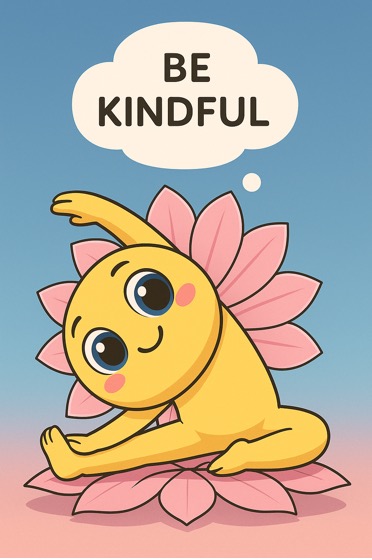
What It Is
The pink owl of MINDFULGym represents HEART-fulness.
If the blue owl reminds us of attention, the pink owl reminds us that mindfulness is not just attention. It is kind attention.
Not cold awareness.
Not harsh awareness.
Not fault-finding awareness.
But kind attention.
That is why HEART-fulness is an antidote to:
harsh self-talk
emotional dryness
mechanical caregiving
compassion fatigue
and the slow hardening that can happen in healthcare life
Healthcare professionals are often very good at caring for others.
A doctor explains patiently.
A nurse comforts gently.
A therapist listens deeply.
A surgeon tries to do what is best.
But many healthcare professionals are much less practiced in caring for themselves.
This chapter places particular emphasis on self-kindness.
Because if caring flows only outward and never inward, the heart can become depleted.
And that brings us back to the Emperor’s Three Questions.
The most important time is NOW.
The most important person is the one in front of you NOW.
The most important thing is to care.
But here is the HEART-fulness addition:
When there is no patient in front of you, who is the most important person?
Sometimes, it is you.
The one who is caring also needs care.
That is why in MINDFULGym we say:
Self-Care Is We Care.
How It Works
There is a famous line often attributed to Mark Twain:
“Kindness is a language which the deaf can hear, and the blind can see.”
That line fits healthcare beautifully.
Patients may not remember every technical term.
Caregivers may not remember every explanation.
Colleagues may forget the exact words of a discussion.
But they often remember the feeling:
Did I feel cared for?
Did I feel rushed?
Did I feel judged?
Did I feel safe with this person?
That is why HEART-fulness matters.
It softens the relationship among stress, the body, and the mind.
When the mind becomes harsh, the body often tightens too. When the body tightens, patience grows thinner, tone sharpens, and fault-finding becomes easier. HEART-fulness helps soften that cycle. It helps the nervous system feel safer, the body feel less defensive, and the mind become less attacking.
This chapter is also important for burnout prevention.
Here is a difficult but freeing truth:
People don’t care how much we know until they know how much we care.
And at the same time:
No matter how experienced we are, we may not always cure — but we can always care.
That line matters greatly.
If I tell myself I must cure every patient, I will eventually be crushed by reality. Some illnesses do not respond. Some outcomes are tragic. Some suffering remains despite our best efforts.
But if I remember that I may not always cure, yet I can still care, then my heart can stay human without being destroyed by every limitation.
That is one reason Self-Care is We Care.
When I care for myself wisely:
I become less harsh
I become less depleted
I become easier to trust
I become less likely to spill my stress onto others
and my care becomes more sustainable
So self-care is not only about me.
It affects we:
we, the patients
we, the caregivers
we, the colleagues
we, the team
we, the family I go home to
HEART-fulness also shifts the mind from a fault-finding mind to a beauty-finding mind.
Fault-finding mind asks:
What is wrong?
Who failed?
Why is this so difficult?
Beauty-finding mind also asks:
What needs care?
What goodness is still here?
What can I appreciate in this human being?
What act of kindness is possible now?
That does not mean ignoring problems.
It means not becoming a person who only sees fault.
What to Do
There are 2 main practices in this chapter.
1. Kindful-PAC
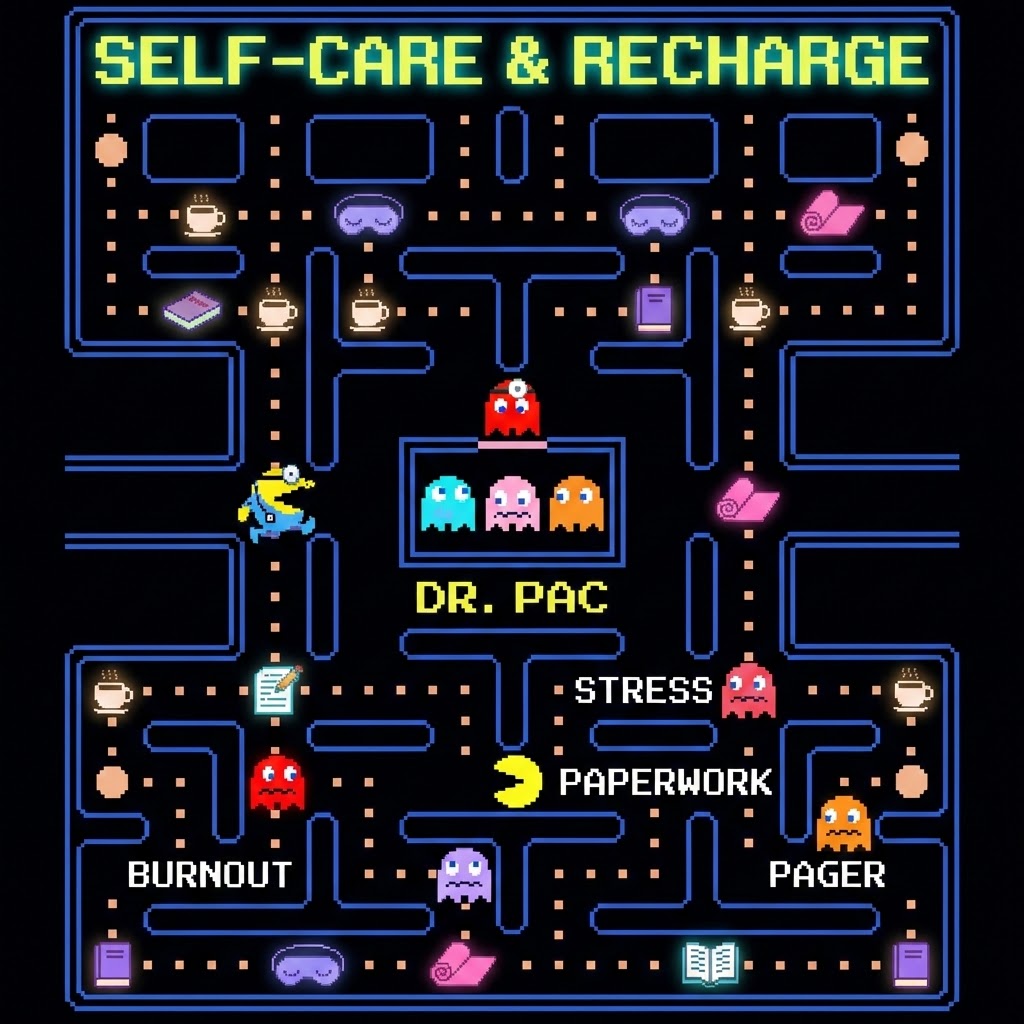
Think of healthcare life like Pac-Man.
You move through corridors, wards, calls, clinics, rounds, alarms, relatives, decisions, and emotional ghosts.
What does Pac-Man need sometimes?
A pellet to recharge.
Kindful-PAC is that self-care pellet.
It is like a self-care version of Mindful-STOP.
P – Pause
Stop for a moment.
Pause the rushing.
Pause the inner scolding.
Pause the automatic pushing.
Just for a few seconds.
A – Acknowledge
Acknowledge how the mind and body feel.
Ask gently:
How is my mind now?
How is my body now?
Am I tense?
Am I tired?
Am I irritated?
Am I hurting?
Am I emotionally flooded?
No need to judge.
Just acknowledge.
C – Care
Now do or say something caring.
This can be very simple:
relax the shoulders
place a hand on the heart or chest
drink water
take one slow breath
stretch the neck
sit down briefly
whisper inwardly, “This is hard right now.”
say, “May I be kind to myself.”
Kindful-PAC is small, but small acts of care can change the tone of the whole day.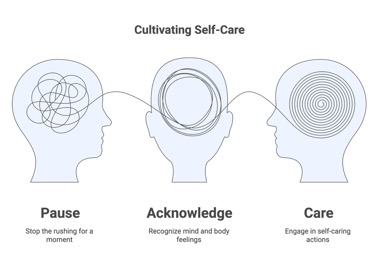
2. Rasa Sayang Loving-Kindness on the Go
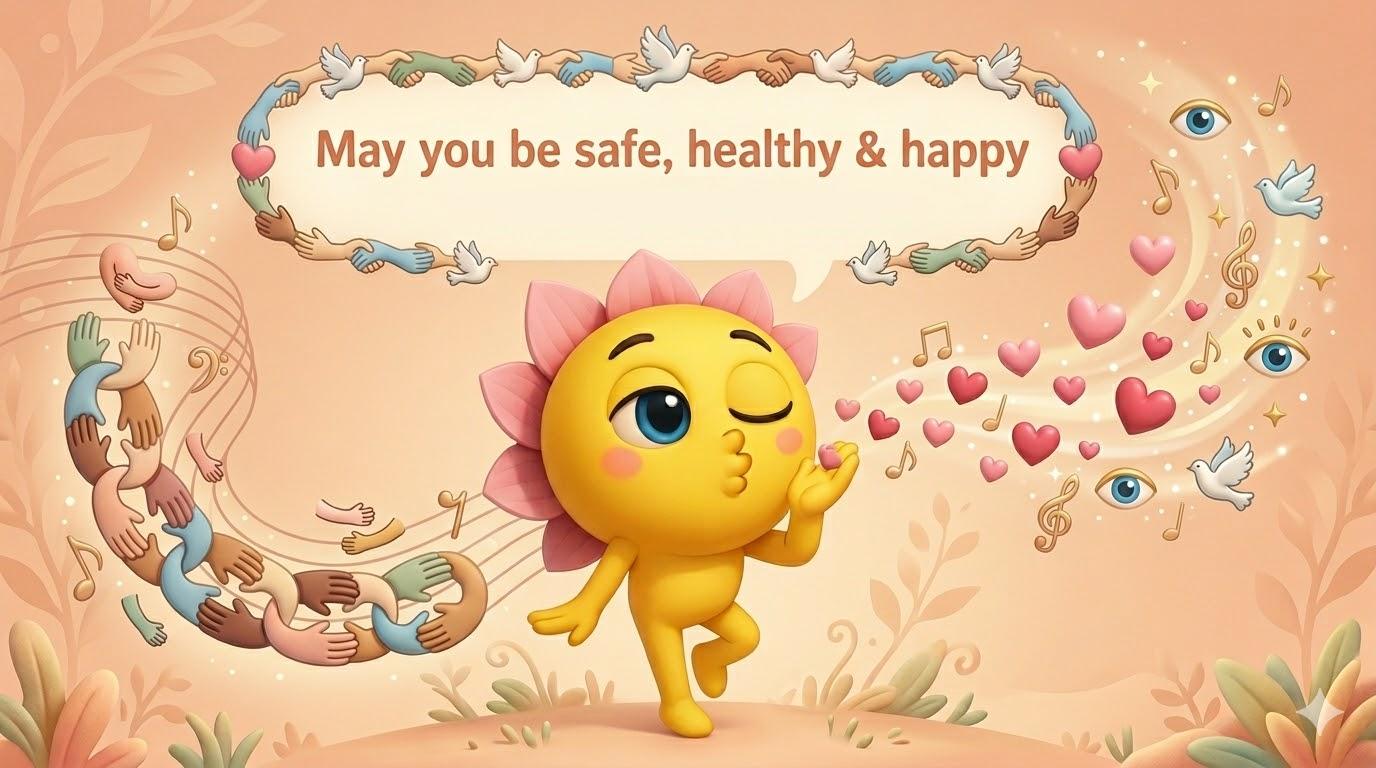
The second practice is the Rasa Sayang loving-kindness practice.
Rasa sayang is a Malay phrase that conveys loving care, tenderness, affection, and heartfelt warmth.
So this is not just a song.
It is a felt sense of caring.
In MINDFULGym, we adapt the song into a simple loving-kindness phrase:
Rasa sayang hey,
Rasa sayang sayang hey,
Hey, may I, may you, may all,
Be safe, healthy, and happy.
This is the on-the-go version of loving-kindness practice.
Not everyone has time for long formal mettā meditation.
But many healthcare professionals can quietly hum, whisper, or hold this line in the heart.
And notice how beautiful the wording is:
Not only you.
Not only me.
But may I, may you, may all.
That expands the heart gently:
self
patient
caregiver
colleague
team
all beings
You can also combine the Rasa Sayang practice with a butterfly hug or gentle chest tapping, followed by mindful breathing.
For example:
cross the arms gently over the chest in a butterfly hug
or place one or both hands over the chest
tap softly, left-right-left-right, or just rest the hands there
breathe slowly and kindly
hum or say the Rasa Sayang line inwardly
This can help:
release tension
soothe the nervous system
soften emotional overload
and bring warmth back to the body
Creative ways to radiate loving-kindness in clinical life
You can use this practice in many simple ways.
1. Before entering a patient’s room
Silently wish:
May I, may you, may all, be safe, healthy, and happy.
This shifts the mind from pure task mode to human presence.
2. During hand hygiene
Let hand-washing become a kindness cue:
May these hands be helpful.
May this patient feel safe.
May I bring calm, not only treatment.
3. While walking to the next patient
Carry the line in the heart, especially after a difficult encounter, so one painful interaction does not spill into the next.
4. Before speaking to a caregiver
If you expect distress, anger, or grief, hum inwardly first. A softer heart often creates a softer conversation.
5. Before a meeting or ward round
Silently wish well to the team:
May we be steady.
May we be safe.
May we work with care.
6. For yourself after a hard moment
When no patient is in front of you, sing or whisper inwardly:
May I be safe.
May I be healthy.
May I be happy.
That is not selfish. That is emotional maintenance.
Listen to the MINDFULGym versions of the Rasa Sayang songs here:
🎶 Rasa Sayang Hey (Ver. 1): Listen on SoundCloud →
🎶 Rasa Sayang Hey (Ver. 2): Listen on SoundCloud →
In workshops, we sometimes sing this simple version:
Mindful Tips

1. Grey Owl — Remembering
Remember kindness, especially when stress is high.
That is usually when we forget it most.
The more pressured we feel, the more likely we are to become:
harsh
mechanical
impatient
or emotionally shut down
That is the moment to remember the pink owl.
2. Blue Owl — Attention
Notice when the mind becomes a fault-finding mind.
Ask:
Am I only noticing what is wrong?
Am I becoming cold?
Am I speaking from tension?
What needs care right now?
This shifts attention from self-blame to self-care.
3. Pink Owl — Kindness
This is the heart of the chapter.
Self-kindness is not selfish.
It is part of sustainable caring.
When you soften toward yourself, you are less likely to harden toward others.
4. Green Owl — Beginner’s Mind
There are many ways to care.
Care may look like:
a hand on the heart
one breath
a stretch
a song
a smile
silence
a softer tone
a boundary
a glass of water
a quieter inner voice
Not all kindness looks the same.
5. Yellow Owl — Wisdom
Kindness is not indulgence.
Kindness is not saying yes to everything.
Kindness is not over-giving until collapse.
Wise kindness may include:
resting
slowing down
setting boundaries
asking for help
saying no
referring onward
stopping the urge to over-fix
That is why HEART-fulness is not about becoming soft in an unwise way.
It is about becoming warm and sustainable.
When to Practice
For the House Officer
A house officer may practise HEART-fulness:
after being scolded, before the self-attack begins
during panic before the ward round
after a small mistake
when feeling alone and inadequate
before speaking harshly to oneself
For the Nurse
A nurse may practice HEART-fulness:
after a difficult family encounter
during compassion fatigue moments
when the body is aching, and the mind is hardening
between patients to reset the heart
before going home, so the ward does not enter the home at full volume
For the Consultant Surgeon
A consultant surgeon may practice HEART-fulness:
after a poor outcome
before difficult consent or family discussions
when leadership becomes too hard-edged
when teaching juniors under pressure
after long, demanding days, when self-kindness is low but needed most
Heartful Story
The Cardiologist Who Carried Rasa Sayang in His Heart
A cardiologist was known for being technically skilled, warm, and calming to patients.
He was busy, of course.
The clinic was full.
Ward work was demanding.
Scans were many.
Decisions were serious.
But he had a quiet habit.
He often carried the Rasa Sayang line in his heart.
Sometimes, he hummed it softly while walking down the corridor.
Sometimes, only in silence.
Sometimes, just before entering the consultation room.
Sometimes, even while doing an echocardiogram.
Not loudly.
Not dramatically.
Just gently.
As he placed the probe and looked at the screen, part of his heart was saying:
May I, may you, may all,
Be safe, healthy, and happy.
Sometimes, when he stood in the lift with nurses, patients, family members, cleaners, porters, or strangers, he would silently offer the same wish to everyone around him:
May you all be safe, healthy, and happy.
No one knew.
Nothing outwardly special could be seen.
But inwardly, it helped him meet people with a softer heart.
Over time, something became clear.
Patients felt calmer with him.
Caregivers found him easier to trust.
Colleagues liked working with him.
Even in difficult cases, his presence felt less rushed and less harsh.
Was it only because of the song?
Not only.
But the song kept reminding him of something essential:
This is not only a heart I am scanning.
This is a human being I am meeting.
And the practice helped him, too.
It softened his own stress.
It protected him from becoming too mechanical.
It reminded him that beyond diagnosis, beyond prognosis, beyond outcome, there is still room for care.
Sometimes after a long day, he would even sing the song quietly before sleep.
Not as performance.
As settling.
As self-soothing.
As a way of letting the heart leave the hospital more gently.
One day, after a particularly difficult case, he said quietly:
“I cannot promise every patient a cure. But I do not want any patient to leave without having felt care.”
Lesson for Healthcare Professionals
Technical excellence matters.
Clinical knowledge matters.
But caring presence matters too.
And when kindness becomes a living practice, it helps:
the patient
the caregiver
the colleague
the team
and the clinician’s own heart
That is why HEART-fulness is not a luxury. It is part of sustainable healing.
🎶 This chapter closes with a deeply touching song titled "Golden Crack: Handle Me With Care." Watch on YouTube →

Inspirational Quote
“If your compassion does not include yourself, it is incomplete.”
— Jack Kornfield
HEART-fulness helps us bring kind attention to ourselves and others.
The next step is learning how to express that kindness more skillfully through listening and communication.
In the next chapter, we will explore Mindful Listening: Caring with the Ears and the Heart.
Jom MINDFULGym.
Chapter 18
Kindful Communication: The Healing Power of Attention, Listening & Speech
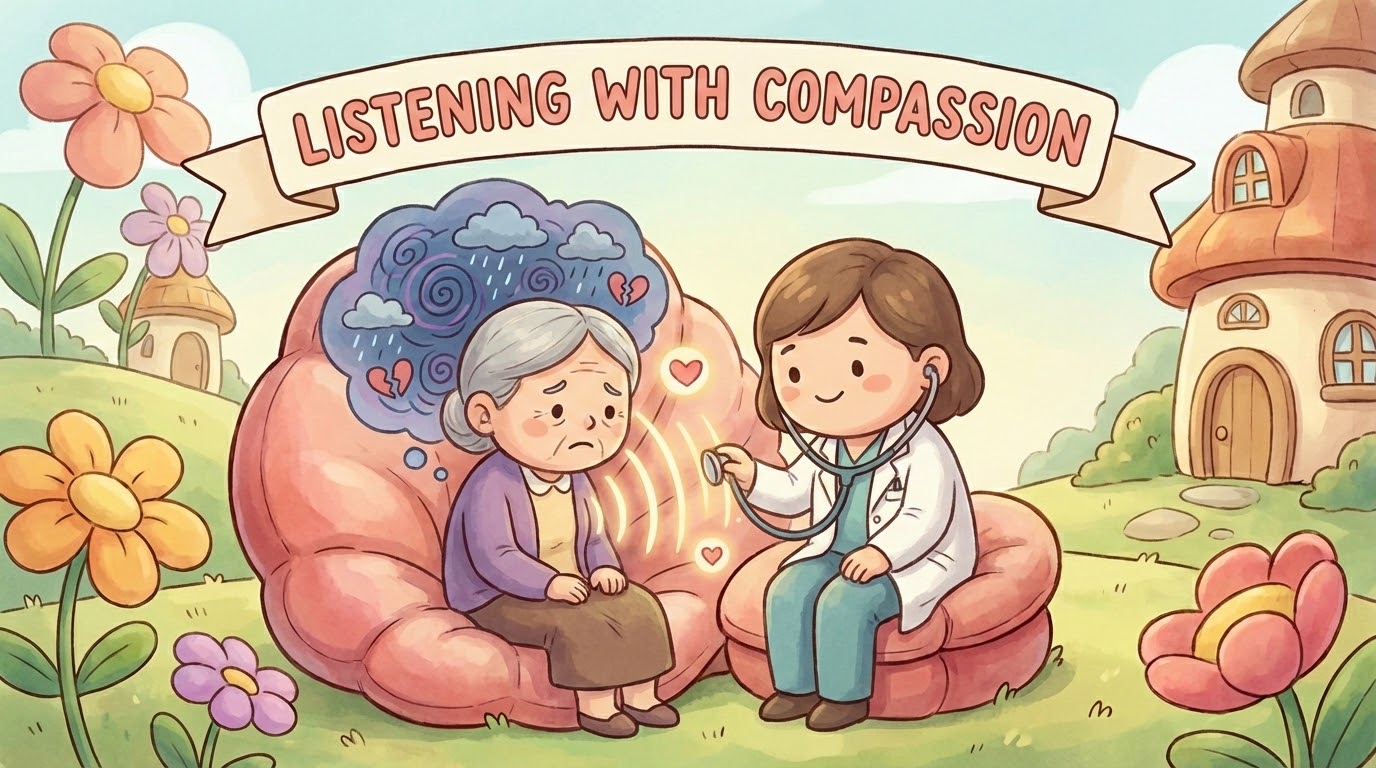
What It Is
Building on the previous chapter’s focus on HEART-fulness and sustainable kindness, this final chapter turns to communication as another quiet expression of care in healthcare.
Mindful communication is not only about passing on information or choosing the right words. It is also about bringing our attention, kindness, and wisdom to how we listen, speak, and respond.
At its heart, it is the art of using our presence and our speech so that others feel heard, respected, and emotionally safe.
In healthcare, communication happens every day in simple but important moments, such as:
greeting a patient
explaining a diagnosis
updating a worried family member
responding to tears, silence, or frustration
speaking with a stressed colleague
Calmness reduces fear; listening eases loneliness; thoughtful words restore dignity and trust. Patients and caregivers often remember how we made them feel—received, understood, and supported—rather than every detail we shared. Thus, attention is care, listening is comfort, and speech is healing.
In the MINDFULGym model, mindful communication is made practical through three simple tools:
M.I.Y.A.O.W.? for mindful listening
T.H.I.N.K. for mindful speaking
L.E.No.V.A. for kindful communication during emotional distress
Together, these tools remind us that healing is carried not only through treatment, but also through human connection.
How It Works
Mindful communication slows interactions, fostering awareness. Instead of automatic reactions, we listen fully, speak wisely, and respond kindly. This is vital in healthcare, where people are often distressed and need not just information but also reassurance, understanding, validation, and a calm human presence.
The MINDFULGym model works through three connected steps.
First, we listen with presence through M.I.Y.A.O.W.?. This helps us stay engaged, warm, and responsive while the other person is speaking. It reminds us that real listening is not only about hearing words, but also about showing that we are truly here.
Second, we speak with wisdom through T.H.I.N.K. This helps us pause before speaking so our words are not impulsive, harsh, or unnecessary. Instead, we aim to speak in ways that are truthful, helpful, intelligent, needed, and kind.
Third, we respond with compassion through L.E.No.V.A. This helps us support someone in distress without rushing to fix, advise, or dismiss their feelings. We listen, empathize, avoid premature advice, validate, and affirm.
In simple words, mindful communication turns everyday conversations into moments of care. It helps us:
reduce emotional distress
build trust
prevent misunderstanding
strengthen connection
support healing relationships
When attention is present, people feel seen. When listening is present, people feel heard. When kind speech is present, people feel safer.
What to Do
In MINDFULGym, mindful communication can be practiced through three simple tools. You do not need to use all three perfectly at once. Start with one, practice it often, and let it gradually become part of the way you relate to others.
A. Mindful Listening — M.I.Y.A.O.W.?
This tool helps us listen with warmth, presence, and care.
M – Mmmmhhh
A gentle sound of acknowledgment that shows you are present and listening.
I – I see
A simple way to show that you are following and understanding.
Y – Ya, Yes
Small words of encouragement that help the person continue.
A – Aaahhh
A natural expression of understanding or realization.
O – Oooohhh
A sign of emotional resonance or shared human feeling.
W – Wow
A sincere response that reflects amazement, pain, or deep recognition.
? – Ask questions to CARE
Ask questions that are:
○ Caring
○ Affirming
○ Respectful
○ Empathic
This reminds us that listening is not passive. It is active, warm, and responsive.
B. Grounding While Listening — H.T.C.
Sometimes, especially for empathic healthcare professionals, listening deeply can feel emotionally intense. We may begin to absorb the other person’s distress, feel overwhelmed, or become mentally scattered. That is why H.T.C. can be used while listening.

H.T.C. = Hearing, Touching, and Seeing
It is a simple grounding method to help us stay present without becoming flooded.
H – Hearing: Briefly notice surrounding sounds (voice, air-conditioner, footsteps) to anchor yourself in the present moment without distraction.
T – Touching: Feel the contact of your feet on the floor, body on the chair, or the texture of objects (pen, clipboard) to stay embodied and steady while listening.
C – Seeing: Softly notice visual details (the person's face, light, colors, object shapes) to ground your mind in the present space.
You do not need to do H.T.C. in a rigid way. You may use it lightly and intermittently while listening, especially:
when the story is emotionally heavy
when you feel your chest tightening or your mind racing
when you notice yourself becoming overwhelmed
when you want to remain compassionate without losing equanimity
In short, H.T.C. helps us stay connected without becoming consumed. It supports grounded compassion.
C. Mindful Speaking — T.H.I.N.K.
Before speaking, pause and ask whether your words are:
T – Truthful
Am I being honest and sincere?
H – Helpful
Will this support or benefit the other person?
I – Intelligent
Is this the right time, place, and way to say it?
N – Needed
Does this need to be said now?
K – Kind
Can I say this with empathy and care?
This helps us speak with more wisdom and less reactivity.
🎶 A song, “T.H.I.N.K. Before You Speak: A Song On Mindful & Kindful Speech” to remind you of what we have just learned: Watch on YouTube →
D. Kindful Communication — L.E.No.V.A.
L.E.No.V.A. is a simple guide for healthcare professionals when speaking with someone in emotional distress, such as a worried patient, a frightened family member, or a stressed colleague.
L – Listen Mindfully
Pay full attention without distractions.
🎶 Song: Put Down Your Phone Listen on SoundCloud →
Show engagement through nodding, eye contact, and a calm presence.
Apply M.I.Y.A.O.W.? and ask caring questions.
○ “Can you tell me more?”
○ “What has been the hardest part for you?”
○ “Would you like to share a bit more?”

Mindful listening, as guided by the Chinese character 'listen (聽)', requires more than just hearing with your ears (耳); it demands treats the speaker with supreme respect (王). It's a practice of total focus and observation with 'ten eyes' (十 + 目), listening deeply with 'one heart' (一 + 心) for a true connection.
E – Empathize

Try to imagine what the person may be feeling.
Listen not only to the words, but also to the emotion behind the words.
Use simple verbal empathy.
Examples:
○ “It sounds like you’re in a lot of pain.”
○ “It seems you’re tired of going through this.”
○ “I can sense you’re worried about the results.”
○ “You must be really frustrated with what has been happening.”
No – No Advice
Avoid rushing in to fix or solve unless the person asks for advice.
Sometimes people need understanding before suggestions.
Use reflection first.
Examples:
○ “You seem overwhelmed.”
○ “This has been a lot for you.”
○ “You’ve been carrying so much.”
V – Validate
Acknowledge the person’s experience without judgment.
Let them know their feelings make sense.
Examples:
○ “It makes sense that you feel this way.”
○ “It’s understandable you’re concerned.”
○ “Anyone in your situation might feel worried.”
○ “This is clearly very important to you.”

A – Affirm & Assure

Affirm the person’s efforts, strengths, or courage.
Reassure them of your presence and support.
Examples:
○ “It’s good that you told me.”
○ “I can see you’re trying very hard.”
○ “You’re so courageous to share this.”
○ “We will go through this step by step.”
○ “You do not have to face this alone.”

M.I.Y.A.O.W.? is under the ‘L’ of L.E.No.V.A. because mindful listening is key to kind communication. This means pausing before responding, listening without interrupting, speaking gently, asking kind questions, validating before advising, and choosing healing words.
These small shifts can make a very big difference.
Mindful Tips
1. Grey Owl — Remembering
Remember that communication is part of care. In busy clinical work, it is easy to focus only on tasks and forget that attention, listening, and speech also have healing power.
2. Blue Owl — Attention
Pay attention not only to the other person’s words, but also to your tone, facial expression, and inner state. Mindful communication begins with being fully present.3.
3. Pink Owl — Kindness
Let kindness shape the way you respond. A warm tone, patient silence, or a simple validating sentence can help a person feel safer and more supported.
4. Green Owl — Beginner’s Mind
Stay open to what is needed in the moment. Sometimes the best response is a gentle question, sometimes it is quiet listening, and sometimes it is saying less.
5. Yellow Owl — Wisdom
Wise communication is knowing what to say, when to say it, and how to say it. Truth is important, but it is most helpful when carried with care.
Mindful communication does not require perfect words. What matters most is sincere presence, kind listening, and speech that helps rather than harms.
When to Practice
For the House Officer
A house officer may practice mindful communication:
when taking a history from an anxious patient
when being questioned under pressure by seniors
when explaining a delay or mistake
when responding to a worried family member
when feeling rushed and tempted to interrupt
For the Nurse
A nurse may practice mindful communication:
when calming a frightened patient
when responding to repeated questions with patience
when supporting a distressed family member
when handing over information to colleagues
when exhaustion makes the tone become sharp or mechanical
For the Consultant Surgeon
A consultant or specialist may practice mindful communication:
when explaining difficult news
before a serious consent discussion
when leading juniors during stressful situations
when handling frustration, conflict, or complaints
when choosing words that are clear, honest, and kind
Mindful communication is especially important when emotions are strong. These are often the moments when a person may forget our exact words, but still remember whether they felt heard, respected, and cared for.
Heartful Story
The Dietician Who First Listened
A dietician in the hospital was asked to see an older patient who had been eating very poorly for several days.
The team was concerned about his nutrition.
But whenever staff encouraged him to eat more, he turned away, kept quiet, or simply said, “No appetite.”
At first, it would have been easy to focus only on calories, supplements, and meal plans. But the dietician chose a gentler way.
She slowed down.
She pulled a chair closer.
She sat at eye level.
She spoke in a calm and caring voice.
Instead of beginning with instructions, she began with presence.
She said, “I notice eating has been very hard for you. Would you like to tell me a little about it?”
The patient was quiet for a while.
Then he spoke softly.
He said the food reminded him of how weak he had become.
He felt embarrassed needing help.
He was worried about being a burden to his family.
And every meal made him think about how much his life had changed.
The dietician listened without interrupting.
She nodded gently.
She allowed the silence.
She did not rush to correct him or persuade him.
She reflected on what she heard.
She acknowledged how difficult this must have been for him.
And only after he felt heard did she slowly explore which foods might be easier, which textures might be more manageable, and which small steps he might be willing to try.
By the end of the conversation, the patient agreed to try a few spoonfuls of a softer meal and a different supplement.
But something else had changed, too.
His face softened.
He no longer looked like someone being pushed.
He looked like someone who had been understood.
Was it only because of the dietary advice?
Not only.
What helped him was also the way the dietician listened, the way she spoke,
and the way she offered her full attention.
Sometimes healing begins not when we tell a person what to do, but when we first help them feel safe enough to speak.
Lesson for Healthcare Professionals
Effective communication involves more than giving advice; it creates a safe space for others to open up. Feeling heard fosters engagement, cooperation, and openness to change.
For healthcare providers, mindful communication is integral to treatment. Patient resistance to instructions often stems from fear, shame, overwhelm, or a sense of being unseen, not from unwillingness. Slowing down, listening carefully, and responding kindly can reveal the underlying concern.
The lesson is simple:
before trying to fix, first connect
before giving advice, first listen
before persuading, first understand
In many situations, attention, listening, and speech are not only tools of communication. They are healing tools.
Inspirational Quote
The most basic and powerful way to connect to another person is to listen. Just listen. Perhaps the most important thing we ever give each other is our attention." – Rachel Naomi Remen
So far, we have explored 12 mindful tools for healthcare practice. Each one is an invitation to care with more presence, kindness, and wisdom.
Now, the journey continues through the voices of colleagues in the Ministry of Health. In the next chapter, their sharing reminds us that mindfulness is not only something to learn, but something to live.
PART 4
– MAKING MINDFULGym A WAY OF LIFE
Chapter 19
The Other Side of the Stethoscope: When the Doctor Becomes the Patient
If you are reading this as a doctor, a nurse, a medical student, or any healthcare worker who has ever questioned whether you are strong enough to continue in this profession, I want you to know one thing before anything else.
I know that feeling all too well.
Not because I have treated patients who described it. Not because I read about it in a psychiatry textbook. Because I lived it.
Even today, I still remember the night of 1st February 2018 with painful clarity. I was sitting alone in my car outside the house I was renting after another exhausting shift. Rain lashed against the windscreen as my own tears streamed uncontrollably down my face. My chest felt tight, every breath seemed too shallow, and one question kept replaying in my mind:
“How am I supposed to walk back in there tomorrow?”
I called my parents. Between sobs, I said something I never imagined I would ever say.
“I don’t want to be a doctor anymore.”
Looking back, those eight words frightened my parents. But they frightened me even more. Until that night, I had never imagined a version of my life that did not involve medicine.
I did not say those words because I had stopped loving medicine. I said that to them because I believed medicine no longer wanted me.
The truth is, this was never how I imagined my story would be.
Only months earlier, I had graduated from medical school, believing I was ready to take on the world. While waiting to begin my housemanship, I became a certified personal trainer and worked at a well-known fitness franchise. That experience taught me a good amount of discipline, responsibility, and perseverance. I believed those qualities would carry me through whatever medicine demanded of me in the future.
My dream was simple—I wanted to become a surgeon.
When I chose a hospital in East Malaysia for my housemanship, I did so willingly. Many questioned why I would move so far away from my family and friends, but I believed the sacrifice would make me a better doctor. I saw it as the first major step towards the future I had envisioned since I was a teenager.
Instead, it became the beginning of the darkest chapter of my life.
Housemanship is difficult for everyone. Long hours, overwhelming workloads, and relentless learning are expected. I knew that before I arrived. I expected to be exhausted. I expected to make mistakes. I expected to be corrected.
What I did not expect was how I was beginning to believe that I simply did not belong there.
I was shouted at during ward rounds in front of patients. I was publicly reprimanded for mistakes that could easily have been corrected privately. I often felt isolated by colleagues who viewed me not as someone who was still learning, but as someone slowing everyone else down. Even junior colleagues sometimes spoke to me with frustration when I struggled to understand how the hospital’s system functions, something that everyone else seemed to grasp naturally.
Being corrected is part of medical training. Being humiliated is something entirely different.
There is a particular silence that follows public humiliation. The ward continues functioning. Patients continue waiting. Conversations continue.
Yet inside you, everything stops. You replay every word. You wonder who heard. You wonder whether everyone now thinks you are incompetent.
Eventually, you stop wondering and you begin believing it yourself.
As the weeks passed, I dreaded going to work. Some mornings, I would stand outside the ward doors, bracing myself before walking inside. Nothing had happened yet. Nobody shouted. Nobody criticized me. Yet my heart would already be racing. My palms will be drenched in sweat. My chest would feel heavy. Every fiber of my body wanted to turn around and run.
At the time, I did not realize I was experiencing panic attacks. I simply believed I was weak.
I have sat alone in my car shift after shift, crying and completely broken, telling my parents repeatedly that I would rather do anything else in the world than go back into that hospital. I have lain awake at night with my chest tight and my thoughts spiraling, dreading the morning that would inevitably come. I have stood alone in a hospital corridor, convinced I was about to fall apart, yet telling myself that asking for help was not something people like me did. I believed it would make me look weak, small, and somehow less worthy of being called a doctor.
Doctors are expected to have the answers. Society reinforces this expectation long before we graduate. Patients look to us for reassurance. Families trust us with their loved ones. Colleagues rely on us to be dependable.
Somewhere along the way, many of us come to believe that admitting we need help is a failure or a weakness.
That belief almost cost me everything.
Looking back, I realize those beliefs had become a prison of my own making. I could no longer see another way forward because I no longer recognized that my thinking itself had become part of the illness. I was blind to the reality of what was happening to me, and because I couldn’t recognize the problem, I couldn’t begin to solve it.
Over the next few months, the anxiety became relentless. Sleep became difficult. Even on my days off, I could not escape the constant fear of returning to work. The mere thought of an upcoming on-call shift was enough to push me to the brink. The person I had once been—driven, optimistic, and confident—began disappearing. In his place was someone who constantly questioned whether he deserved to be called a doctor at all.
Eventually, my coping mechanisms became unhealthy and I was no longer “functioning” as a houseman should. I asked to be referred to a psychiatrist, not because I recognized that I needed help, but because I believed it would improve my chances of being transferred closer to home, where my support system was.
I was diagnosed first with adjustment disorder and, later, major depressive disorder with anxiety.
Initially, I rejected both diagnoses. I said to myself - surely it was just the environment. Surely it was the people around me. Surely anyone would feel this way if they were here in my place.
A close colleague—another surgical enthusiast in whom I had been confiding in told me, “There is no such thing as depression.”
Others offered advice that I know was well-intentioned, but deeply painful to hear:
“Man up.”
“Everyone goes through hardships in their life.”
“It’s all in your head.”
Every conversation left me feeling more alone than the last. Instead of feeling understood, I felt ashamed for struggling with something that so many people insisted did not even exist.
So I attended my psychiatric appointments inconsistently. I rarely took my medication. I still believed I could carry the burden alone. There is an old saying that doctors make the worst patients. I realize there was far more truth in that saying that I ever cared to admit.
Ultimately, my application for a transfer was rejected. Soon afterward, I submitted my resignation in shame.
To many people, it probably looked as though I had simply left a job. To me, it felt like attending the funeral of the future I had spent nearly a decade building. Medicine has never been just a job. It had become my identity. Without it, I no longer knew who I was.
I avoided meeting friends. I declined invitations. I disappeared from social media. Every time someone asked, “How are you?” I felt ashamed. I often avoided replying altogether because I simply did not know what to say.
Finding work without completing housemanship was extremely challenging. I returned to part-time personal training before eventually joining a multinational pharmaceutical company as a medical sales representative.
Objectively, life became better. The salary was good. The people were kind. The work-life balance was great. For the first time in months, I no longer woke up each morning with dread anymore.
Yet something was still missing.
Every time someone asked me a medical question, every time I drove past a hospital, and every time I saw a former classmate progressing through their career, I felt an emptiness I could not explain.
I had escaped the environment. But I had not escaped the grief.
Almost two years later, after a lengthy reapplication process, I was given another opportunity to complete my housemanship. This time, I chose a hospital closer to home. I spoke to doctors who had worked there, researched the working environment, and tried to prepare a failsafe for everything I had experienced before. I wanted to believe that this time would be different.
Eleven days after my orientation, a difficult interaction with a senior medical officer in the NICU brought everything rushing back.
The panic.
The feeling of my heart pounding so violently that speaking becomes difficult.
The overwhelming certainty that history was repeating itself.
I was ready to resign for a second time. This time, the advice I received sounded painfully familiar:
“If it’s not meant for you, it’s not meant for you.”
“Why can everyone else do it, but you can’t?”
“If you quit again, just forget about being a doctor.”
Those words echoed every fear I had carried since my first housemanship. Perhaps I really was not meant for this profession. Perhaps everyone else was simply stronger than I was.
That afternoon, I contacted Human Resources and asked about the resignation process. For the second time in my life, I believed I was about to let go of the only dream I had ever truly wanted.
The turning point in my journey was neither obtaining courage nor building resilience. It was the kindness and compassion of the woman who would later become my wife.
She had witnessed every anxiety attack. She knew my history better than anyone else, and she remembered the person I had been before depression convinced me that I was someone else.
Instead of telling me to be stronger, she simply said, “If you decide to quit, I’ll still be here.”
She paused before adding,
“But before you make that decision, promise me you’ll give help one more chance.”
She had previously sought treatment from her psychiatrist, Dr. Phang Cheng Kar, and had complete faith in him. That same evening, she brought me to see him, and despite his clinic being fully booked, Dr. Phang agreed to see me as his last patient of the day.
For months, everyone had spoken to the doctor in me—to the struggling houseman, the trainee who was falling behind, the person who simply needed to work harder.
Instead, Dr. Phang somehow managed to speak to the broken man beneath the white coat.
And for the first time, I stopped analyzing my own treatment as a doctor and allowed myself to trust another doctor with my mental health.
That decision changed everything for me.
This time, I attended every appointment. I remained compliant with my medication and committed myself fully to treatment. More importantly, I accepted something that I had spent years resisting—that asking for help was not a sign of weakness. It was the first step towards genuine healing.
Medication played a role. Psychotherapy played a role. Time played a role.
But none of those could have helped if I had not first allowed myself to become a patient.
Recovery was never dramatic either. There was no single morning when I woke up and suddenly felt like myself again.
Instead, it happened gradually. One consultation at a time. One shift at a time. One step at a time.
Slowly, the impossible became manageable. The fear that had once dominated every working day gradually lost its grip. Eventually, the emotional numbness began to lift.
Despite a change in environment, I was still shouted at in front of others; I still encountered colleagues with whom working together was difficult. I still made mistakes. Medicine did not suddenly become kinder. I had simply become healthier.
For the first time in years, I no longer questioned whether I belonged in medicine. I simply focused on becoming a better version of myself each day. Through treatment, the unwavering support of my wife, and learning to trust my doctor, I had rebuilt something I thought I had lost forever—confidence in myself.
Eventually, I completed my housemanship without a single extension, achieving an overall performance score of 95.46%.
To think, years earlier, I had sat alone in my car, crying and convinced I would never become a doctor. Now I had crossed the finish line I once believed was impossible to reach.
Along the way, I met incredible colleagues who became lifelong friends. I was fortunate to work alongside specialists and consultants who reminded me why I had fallen in love with medicine in the first place. It felt as though my heart had started beating again.
I continued serving as a medical officer in a small but busy government health clinic. There were days when two doctors had to care for hundreds of patients using little more than paper records, teamwork, and determination. Lunch breaks often disappeared, and the workload remained relentless.
The difference was that I was no longer carrying everything alone.
No matter how exhausted I was, I never missed a phone call with my wife. I continued my follow-up appointments with Dr. Phang and remained compliant with the treatment. Most importantly, I allowed the people who loved me to support me rather than convincing myself I had to face everything in silence.
Looking back, I realize those experiences did not make me a weaker doctor. They made me a more compassionate one.
The most important lesson I have ever learned about medicine did not come from a textbook, a ward round, or an operating theatre.
It came from sitting on the other side of the consultation table.
If there is one message I hope every healthcare worker takes away from my story, it is this:
You are not weak because you need help.
You are not less competent because you struggle.
You are not a failure because you develop depression, anxiety, or any other mental illness.
Doctors spend their lives caring for others, yet many of us quietly carry our own suffering. We encourage our patients to seek treatment early, yet we often wait until we are completely overwhelmed before allowing ourselves to do the same.
My advice is simple.
Ask for help early—not when things become unbearable, and not only as a last resort. Be honest with yourself and allow your family, friends, colleagues, and doctors to show up for you in the same way you show up for your patients every single day.
You are not immune to suffering simply because you understand it clinically.
You are human first. The stethoscope comes after.
At the time of writing this chapter, I have completed my compulsory government service and am happily practicing as an aesthetic physician in a wonderful clinic—a path that drew upon every chapter of my life in ways I never could have imagined.
The strongest decision I ever made was not returning to housemanship. It was allowing myself to become a patient.
Because healing—real healing—only begins when we finally allow ourselves to be heard.
Chapter 20
Sharing by Healthcare Professionals – Real Stories, Real Practice
After learning the practical tools of MINDFULGym, we now turn to the voices of healthcare professionals who have lived them.
Mindfulness is not meant to remain only as a theory or exercises on a page. Its true value is seen when it is brought into real clinical work, real stress, real relationships, and real moments of care.
In this chapter, healthcare professionals share their reflections and experiences of applying MINDFULGym in daily practice. Their stories remind us that mindfulness in healthcare is not about being calm all the time, but about returning, again and again, to presence, kindness, and humanity in the midst of a demanding profession.
These are real stories, from real practice.
Dr. Thurkadevi Munikanan (Psychiatrist)
Mindfulness: A Decade of Resilience and Growth
I was introduced to mindfulness by Dr. Phang in April 2016 through five weekly sessions, and it has been a smooth and meaningful journey ever since. The MINDFULGym program was incredibly helpful for my emotional well-being and for building my self-confidence. It has allowed me to redefine my own concept of success and to build resilience each time I encounter setbacks. It's like having a best friend who offers a helping hand with love and care.
The practices are straightforward and accessible to anyone willing to explore mindfulness. The program is beautifully structured to help everyone understand their own stress symptoms. By recognizing and accepting our stress symptoms, we can set intentions and begin practicing mindfulness step by step. We learned to manage each moment using the skills we acquired.
This year, 2026, marks the 10th year I have been engaged with these practices. I am very grateful and happy to be part of this wonderful journey, alongside so many participants who are also learning and growing. Thank you, Dr. Phang, for initiating this incredible effort and making this valuable learning available to so many people in need. I hope that this skill becomes even more accessible, especially for healthcare workers, so they can learn, practice, and share it with as many people as possible.
Loo Siew Chee (Counselor)
From Burnout to Breath: My Ten-Year Journey with Mindfulness
For over a decade, I have served as a registered counselor in government hospitals and clinics. While the role is deeply meaningful, the weight of the system often feels like an invisible gravity. I spent years as a "lone ranger," navigating back-to-back referrals and endless case notes with little time for human connection between sessions. Gradually, the passion that led me to this field began to fray. I found myself trapped in a cycle of professional doubt, compassion fatigue, and a chilling sense of numbness. At times, I felt like a functional robot, yet hollow, struggling with a lack of support and a fractured sense of purpose.
The turning point arrived in 2019. During my own psychotherapy sessions, my psychologist introduced me to mindfulness. This led me to Dr. Phang’s Mindful-Gym program and several subsequent courses. Crucially, I didn’t start by teaching these skills to my clients; I started with myself. My transformation wasn't a sudden epiphany, but a slow, rhythmic shift. I began integrating mindfulness into the routine: the sensation of the brush against my teeth, the taste of my meals, the grip of the steering wheel during my drive to the destination, and others.
As my external awareness sharpened, I turned that attention inward. I began to observe my "inner weather", such as the harsh self-criticism, the heavy expectations of perfectionism, and the internal struggles I had long ignored. Over time, I noticed a softening. I became more self-compassionate when I stumbled, finding a newfound reservoir of calm in the face of workplace chaos. This personal shift ignited a new passion. I began sharing mindfulness with my clients and eventually expanded to psychoeducation for my colleagues.
This practice became even more vital when I became a mother. Parenting is a relentless mirror; it reflects our deepest frustrations and expectations. When my daughter doesn't act as I expect, I practice pausing to observe my rising emotions. I’ve realized that parenting requires immense wisdom, using the "wise mind" to respond rather than react. This same intentionality is something I am still learning to apply to maintain a high-quality marriage.
Today, I conduct mindfulness workshops for fellow healthcare workers. These sessions aim to help staff manage the distress caused by high workloads and interpersonal friction. Seeing participants report improved focus, patience, and resilience is incredibly rewarding. They are discovering what I did, that we cannot always change the system, but we can change how we relate to it.
Mindfulness has evolved from a survival tool into a way of life. By moving from a state of "doing" to a state of "being," I have rediscovered my professional spark and personal peace, and I still am. Whether in the workplace or at home, the practice reminds me that while challenges are inevitable, suffering is something we can learn to navigate with grace and wisdom.
Tan Sing Wuing (Clinical Psychologist)
Living with MINDFULGym Practices
My journey with mindfulness began when I joined MINDFULGym Batch 7 around 2013–2014. It has been more than a decade since I was first introduced to mindfulness, and over the years it has continued to shape my life in profound ways—both personally and professionally.
What made the experience particularly meaningful for me was learning mindfulness in a localized context. It felt accessible and close to my heart, making it easier for me to absorb and integrate the practice into my everyday life. In MINDFULGym, mindfulness was described as remembering to pay attention to the present moment with a beginner’s mind, kindness, and wisdom. This simple yet powerful definition has stayed with me throughout the years.
The idea of “remembering” is especially meaningful. It reminds me that mindfulness is not about achieving a perfect state of mind, but about gently returning our attention to the present moment again and again. Equally important is the quality of the attention we bring—one that is curious, kind, and wise. This understanding has deepened my appreciation of mindfulness practice. It is not just about applying techniques, but about cultivating an inner attitude that supports awareness and compassion.
Over time, with discipline and consistency, inviting the mind back to the present moment has become an important part of how I live and work. Although the inner experience of mindfulness is often difficult to fully capture in words, its impact becomes clear in the way I relate to others and to myself.
As a psychologist and therapist, I have found that mindfulness has significantly influenced how I show up in my work. Being present with a client in the here and now allows a deeper sense of connection to emerge. In those moments, the shared space between us becomes meaningful and alive. Nothing is more important than the moment we are experiencing together, because the present moment is truly the only moment we have.
Recognizing that each moment passes so quickly yet holds such depth has encouraged me to reflect on the kind of presence I want to bring to my work and life. In therapy, I often accompany people through experiences of suffering, trauma, joy, and growth. Mindfulness helps me remain grounded and open, allowing space for both vulnerability and transformation to unfold.
One mindfulness tool from MINDFULGym that I deeply appreciate is Mindful T.H.I.N.K. During therapy sessions, it reminds me to pause internally and reflect before responding. I ask myself whether what I am about to say is genuine, helpful, and appropriate for the moment. This gentle inquiry guides me to respond with greater awareness and care.
Through this process, mindfulness continues to nurture both my professional development and my personal growth. It invites me to be not only a competent professional but also a whole and authentic human being when I sit with others. This integration brings a deep sense of meaning and satisfaction to my work.
Finally, I feel deeply grateful to Dr. Phang, who was my first mindfulness teacher. His dedication to practicing and embodying mindfulness has been a truly inspiring example in my life. I sincerely hope that more people will have the opportunity to experience mindfulness through MINDFULGym and discover the joy, clarity, and fulfillment it can bring to everyday life.
Dr. Lim Xue Bin (Psychiatrist)
Mindfulness for Medics: A Doctor's Journey to Beating Burnout
I am a medical doctor who has spent the last 15 years working with the Ministry of Health in Malaysia. My job is incredibly fulfilling because it allows me to help those in need. However, the demanding nature of this profession can often lead to high levels of stress and burnout.
In 2019, I was fortunate to participate in the 5-week MINDFULGym Program, led by Dr. Phang Cheng Kar. This program is grounded in the concept of mindfulness and offers a variety of powerful tools to help maintain our mental health in everyday life. One aspect that resonated with me was the definition of mindfulness: paying attention to the present moment with kindness, a beginner's mind, and wisdom. I often repeat this phrase to remind myself to stay present.
For instance, during my drive home after a long day at work, I found myself often distracted, either driving on autopilot or dwelling on my patient encounters. This lack of focus can be hazardous—not just for me, but for others on the road. Now, by recalling the MINDFULGym definition, I consciously focus on my driving. I practice kindness on the road, such as yielding to animals attempting to cross. With a fresh perspective, I notice new landmarks, signs, and routes. And I drive wisely, planning my journey in advance and adhering to traffic rules. This simple shift transforms my mindless driving into a mindful experience. You can apply the MINDFULGym definition to any activity in your day, whether you’re cleaning your home or performing surgery.
Another valuable tool I've incorporated is the Mindful-STOP technique. Taking a mindful pause during ward rounds or patient consultations has been instrumental in reducing tension and regaining my composure at work. It enables me to remain calm and patient throughout my day.
Additionally, I highly advocate for practicing the 5 Mindful Vitamins to guide our thought processes when facing challenges. For example, if I realize I've made a mistake during clinical work, I ask myself, "What can I learn from this?" I remind myself that I'm not alone, and things could have been worse. What I can do now is acknowledge and rectify the error, understanding that this moment will also pass.
I carry forward the lessons I’ve learned to continue providing care to my patients. I would say MINDFULGym has been my best companion or self-help tool during my journey in the medical profession. It is simple, practical, and efficient. I hope more healthcare professionals will benefit from MINDFULGym as I do. Give it a try!
Lee Yu Ying (Behavior Analyst in Autism Support)
From Burnout to Breakthrough: Mindfulness Brings Compassion in My Practice
In my work, I meet many parents. These are parents of children who were referred to me after receiving a diagnosis of a neurodevelopmental disorder, mainly Autism, Attention-Deficit/Hyperactivity Disorder (ADHD), and Global Developmental Delay (GDD), to access the necessary support and interventions.
The first meeting, which we call the initial meeting, is usually interesting. I meet parents who harbor a great deal of uncertainty, doubt, and protective judgment towards us, and who sometimes show resistance towards the diagnosis. We provide information as part of psychoeducation, and we sometimes share stories of other families to serve as guidance.
In recent years, I have had more opportunities to meet parents who have been on this parenting journey for a while, and sometimes a very long while. As their children grow, entering their teenage years and beyond, there is tiredness, exhaustion, burnout, and at times, anger and hopelessness as well.
In every family I meet, there is a unique story to hear. There are families in which high-achieving parents struggle with the fact that their child will not be able to follow in their footsteps and, at times, cannot even do simple mathematics. There are also families where the parents themselves struggle with social relationships and communication, and they now find it difficult to connect and communicate with a child who experiences those same challenges.
As the support and work begin, the therapeutic relationships yield deeper insights. There have been many occasions filled with tears of sadness, angry words, sarcasm, resistance, and passive-aggressive remarks stemming from doubt. Often, conversations are constantly diverted to avoid the painful facts that need to be addressed. There are times when parents are frustrated because they feel they have no other options.
As a young and passionate therapist trained in behavioral science, these interactions often landed hard on me and triggered a lot of emotions within me. I was stuck in a dilemma: abiding by the practice limitations of only focusing on what one can observe behaviourally and the ethics in the guidebook, versus acknowledging that the individual I am supporting is a whole person who is suffering.
Doubting my own abilities and heavily burdened by the aftermath of these interactions, I struggled to process the first-hand emotions coming from the parents. I then found myself stuck ruminating on the second-hand emotions triggered by these exchanges.
I used to be quick to offer the solutions I knew, dispensing facts, data, theories, research, and knowledge I had read and learned. I did not realize that, at times, this might have made parents feel even more helpless and vulnerable. It can be intimidating. It is frustrating, and at one point, it became very stressful.
I joined the MINDFULGym program to help myself cope with the piling stress and to deal with my towering anxiety. I invested a month attending the learning sessions with Dr. Phang to learn the concepts and tools. Through this, I gained tangible tools that I can use to calm my mind and bring about moments of ease. I can still remember the inspiring moment when we were guided to practice the Mindful-STOP technique. For the first time in a long while—after being unable to bear the radio being on in my car—I heard quietness, truly enjoying the beauty of silence and a moment of ease.
I started to practice it on my own after difficult conversations, and it helps immensely after a long day. At the very least, the stress does not pile up, and I have a way to pour away the load in my emotional pail.
My first personal assignment from MINDFULGym was learning to be kind to myself. I could be kind and accepting to everyone, but least of all to myself. As my practice continues, and as I continue to practice through revision sessions, I am becoming increasingly aware of myself—how my thoughts flow and shift in their playground, how my sensory experiences manifest, how they change, and finally, how to be more in tune with my own feelings. These are the private behaviors that I have been wanting to learn more about.
Mindful listening has been a game changer. Applying mindfulness to conversations with others was a pivotal shift for me. For the first time, I noticed and heard my thoughts formulating a reply before my mouth even spoke. I have gotten to know my mind better and observe how it reacts. I also get to observe how my emotions change as the conversation progresses. It provides me with a space that serves as a captain's headquarters. In this space, I can look at the ground, maps, and plans, analyze the people and conditions, and change strategies before giving instructions on how to move forward on the battlefield. It was truly remarkable. Then, I try to speak mindfully, with the rightful intentions and better-thought-out decisions.
I have brought this practice into my work, particularly in conversations with parents who struggle. I can "hear" their emotions and the meaning behind their angry words. I can "hear" the disappointment and grief in their passive-aggressive responses. I can "hear" the worries in their sporadic conversations.
Then, I can also "see" my own anxiety behind my quick reaction. I can "see" my fear of losing in disagreements and rejections. I can "see" the ego I'm withholding to protect what I have built.
This ability gives me the space and wisdom to respond with care and empathy. Slowly, a pathway opens where the right understanding and suitable knowledge can be embedded gently but firmly into the process. Things finally clicked. Gradually, I hear gratitude, see smiles and progress, and, most importantly, see confidence in the parents. From there, I see meaningful and sustainable changes.
As Dr. Phang has shared before: "People do not care how much you know until they know how much you care."
These experiences happen again and again, and they have slowly supported me in learning to care compassionately. It is a valuable skill that one cannot learn from books, and no board examination can instill it in a practitioner. I am very grateful that this journey of self-help has helped me to enrich others and to live a meaningful life.
Now, I truly enjoy meeting new parents and hearing new stories, knowing that I am more capable of making a meaningful change.
The MINDFULGym program makes difficult things less challenging, yielding precious gems from these hard rocks.
Lau Ker Li (Nurse)
Caring for the Caregiver: Finding Calm in the Chaos of Nursing
As a nurse, I spend most of my time caring for other people. Over the years, I became so intensely focused on caring for others that I sometimes forgot to take care of my own mind. Stress, overthinking, and constantly being in a "problem-solving mode" slowly became part of my daily life.
The MINDFULGym program did not change my life overnight, but it profoundly changed the way I respond to life.
Throughout these five weeks, I learned various tools that I can bring into my everyday routine. The practice of "NOWing" taught me to be more aware of my thoughts, emotions, and surroundings instead of automatically reacting to them. "The Happiness is Here & Now Song" reminded me to appreciate the present moment and find joy in simple things. Learning about the 10 Negative Thinking Errors helped me recognize the patterns in my mind that create unnecessary worry, while the Mindful-STOP technique gave me a chance to pause, reset, and respond with greater awareness.
These practices have helped me become calmer and more mindful, not only as a nurse but also as a person. I still experience stress and challenges, but I now have better, healthier ways to understand and handle them.
What I appreciate most about MINDFULGym is that it is not just a five-week course. It is a set of skills I can continue to practice for the rest of my life. These tools have become an integral part of my journey, and I believe they will continue to guide me through the different stages of life.
Thank you, Dr. Phang, for sharing your knowledge, wisdom, and kindness with us. Thank you for creating a space where we can learn to understand ourselves better. I am truly grateful for this journey, and I hope to continue practicing these lessons while caring for both others and myself.
Dr. Lee Sze Chet (Psychiatrist)
Mindfulness in a Private Practice: A Psychiatrist's Journey
I am a private psychiatrist who practices in a small town in Penang. Thanks to Dr. Phang Cheng Kar for planting a Mindfulness Seed within me. I still remember that a few years ago, a highly anxious patient walked into the clinic. He developed panic attacks: shortness of breath, tremors, giddiness, and blurring of vision in my clinic. I practiced Mindful Breathing and Mindful Body Stretching with him, which helped him to calm down without the use of any tranquilizer.
Being a private psychiatrist in a private clinic, there are a lot of stimuli — for example, facing mental health stigma and denial from patients and caregivers, A4 paper running out, toilet paper running out, water leaking from the roof, internet/Wi-Fi going down, and patients refusing to cooperate with us. We need to handle tasks ranging from computer skills and appointments to patients or caregivers who are in emotional distress or facing denial and mental health stigma.
Those emotional feelings and stress can sometimes be highly contagious. One such case involved an angry elderly man who refused to let his florid, psychotic son receive medical treatment in my clinic. The Mindful STOP practice gave me a pause and made me aware of my emotions, sometimes driving them away or making my thinking calmer, so I could respond better to every stimulus.
Whenever I feel distracted by obstacles or daily private clinic tasks on my "To-Do" list, I take a Mindful STOP. It helps me stay in the NOW… and change how I feel. I start with a Mindful STOP before every patient walks through my door, then proceed with a SMILE to greet them.
Whenever a patient did well or did not respond well to treatment, I always thanked them for their effort and trust in me. This gratitude practice, which I use in my daily work, has helped to enhance therapeutic relationships and foster tender, loving care in my practice. Patients who did not respond well to first-line treatment will have more confidence to walk further in their recovery journey."
Thanks once more, Dr. Phang. I am still applying this daily, even with the most difficult cases involving stigma and denial... NOW, it's paying off! Hahaha.
Chin Zhen Kei (Nurse)
Caring for Myself So I Can Care for Others By Chin Zhen Kei
As healthcare professionals, we dedicate our lives to caring for others. Ironically, when I needed help the most, I did not know how to care for myself.
In 2022, I was diagnosed with anxiety and depression after experiencing prolonged workplace stress, an excessive workload, long working hours, and workplace bullying. Like many healthcare professionals, I believed I simply had to stay strong and keep going. Seeking professional help was one of the bravest decisions I have ever made, and under Dr. Phang's care, I gradually found hope and healing.
As a registered nurse, I know how demanding our profession can be. Every shift involves caring for patients and families, coordinating doctors' rounds, responding to emergencies, completing documentation, and constantly multitasking under pressure. It is easy to become so focused on caring for others that we forget to care for ourselves.
Joining the MINDFULGym program has changed how I respond to these challenges. I begin each day with mindful breathing and positive self-talk. During busy shifts, the Mindful-STOP technique and mindful walking in the hospital corridors remind me to pause, breathe, and reset, while the 5 Mindful Vitamins help me reflect and remind me that "This will also pass" before the end of the day.
The greatest lesson MINDFULGym has taught me is that mindfulness is my forever exercise. It is a lifelong practice that helps me stay calm, resilient, and become a better nurse.
To every healthcare professional reading this, please remember: it is okay to seek professional help when you need it. Asking for help is not a sign of weakness—it is a sign of courage. We care for others every day, and we deserve the same compassion for ourselves.
Finally, I want to express my heartfelt gratitude to Dr. Phang for his compassionate care and for creating MINDFULGym. If my story encourages even one healthcare professional to pause, breathe, or seek help, then sharing my journey has been worthwhile.
Chapter 21
Your MINDFULGym Personal Practice Package (MP3)
Making Mindfulness Work for You
This chapter is about building your own personal practice.
Not how to read the book.
Not how to understand all 12 tools.
But: How do I choose a few tools that really work for me?
Think of it like an MP3 playlist.
You do not play every song every day.
You choose what fits your:
mood
need
energy
and situation
MINDFULGym is the same.
You do not need all 12 tools every day.
You need a personal package that is:
simple
practical
flexible
and realistic
The Best Package Is the One You Will Actually Use
Do not choose too many tools.
Better:
1 daily tool
1 rescue tool
1 joy tool
That is already enough.
Build Your MP3 in 3 Parts
1. Daily Tool
A small practice you can use often.
Examples:
Mindful Breathing
Mindful-PDF & NOW-ing
Mindful Body Stretching
Mindful-STOP
Mindful Body Grounding
2. Rescue Tool
A tool for yellow or red moments.
Examples:
Mindful Breathing & Stretching
Mind-Scan
5 Mindful Vitamins
Kindful-PAC
Body Scan & Kindness
3. Joy Tool
A practice that nourishes the heart.
Examples:
Google-WWW-Yahoo
Mindful Photography
Sing the ‘Rasa Sayang’ song
Listen to the MINDFULGym songs
Mindful Walking
House Officer
Daily Tool: 3 mindful breaths before ward round
Rescue Tool: Mindful-STOP when panicking
Joy Tool: Google-WWW-Yahoo before sleep
Nurse
Daily Tool: Mindful Body Stretching
Rescue Tool: Kindful-PAC after a hard interaction
Joy Tool: ‘Rasa Sayang’ song while going home
Consultant Surgeon
Daily Tool: Mindful-PDF & NOW-ing
Rescue Tool: Mind-Scan after a difficult case
Joy Tool: Beginner’s Mind in clinic or teaching
Keep It Small
Please do not turn mindfulness into another burden.
Do not try to do everything.
Better a small package you practice than a perfect package you abandon.
Your Package Can Change
What helps you now may not help you later.
Your MP3 can change with:
your posting
your workload
your life stage
your stress level
So review it from time to time. Ask:
What do I need now?
What is helping?
What is not helping
What have I learned?
How can I make it better?
Final Reminder
Your MINDFULGym practice should become like your own favorite drink.
Some like kopi-O.
Some like tea.
Some like cham.
For me, one favorite is teh cham.
In the same way, your mindfulness practice should become your own workable blend.
Keep it:
simple
kind
realistic
and personal
Choose a few tools.
Practice them regularly. Let them grow with you.
Jom MINDFULGym ‘kaw kaw’.
Appendix I: MINDFULGym Theme Song
Happiness Is Here & Now
(1-Malaysia version*)
HAPPINESS is Here & Now,I have dropped my WORRIES.Nowhere to go, nothing to do,No longer in a HURRY.
HAPPINESS is Here & Now,I have dropped my WORRIES.Somewhere to go, something to do,but not in a HURRY.
HOI SAM is Here & Now,I have dropped my RISAU.Nowhere to go, nothing to do,No longer in CEPAT-CEPAT.
HUA HI is Here & Now,I have dropped my RISAU.Somewhere to go, something to do,but not in SIKRAM-SIKRAM.
"Hoi Sam" (Cantonese) and "Hua Hi" (Hokkien) both mean "happy." "Sikram-Sikram" (Tamil) means "hurry."
Join us for MINDFULGym and learn the wonderful theme song with hand gestures.
* This song is an adaptation of the original work of the same title from Plum Village in France.
MINDFULGym Original version
MINDFULGym Hip Hop Version
MINDFULGym Music Box version
Appendix II: MINDFULGym Tools
20 practical MINDFULGym tools
Select any tool to go directly to its explanation and practice in the book.
Appendix III: MINDFULGym Resources
Connect with MINDFULGym through these official learning, practice, and community resources.
MINDFULGym Facebook
Open FacebookMINDFULGym YouTube
Open YouTube channelMINDFULGym Instagram
Open InstagramMINDFULGym TikTok
Open TikTokMINDFULGym Telegram
Join TelegramMINDFULGym Website & Blog
Visit website and blogJom MINDFULGym NOW WebBook
Read the live WebBookMINDFULGym Music on SoundCloud
Listen on SoundCloudMINDFULGym Online Course for Nurses
Open the online courseAfterword
MINDFULGym has come a long way from its humble beginnings.
It started as an informal mindfulness training for Universiti Putra Malaysia (UPM) medical students during their psychiatric posting. Over time, it grew through research grants supporting its effectiveness and, later, through education grants from MySihat that enabled free community programs. This book, Jom MINDFULGym for Healthcare Professionals, is one meaningful step in that journey.
But this is not the end.
This book is not only a record of what MINDFULGym has been. It is also a small step toward what it may yet become.
This is a shared dream.
A dream for MINDFULGym to continue evolving into something more accessible, scalable, and sustainable — perhaps one day as the Jom MINDFULGym Chatbot, a mindful chatbot and digital intervention platform based on the content of this book. Such a platform could combine an AI chat component with practical mindfulness tools, guided exercises, and evidence-based support for healthcare professionals in their daily work.
Existing digital tools such as Wysa and Woebot have shown how chatbot-based support can make mental health care more accessible. In a similar spirit, the Jom MINDFULGym Chatbot could offer brief moments of pause, reflection, and grounding — even in the busiest clinical settings.
This dream cannot be realized alone.
It calls for collaboration from those with expertise, vision, and resources — clinicians, researchers, developers, educators, partners, and institutions, perhaps even the Ministry of Health.
For those interested in collaborating on this project, you are warmly invited to reach out to drphangsunmed@gmail.com.
May MINDFULGym continue to grow — in reach, in depth, and in heart, supporting healthcare professionals from stress to balance, one STOP at a time.
This book is not only a milestone in the journey of MINDFULGym, but also a doorway to its future.
About The Author

Dr. Phang Cheng Kar, a respected consultant psychiatrist at Sunway Medical Center in Malaysia, is also the visionary founder of MINDFULGym. This program is recognized as Malaysia’s leading evidence-based initiative for stress reduction and wellness promotion through mindfulness.
MINDFULGym is an innovative program that seamlessly blends profound ancient spiritual wisdom with the latest scientific research in mindfulness, Cognitive Behavior Therapy (CBT), and positive psychology. Notably, Dr. Phang customized the program to resonate specifically with Malaysia’s diverse population, an adaptation validated by over 12 local scientific studies. It has proven effective in reducing stress and enhancing emotional well-being across a wide spectrum of individuals, including medical students, nurses, cancer patients, parents of children with autism, and those managing anxiety or depressive disorders.
Dr. Phang's commitment to his roles as a medical doctor, psychotherapist, and teacher is evident in his extensive work. He has authored numerous books and articles focused on emotional well-being and mindfulness. Through a uniquely engaging, creative approach, he empowers individuals to overcome limiting beliefs, transform stress into a source of strength, and achieve greater clarity and peace.
In his personal time, Dr. Phang enjoys composing music, meditating, and actively sharing mindfulness practices with his patients, friends, and the wider community. Feel free to connect with him at drphangsunmed@gmail.com.
Books By The Author
Index of Topics & Key Concepts
Choose a topic to move directly to its explanation in the book.
Looking for practical exercises? Open Appendix II: MINDFULGym Tools →Index of Heartful Stories
Twelve reflective stories from healthcare life, gathered here for easy access.
Index of MINDFULGym Songs
Songs for remembering, practising, and carrying MINDFULGym into everyday life.
Index of Inspirational Quotes
Memorable quotations from the twelve core MINDFULGym practice chapters.
References
1. Ismail M, Lee KY, Tanjung AS, et al. The prevalence of psychological distress and its association with coping strategies among medical interns in Malaysia: A national-level cross-sectional study. Asia-Pacific Psychiatry. 2020;12(4):e12417.
2. Lim YS, Abu Nowajish S, Amin Z, et al. Mental Health of House Officers during COVID-19 Pandemic in Malaysia. ASEAN Journal of Psychiatry. 2022.
3. Yahaya SN, Wahab SFA, Yusoff MSB, Yasin MAM, Rahman MAA. Prevalence and associated factors of stress, anxiety, and depression among emergency medical officers in Malaysian hospitals. World Journal of Emergency Medicine. 2018;9(3):178–186.
4. Zakaria N, Zakaria NH, Abdul Rassip MNA, Lee KY. Burnout and coping strategies among nurses in Malaysia: A national-level cross-sectional study. BMJ Open. 2022;12:e059348.
5. Zakaria, N.H., Zakaria, N. & Lee, K.Y. Relationships between burnout and coping strategies among assistant medical officers in Malaysian public healthcare facilities. Sci Rep 15, 30058 (2025).
6. Roslan, N. S., Yusoff, M. S. B., Ab Razak, A., Morgan, K., Ahmad Shauki, N. I., Kukreja, A., Rahmat, N., Andrew, C. R. W., Shaharudin Basri, M. F., Abd Mokti, A. S., Md Yazid, N. H., Ismail, M., & Bakit, P. (2021). Training Characteristics, Personal Factors, and Coping Strategies Associated with Burnout in Junior Doctors: A Multi-Center Study. Healthcare, 9(9), 1208.
7. Roslan NS, Yusoff MSB, Razak AA, Morgan K. Burnout prevalence and associated factors among Malaysian healthcare workers during COVID-19 pandemic. International Journal of Environmental Research and Public Health. 2021;18(9):4961.
8. Hee KL, Subramanian P, Rahmat N, Phang CK. The effect of mindfulness training programme on reducing stress and promoting well-being among nurses in critical care units. Australian Journal of Advanced Nursing. 2014;31(3):22–31.
9. Ghawadra SF, Abdullah KL, Choo WY, Danaee M, Phang CK. The effects of mindfulness-based training on stress, anxiety, depression and job satisfaction among ward nurses: A randomized control trial. Journal of Nursing Management. 2020.
10. Izyan SK, Nor Asyikin F, Asrenee AZ, Phang CK. Experience of Mindfulness Programme for Nurses at a Hospital in Kelantan, Malaysia: A Qualitative Study. Malaysian Journal of Psychiatry. 2021;20(2):4–16.
11. Fadzil NA, Heong WO, Kueh YC, Phang CK (2021). The Effect of a Mindfulness-Based Intervention on Nurses in Kelantan, Malaysia. Malays J Med Sci. 2021;28(6):121-128.
12. Kajee N, Montero-Marin J, Saunders KEA, Myall K, Harriss E, Kuyken W. Mindfulness training in healthcare professions: A scoping review of systematic reviews. Medical Education. 2024;58(6):671–686.
13. Frias CE, Samarasinghe N, Cuzco C, Koorankot J, de Juan A, Ali Rudwan HM, Rahim HFA, Zabalegui A, Tulley I, Al-Harahsheh ST, Al-Homaiddi MSST, Fendt-Newlin M, Campbell J. Strategies to support the mental health and well-being of health and care workforce: A rapid review of reviews. Frontiers in Medicine. 2025;12:1530287.
Disclaimer
A Note on the Stories in This Book
To help you bring the MINDFULGym model to life, I have included various stories and case studies throughout these chapters. With the exception of Chapter 20 (sharing by healthcare professionals; real stories, real practice) and Chapter 19, which recounts a real story shared anonymously to protect the person's privacy, the characters and situations presented are not based on real individuals. They serve as "composite portraits," illustrating common challenges and insights gathered from years of professional experience.
These stories are designed to show how mindfulness can be practiced "on the go and on demand" in the messy reality of daily life. While the MINDFULGym tools are evidence-based, this book is an educational guide rather than a clinical intervention. If you are experiencing significant distress, please consult with a mental health professional.